
Reviewed · TRABZON TOURS
Eastern Turkey 12-Day Sightseeing Tour from Trabzon
Eastern Turkey packs an astonishing amount into 12 days: Byzantine churches, Armenian cathedrals, Urartian fortresses, Syriac monasteries, Islamic monuments, Roman bridges, prehistoric stonework, and the giant statues of Mount Nemrut. This is not a gentle resort holiday. It is a fast-moving cultural expedition across a large part of the country.
I like the way the route connects Sumela Monastery, Ani, Akdamar Island, and Göbekli Tepe, four places that would be difficult to link without help. I also like the local focus: character-filled hotels, regional food, private guiding, and time in bazaars and town centers rather than only famous photo stops.
The trade-off is the pace. You change hotels almost every night, spend many hours in the vehicle, and need moderate physical fitness for walks, uneven ruins, stairs, and mountain sites. At $3,850 per person, the tour can be good value if you want the logistics handled, but it is a serious investment and worth confirming the exact vehicle, room plan, and meal arrangements before paying.
In This Review
- Key points to know before booking
- Why this route is worth the effort
- Day 1: Trabzon, Hagia Sophia, and Sumela Monastery
- Day 2: Ishan, Tortum Waterfall, and Erzurum
- Day 3: Erzurum and the ruined capital of Ani
- Day 4: Mount Ararat and Ishak Pasha Palace
- Day 5: Akdamar Island, Hosap, and Urartian Van
- Day 6: Nemrut Crater and the tombstones of Ahlat
- Day 7: Hasankeyf, Mardin, and Deyrulzafaran
- Day 8: Diyarbakır’s walls, mosque, and old city
- Day 9: The statues of Mount Nemrut at sunset
- Day 10: Göbekli Tepe and Şanlıurfa
- Day 11: Zeugma mosaics and Gaziantep food
- Day 12: Departure from Gaziantep
- Hotels, vehicles, and daily comfort
- Guides, group size, and the human side
- Is $3,850 per person good value?
- Who should book this tour?
- Final verdict
- FAQ
- Where does the tour begin?
- Where does the tour end?
- How long is the experience?
- Is the tour offered in English?
- What is the maximum group size?
- Are domestic flights included?
- Are breakfasts and dinners included?
- Are entrance fees included?
- Does the tour require much walking?
- Can I cancel for a full refund?
Key points to know before booking
- Sumela begins the journey with a cliffside monastery: The seven-story complex hangs above a steep valley in Altindere National Park.
- Ani and Mount Nemrut are the major ancient-world highlights: One is a ruined medieval capital; the other is a mountaintop royal tomb with colossal statues.
- The route reaches places most visitors miss: You visit Ishan, Çavuştepe, Ahlat, Deyrulzafaran, Hasankeyf, and Göbekli Tepe.
- Expect a small group and a private-guide feel: The maximum group size is eight, and some departures have operated with only two people or even one.
- The food is part of the experience: Gaziantep is a major reason to save room for spicy kebabs, lahmacun, soups, vegetable dishes, and pistachio-based specialties.
- Comfort depends on transport and stamina: A compact Mercedes vehicle was considered tight for five people with luggage, so ask what vehicle your departure will use.
Why this route is worth the effort
Most tours of Turkey concentrate on Istanbul, Cappadocia, Ephesus, and the Mediterranean coast. This journey goes somewhere very different. You cross the Black Sea region, the highlands of eastern Anatolia, the Lake Van area, southeastern Turkey, and the old lands of Upper Mesopotamia.
I love the range of cultures packed into the route. In a single trip, you see Byzantine frescoes, Armenian stone reliefs, Georgian and Armenian church ruins, Urartian engineering, Seljuk tombs, Ottoman architecture, Syriac Christian worship sites, and very early religious structures at Göbekli Tepe.
The value of a private guide becomes clear here. Many sites are remote, spread across open country, or difficult to understand without context. A good guide can explain how a ruined church relates to Armenian and Georgian traditions, why Urartian fortresses were placed above valleys, and how trade routes shaped places such as Hosap.
The advertised price includes two domestic flights, air-conditioned transport, breakfasts, dinners, museum and site admissions, and taxes. That removes many small costs that add up quickly on a 12-day trip. Lunch is unclear in the supplied information: it appears under both included and not included, while the inclusions specifically list breakfasts and eight dinners. Ask for a written clarification.
Other Turkiye days worth putting on the list:
- Istanbul: Bosphorus Dinner Cruise & Show with Private Table
★ 4.8 · 44,561 reviews - Istanbul: Daytime or Sunset Sightseeing Cruise & Audio Guide
★ 4.8 · 14,430 reviews - Istanbul: Bosphorus Dinner Cruise with Turkish Night Show
★ 4.8 · 10,127 reviews
Day 1: Trabzon, Hagia Sophia, and Sumela Monastery
Your arrival point is Trabzon Airport. You can take a morning flight from Istanbul or arrive in Trabzon the previous day. Airport pickup is offered, which is useful because the first day already covers several major stops.
Trabzon’s Hagia Sophia Museum is a good opening visit. This fourteenth-century Byzantine church overlooks the Black Sea and contains important frescoes. Allow about an hour. The building gives you an early sense of the region’s Christian past before the route moves into the mountains.
The main event is Sumela Monastery, reached through Altindere National Park near Maçka. The monastery is attached to a cliff about 1,200 feet above a steep river valley, so the setting is as memorable as the stonework. The site has served as a monastic center since at least the fourth century.
Give Sumela its full two hours. You will want time to look at the position of the buildings, the surviving religious art, and the surrounding mountain scenery. The route then continues toward Artvin by way of Rize and Hopa along the Black Sea coast.
This is a full first day after a flight. Expect roughly three hours divided among the Trabzon city tour and Altindere National Park, in addition to the monastery and museum. Wear shoes suited to uneven ground.
Day 2: Ishan, Tortum Waterfall, and Erzurum
The road to Ishan takes you through Artvin and the Çoruh Valley. A stop at the Bocka Dam breaks up the drive, while the river and surrounding Georgian valleys provide some of the trip’s best scenery.
Ishan is a particularly rewarding stop because it is less familiar than the headline sites. The mountain village was once associated with an Armenian and later Georgian bishopric. Its ruins include an eighth- or ninth-century cathedral and a church dedicated to the Virgin Mary, dated to 1006.
The next stop is Tortum Lake and Tortum Waterfall, described as Turkey’s tallest waterfall. The visit includes a walk down to the bottom, with about two hours available. A picnic is possible here, though lunch arrangements should be confirmed in advance.
In Erzurum, Yakutiye Medresesi introduces you to Seljuk-era architecture. This fourteenth-century madrasa now contains a small museum and sits in the city center, making it easy to combine the monument with a walk through local streets.
The day joins remote religious ruins with a natural stop and an urban monument. It also illustrates the pace of the tour: you cover a lot of ground, but the schedule does not reduce every stop to a quick photograph.
Day 3: Erzurum and the ruined capital of Ani
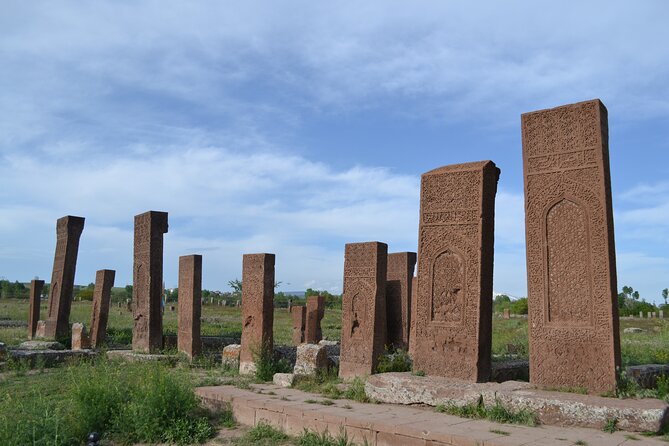
The morning walk through Erzurum includes the Great Mosque, the Double Minaret Madrasa, other medreses, the bazaar, the Three Tombs, and Ulu Cami. You get a useful look at the city’s public life as well as its monuments.
Then the route heads toward Kars and Ani. The ruined city of Ani was once the capital of a powerful medieval Armenian kingdom. At its height in the tenth century, it was among the largest and most impressive cities in Europe.
Today, Ani is an open archaeological site with churches, defensive walls, a citadel, a mosque, and the shell of its cathedral. The Church of St. Gregory, also called Tigran Honentz, preserves striking traces of frescoes despite centuries of exposure.
Ani deserves time and attention. The appeal is not a single perfect building, but the sense of a once-important city spread across a broad site. Wind, distance, and ruined walls are part of the experience. Bring protection from the weather and expect a fair amount of walking.
The cathedral visit is allotted three hours, making it one of the more substantial stops. Construction began in 989 under King Smbat II and was completed around 1001 or 1010, depending on the reading of the inscription. Your guide can help separate documented facts from the many layers of tradition surrounding the site.
Same city, a completely different kind of day:
- Best of Istanbul 1, 2 or 3-Day Private Guided Istanbul Tour
★ 5.0 · 8,922 reviews - FOR CRUISERS: Skip The Lines PRIVATE EPHESUS TOUR &On Time Return
★ 5.0 · 8,527 reviews - Istanbul: Basilica Cistern Fast-Track Entry and Audio Guide
★ 4.6 · 7,521 reviews - Top Choice For Cruisers: Ephesus, Mary’s House WITH TICKETS+LUNCH
★ 5.0 · 7,233 reviews
Day 4: Mount Ararat and Ishak Pasha Palace
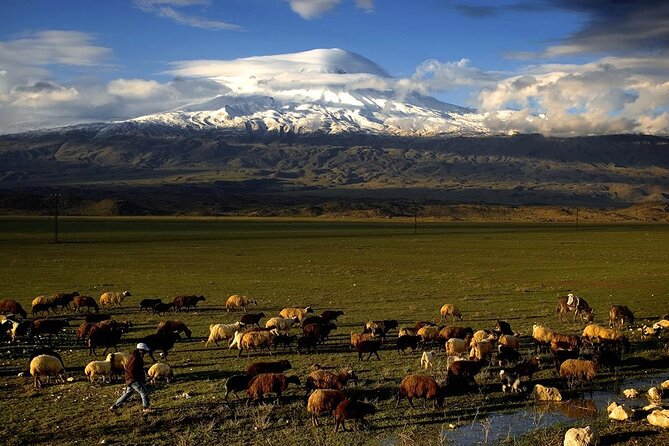
The route skirts the western side of Mount Ararat, Turkey’s highest mountain at 5,137 meters. The mountain is a major visual landmark, but visibility can change, so treat the two-hour stop as a chance to appreciate the setting rather than a guarantee of a clear summit view.
Near Doğubayazıt, Ishak Pasha Palace is the day’s main architectural prize. Built between 1685 and 1784, the palace combines Seljuk, Ottoman, Georgian, Armenian, and Persian influences. Its remote position makes the scale and ambition of the complex even more surprising.
The palace was built as the seat of government in the Mount Ararat province. Even in a ruined state, its courtyards, stone details, and position above the surrounding country show that this was more than a defensive outpost.
Muradiye Waterfall provides a short refreshment stop. It is a pleasant change after the palace and the road, but the visit lasts only about an hour. This is another day when comfortable shoes and a water bottle matter.
Day 5: Akdamar Island, Hosap, and Urartian Van
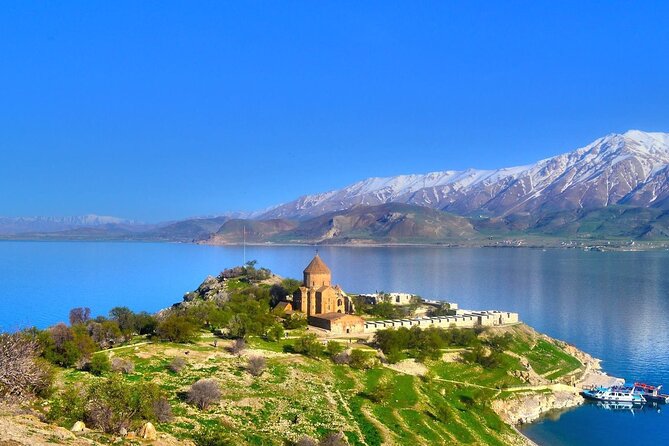
Lake Van brings a change in mood. A boat trip to Akdamar Island leads to the tenth-century Armenian Church of the Holy Cross, built between 915 and 921 by King Gagik Ardzruni.
The church is famous for its exterior reliefs. Biblical scenes, animals, and decorative stonework cover the walls in a way that is unusual even among Armenian churches. The three-hour allocation lets you appreciate the building rather than rush around it.
Hosap Castle follows. The fortress guarded a Silk Road route and collected tolls from passing merchants. The present structure dates mainly from 1643, when the Kurdish governor Sari Süleyman Bey rebuilt it and added a new entrance tower. Earlier construction may reach back to the Urartian period.
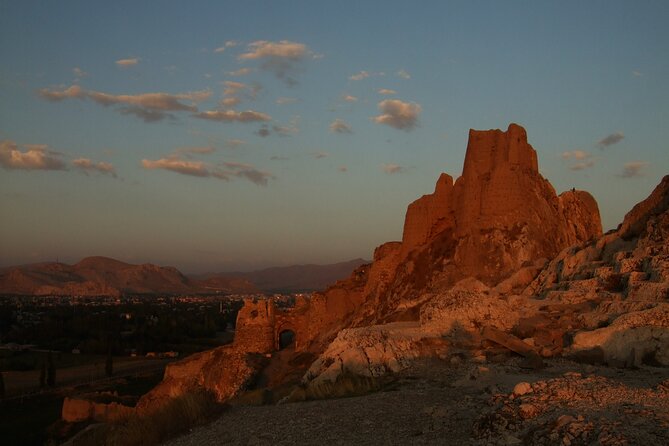
Van Castle is older still. It was built by the Urartian kingdom between the ninth and seventh centuries BC and overlooks the remains of Tushpa, the Urartian capital. From the massive stone fortification, you can begin to understand how rulers used high ground to control roads and settlements.
The day ends at Çavuştepe, an Urartian palace and fortress site. The visit is brief, about 40 minutes, but it adds another piece to the story of Urartian power. The combination of Akdamar, Hosap, Van, and Çavuştepe is one of the strongest sections for anyone interested in ancient architecture.
Day 6: Nemrut Crater and the tombstones of Ahlat
Leaving Van, you follow the southern shore of Lake Van toward Tatvan. From there, the road climbs toward Mount Nemrut’s crater. This is not the same Mount Nemrut visited later in the trip for the Commagene statues.
The volcanic caldera reaches about 3,050 meters at its highest point and contains five lakes. The cold lake is large and deep, while the hot lake has thermal springs that release visible steam. A picnic lunch beside the crater lakes is planned, but confirm who supplies the food.
This is a strong nature day, but weather and road conditions can affect the experience. The altitude and walking make sturdy shoes and moderate fitness useful.
Ahlat provides the cultural counterpoint. The town is known for its carved historic tombstones, many linked to the Ahlatshah dynasty, also called the Shah-Armen dynasty. The stones are a reminder that eastern Anatolia is not only about famous ruins. Its cemeteries and smaller towns hold important art in their own right.
Day 7: Hasankeyf, Mardin, and Deyrulzafaran
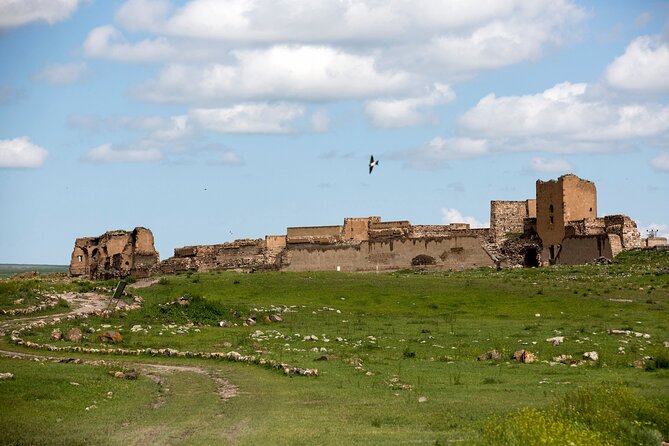
The road passes through Bitlis Gorge and Batman before reaching Hasankeyf on the Tigris. You have about three hours for lunch and a visit to caves and ruins associated with the medieval city.
Hasankeyf’s story is complicated by major changes along the Tigris, so ask your guide to explain what remains in its original setting and what has been affected by later development. The caves and river setting give the stop a distinctive feel.
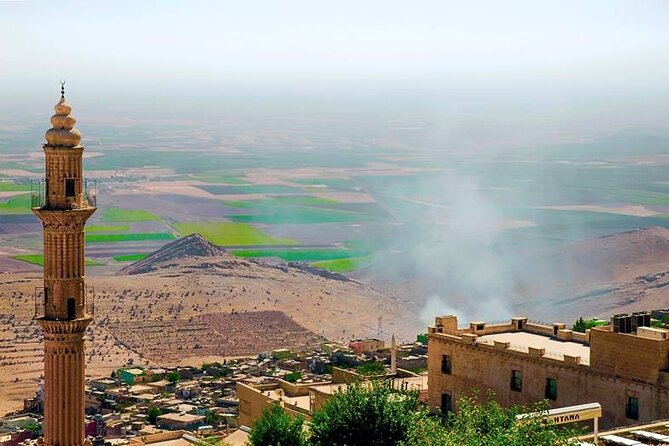
Mardin is one of the most visually memorable towns on the route. Its honey-colored limestone buildings climb the hillside, and the city is often treated as an open-air museum. The old architecture reflects centuries of Assyrian, Syriac, Roman, Islamic, and Ottoman influence.
Deyrulzafaran Monastery, also called the Saffron Monastery, was once a center of the Syriac Christian patriarchate. It was built over an ancient temple associated with sun worship, and the old temple’s flat-arched roof remains a fascinating part of the structure.
The visit lasts about an hour. Modest clothing is sensible for religious sites, and your guide can provide useful context about Syriac Christianity, a tradition many visitors encounter here for the first time.
Day 8: Diyarbakır’s walls, mosque, and old city
Diyarbakır begins with its fortress and city walls. The walls grew from the Roman city of Amida and took their present form in the fourth century under Emperor Constantius II. The fortress includes inner and outer sections, with four main gates: Mountain, Urfa, Mardin, and New.
The Great Mosque was built by the Seljuk Sultan Malik-Shah I over an older mosque and was influenced by the Great Mosque of Damascus. It is a significant Islamic center and is known for accommodating four Islamic traditions.
The wider city walk includes Meryem Ana Church, the Ten Arches Bridge over the Tigris, and Hasan Pasha Han, a sixteenth-century Ottoman inn. The han and bazaar areas are useful places to observe everyday city life rather than simply move from one monument to another.
Diyarbakır can be hot, especially in summer. The three-hour city portion is best approached with water, a hat, and a willingness to walk at a steady pace.
Day 9: The statues of Mount Nemrut at sunset
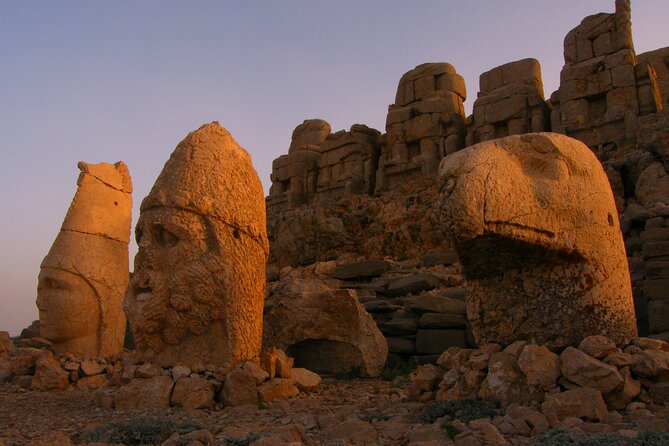
This is the tour’s most dramatic finish in terms of setting. After crossing the Euphrates by ferry, you continue to Narince Village and Nemrut National Park, then climb to about 2,150 meters.
At the summit is the funerary monument of Antiochus I of Commagene. A tumulus of crushed stones covers the summit, with colossal statues of gods and rulers arranged around the eastern and western terraces.
The sunset visit lasts about six hours, including the ferry, road travel, climb, and time at the top. The ancient monument was forgotten for nearly 2,000 years and rediscovered in the late nineteenth century.
Expect uneven ground and cooler conditions at altitude. The walk to the summit is not presented as a technical hike, but it does require reasonable fitness. This is one of the places where a guide adds real value, helping you understand the mixture of Persian, Greek, and local Commagene traditions in the statues and inscriptions.
Day 10: Göbekli Tepe and Şanlıurfa
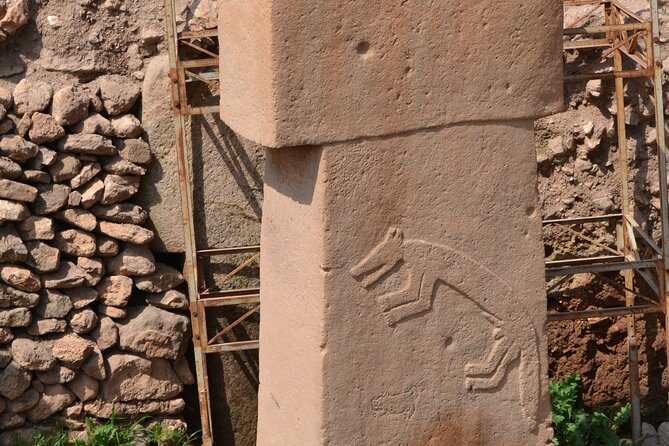
Göbekli Tepe changes the scale of the journey. The site is about 11,000 to 13,000 years old and predates pottery, writing, Stonehenge, and the pyramids. Its early religious structures have changed how archaeologists think about settled life and organized worship.
The archaeological work is ongoing, so you are seeing a site that is still being interpreted. Allow two hours, and pay close attention to the carved stone pillars and the explanations provided by your guide.
In Şanlıurfa, the Holy Pools of Abraham and the cave associated by tradition with his birth connect ancient belief with living religious practice. The bazaar and Gümrük Han add a more ordinary urban rhythm, with shopping, tea, and local commerce.
The Şanlıurfa Archaeology and Mosaic Museum displays finds from the surrounding region, including Göbekli Tepe and Harran. It is a useful companion to the archaeological visit because it places local discoveries in a larger timeline.
Day 11: Zeugma mosaics and Gaziantep food
The Zeugma Mosaic Museum in Gaziantep houses mosaics recovered from the ancient city of Zeugma, much of which is now beneath the waters of the Atatürk Dam. The mosaics show both technical skill and the wealth of the people who commissioned them.
After the museum, you have time around Gaziantep’s citadel district and old town. The city is one of the best places on this route to focus on food. Local cooking reflects Turkish, Oğuz, and neighboring Aleppo influences.
Look for different kebabs, lahmacun, spicy soups, meatballs, vegetable dishes, yogurt with potato, and pistachio specialties. The food can be hot and meat-heavy, so vegetarians and vegans should ask ahead what alternatives are available.
Some meals during the tour may feel repetitive, especially if kebabs appear often. That is a fair concern, but Gaziantep gives the food portion a strong final chapter.
Day 12: Departure from Gaziantep
After breakfast, the tour transfers you to Gaziantep Airport. The listed transfer time is about 30 minutes.
Because the tour ends in a different city from where it began, it works best as part of a larger Turkey plan. You can start with Istanbul, fly to Trabzon, and continue onward from Gaziantep. The two domestic flights included in the price help make this point-to-point design practical, but confirm the exact flight arrangements before departure.
Hotels, vehicles, and daily comfort
The accommodation has been described as clean, comfortable, and often full of local character rather than built like international chain hotels. That suits this route, since staying in distinctive properties can reinforce the sense of place.
The main practical issue is luggage space. A Mercedes vehicle was found too small for five people and their bags, and taller passengers had trouble getting in and out. A Toyota or larger vehicle may be more comfortable, so ask about the vehicle assigned to your group.
Roads are generally considered fast and safe, with comfort breaks on longer drives. Still, this is a road-heavy trip. Hotel changes occur almost every day except one, which can leave you tired by the final stretch.
Toilets on the first part of the route may be Turkish-style squat toilets, although Western toilets are available in hotel rooms. Check other cubicles, including accessible facilities, if you prefer a seated toilet.
Guides, group size, and the human side
The tour is offered in English and is limited to eight people. Some departures have become private trips when other participants canceled, giving the guide room to adjust stops and timing.
Guides associated with this experience include Ahmet Gülmez, Ören, Sabahattin, and Adem Kocaman. Their strengths have included strong knowledge of Turkish history and culture, humor, local restaurant choices, flexibility, and attention to individual needs. Drivers such as Serhat and Orhan have been praised for safe handling on difficult roads and for being pleasant companions.
The exact guide and driver will depend on your departure. Ask for their names and the group size before you go. A small group matters here because the vehicle, luggage space, restaurant choices, and ability to pause for photographs all affect your comfort.
Is $3,850 per person good value?
The price is high, but the route is unusually broad. You are paying for 12 days of transport across eastern and southeastern Turkey, two domestic flights, hotel accommodation, breakfasts, eight dinners, admissions, taxes, airport pickup, and an English-speaking private guide.
The value is strongest if you would otherwise struggle to arrange remote sites such as Ishan, Çavuştepe, Hosap, Ani, and Mount Nemrut. It is also useful if you prefer not to manage long-distance driving, ferries, museum tickets, borderland geography, and one-way hotel planning.
The value is weaker if you prefer slow travel, independent public transport, or several nights in each town. The schedule has little spare time, and the price does not clearly include lunch despite conflicting information. Alcohol is not included.
The tour has a 4.7 rating from 28 reviews, with 93 percent recommending it. That is a strong record, but one operational cancellation caused serious frustration when the minimum group size was not met. The stated policy allows a full refund if the operator cancels for that reason, but I would still confirm cancellation communication and minimum numbers directly.
Who should book this tour?
You should consider it if you want ancient sites, religious architecture, mountain scenery, local food, and a guide who can connect the pieces. It suits curious, active adults who can handle long road days, frequent hotel changes, and uneven walking.
It is less suitable if you want a relaxed holiday, dislike early starts or road travel, require a large vehicle, or need a highly predictable food plan. Families with young children may find the schedule demanding, though the supplied information does not set an age limit.
Final verdict
I would book this tour for the route, not for easy comfort. Sumela, Ani, Akdamar, Ishak Pasha Palace, Göbekli Tepe, and Mount Nemrut make a remarkable chain of places, and the smaller stops give the journey real depth.
Before paying, confirm the vehicle size, lunch arrangements, hotel list, exact flights, guide assignment, and minimum group requirement. If those details suit you, this is a strong way to see a part of Turkey that is difficult to plan alone. If you need leisurely mornings and several nights in one hotel, choose a slower custom version instead.
FAQ
Where does the tour begin?
The tour begins with pickup from Trabzon Airport. You can fly from Istanbul to Trabzon on the first morning or arrive in Trabzon one day earlier.
Where does the tour end?
The tour ends with a transfer to Gaziantep Airport after breakfast on Day 12.
How long is the experience?
The tour lasts approximately 12 days.
Is the tour offered in English?
Yes. The experience is offered in English.
What is the maximum group size?
The maximum group size is eight people.
Are domestic flights included?
Yes. The price includes two domestic flights, although you should confirm the exact flight details before departure.
Are breakfasts and dinners included?
Breakfast is included for 11 mornings, and eight dinners are included. The supplied information gives conflicting details about lunch, so confirm lunch arrangements before booking.
Are entrance fees included?
Yes. Museum and site entries, along with state and local taxes, are included.
Does the tour require much walking?
You should have moderate physical fitness. The route includes walks through ruins, city centers, national parks, waterfalls, fortresses, and mountain sites such as Mount Nemrut.
Can I cancel for a full refund?
You can cancel at least 24 hours before the experience’s start time for a full refund. Cancellations or changes made less than 24 hours in advance are not accepted for a refund. If the operator cancels because the minimum number is not met, you will be offered another date or experience, or a full refund.
Just added around Turkiye
- Whirling Dervish Show★ 4.8 · 21 reviews
- Whirling Dervish Ceremony İn Cappadocia★ 4.5 · 20 reviews
- Cappadocia Atv Tour : Full Extremly Atv Tour (Private Route)★ 4.5 · 66 reviews
- Red Dragon Pirate Boat Trip & Lunch★ 4.1 · 103 reviews
- Underground city tour & optional wine tasting★ 5.0 · 16 reviews
- Whirling Dervish Ceremony★ 4.5 · 35 reviews
- Istanbul:Whirling Dervish Ceremony, Mystical Sufi Experience★ 4.1 · 17 reviews
- Visit to Cappadocia ceramic workshop and carpet store★ 4.6 · 19 reviews
Trabzon Tours, compared.
Sumela Monastery, Zigana and Hamsiköy Village Tour
Read our review →
Uzungöl Group Tour, Explore The Nature & Taste Tea
Read our review →
Uzungol Tour: Full-Day Nature Adventure with Tea Factory Visit
Read our review →
Full Day Tour In Uzungol Lake with Turkish Tea Tasting
Read our review →
Rize: Ayder Tour & Kaçkar Mountaıns & Fırtına Valley
Read our review →
Browse the lists this tour appears in