
Reviewed · EPHESUS TOURS
Ephesus, Priene, Miletos and Didyma Tour
The unusual strength of this tour is its four-site route. In eight hours, you move from Roman Ephesus to the hilltop planning marvel of Priene, the philosopher-city of Miletos, and the huge oracle sanctuary at Didyma. It gives you a much wider view of ancient Aegean life than an Ephesus-only outing.
I like the private format and the fact that entrance fees, transport, a driver, and a licensed guide are included. I also like the chance to see smaller archaeological sites where you might have the ruins largely to yourself, rather than spending the whole day among the busiest sights near Kusadasi.
The tradeoff is simple: this is a full day with four stops, long road sections, heat, uneven ground, and plenty of walking. If you want a slow visit with time for every inscription and museum display, the schedule may feel brisk. It is best for people who prefer broad coverage and strong historical context.
In This Review
- Key points to know before booking
- Why this four-city circuit is worth your day
- Ephesus brings the Roman world to life
- Priene shows how a Greek city was planned
- Miletos connects trade with philosophy
- Didyma ends the day with a giant sanctuary
- The guide can make or break the route
- Timing, transport, and the private format
- Who should book this tour?
- FAQ
- How long does the tour last?
- Where does pickup take place?
- Which archaeological sites are included?
- Are entrance fees included?
- Is this a private tour?
- Which languages are available?
- Is the tour suitable for wheelchair users?
- Should you book it?
Key points to know before booking
- Four ancient sites in one day: Combine Ephesus, Priene, Miletos, and Didyma without arranging separate transport.
- A private group: Your guide can explain the sites and, according to the tour information, adjust time and stops to your needs.
- A strong guide-and-driver team: Olkan or Volkan may be among the guides available, while Mohammed has been praised for a calm driving style.
- More than marble streets: See Ephesus’ theater and Terrace Houses, Priene’s hilltop ruins, Miletos’ Baths of Faustina, and Didyma’s Temple of Apollo.
- Good value at $210 per person: The price includes all listed entrance fees, a private air-conditioned vehicle, driver, guide, and pickup and drop-off.
- Come ready for the terrain: Comfortable shoes, a hat, sunglasses, a camera, and passport or ID card are practical essentials.
Why this four-city circuit is worth your day
Most visitors to the Kusadasi area focus on Ephesus, and for good reason. It is the grandest and easiest-to-understand ancient site in the region. But Ephesus alone can leave you with a narrow picture of the Aegean past.
This tour adds three places that explain how cities were planned, how ports shaped intellectual life, and how religious centers drew people from far beyond their own walls. You do not just see one famous ruin. You follow a chain of ancient power, trade, philosophy, and prophecy.
The private setup matters here. Four sites require a guide who can keep the day moving without turning every stop into a rushed photo break. A strong guide can help you focus on the parts that fit your interests, whether that means architecture, Roman public life, Greek mythology, or the development of early philosophy.
The tour is listed at $210 per person. That is not a budget outing, but the price becomes easier to assess when you add up the included guide, driver, air-conditioned vehicle, pickup and drop-off, and four entrance fees. You are also paying for a route that would be awkward to organize independently in one day.
More Ephesus Tours in Kusadasi
- FOR CRUISERS: Skip The Lines PRIVATE EPHESUS TOUR &On Time Return
★ 5.0 · 8,527 reviews - Top Choice For Cruisers: Ephesus, Mary’s House WITH TICKETS+LUNCH
★ 5.0 · 7,233 reviews - PRIVATE EPHESUS TOUR FOR CRUISERS: On-time Return and Skip-Line
★ 5.0 · 5,807 reviews
Ephesus brings the Roman world to life
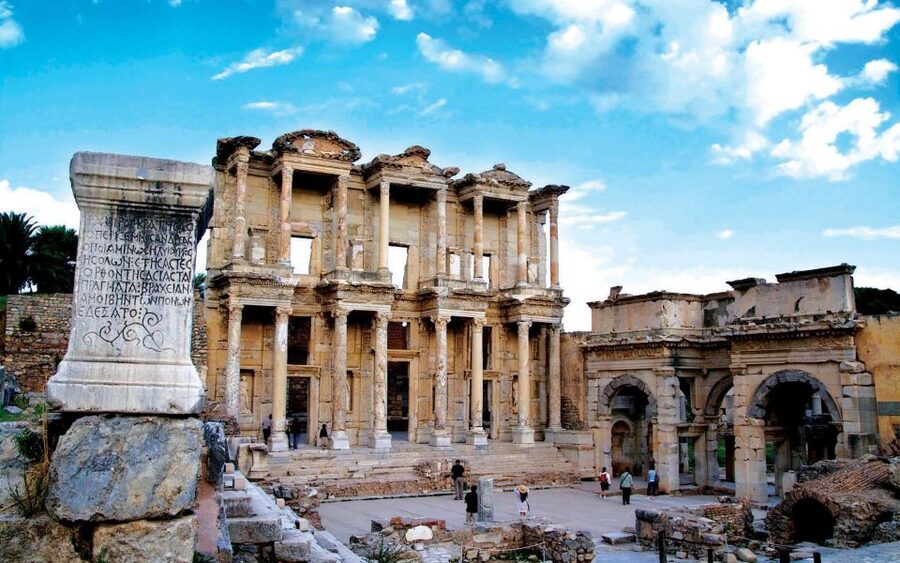
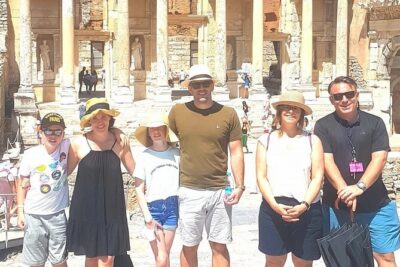
Ephesus is the anchor of the route. Here, you walk along the Marble Street and see the remains of a city built for public life, trade, religion, entertainment, and political display. The scale is what makes the place work. Even in ruins, the streets and monumental buildings give you a clear sense of a major Roman city.
The Great Theatre is one of the key stops. It could hold about 24,000 people and served more than entertainment. Political meetings, public speeches, plays, and gladiatorial contests all formed part of its role. Stand inside it and you can better understand why public space mattered so much in ancient cities.
The Library of Celsus is the familiar postcard view, but it should not be the end of your visit. Your guide can connect the library to the wider street plan and explain how the city’s monuments were arranged to impress people arriving from the harbor and moving toward the center.
One of the tour’s more amusing details is the carved footprint and heart near the old brothel. It is often described as an early advertisement, pointing visitors toward paid companionship. The exact interpretation of ancient signs can be debated, but the detail gives the ruins a human edge. Ephesus was not only emperors and marble facades. It was also a working city with ordinary temptations and practical businesses.
The Terrace Houses are an optional premium upgrade. If you choose to add them, you see the decorated homes of wealthy Ephesians, including mosaics and frescoes. I would consider this add-on if domestic life interests you. The main route already offers plenty, so you do not need it to make the day worthwhile, but it adds a more intimate view of the city than its grand public buildings.
Expect sun, exposed paths, and uneven ancient paving. Comfortable shoes are not a minor suggestion here. The site is large, and your attention will be divided between listening, taking photographs, and watching your footing.
Priene shows how a Greek city was planned
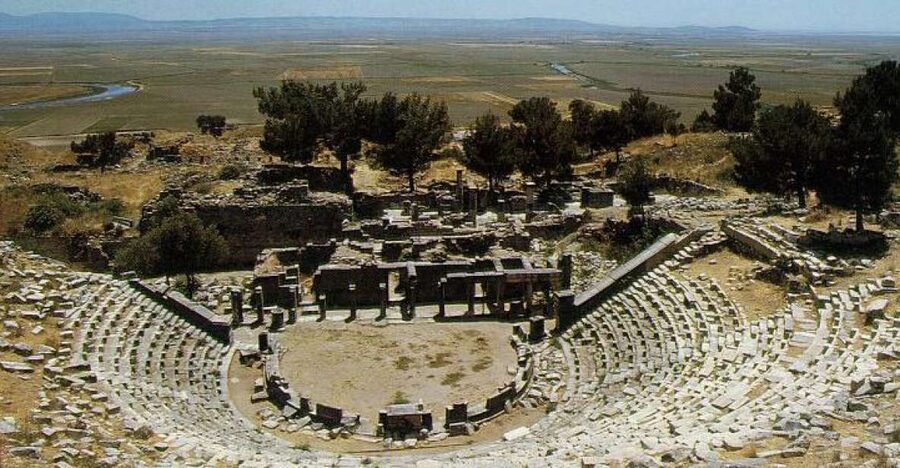
Priene changes the mood completely. Instead of the broad Roman grandeur of Ephesus, you climb toward a smaller Hellenistic city set on a hillside. Its importance lies partly in its design. Streets were laid out on a precise grid, creating an orderly plan that later city planners studied and admired.
The Temple of Athena Polias is the main architectural focus. Its columns and setting help explain the clean lines of classical Ionian design. The remains are not as complete as Ephesus, so this stop rewards a guide who can help you reconstruct the original city in your mind.
The view from the theater is another reason to come. From the hillside, you look across the Meander River delta and see why this position mattered. The setting offered both a commanding view and a sense of the changing geography around the city.
Priene is also where the physical demands of the tour become more obvious. You ascend through an archaeological site, and the ground is uneven. The tour is not suitable for wheelchair users, and anyone with limited mobility should ask specific questions before booking.
I like Priene because it gives you a chance to see ancient urban planning rather than only famous monuments. The scale is more human, and the hillside setting helps you picture how homes, public buildings, temples, and theaters worked together.
Miletos connects trade with philosophy
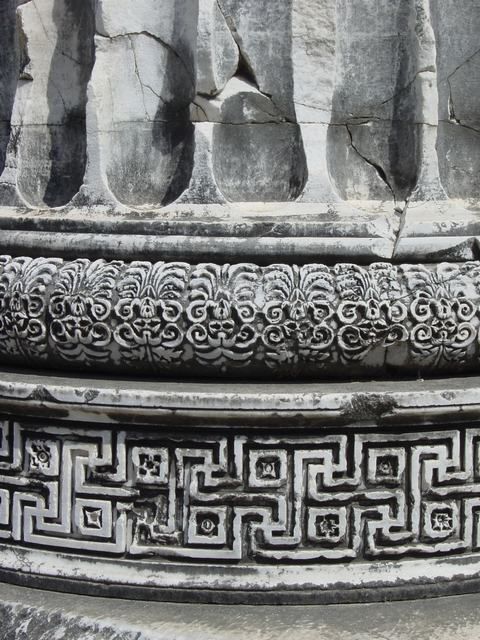
Miletos was a major maritime center and the birthplace of early Greek philosophy. Thinkers such as Thales and Anaximander are linked to the city, making this a useful stop for anyone interested in how people began asking natural and scientific questions outside a purely mythological framework.
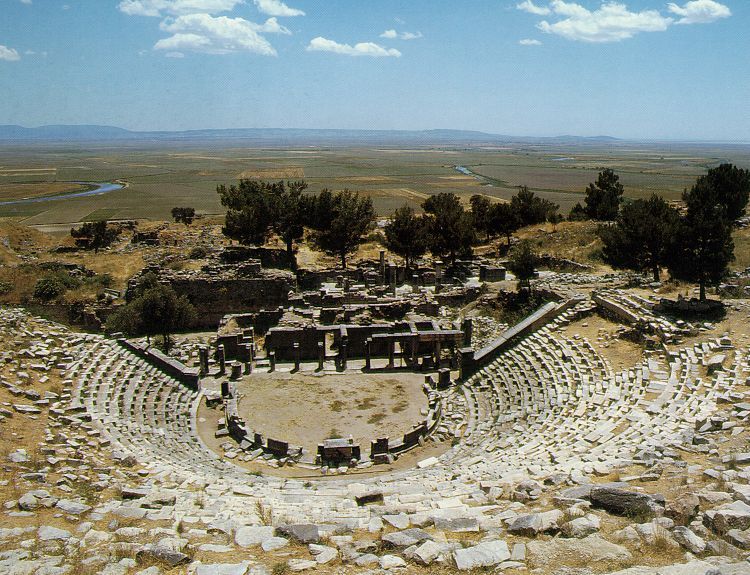
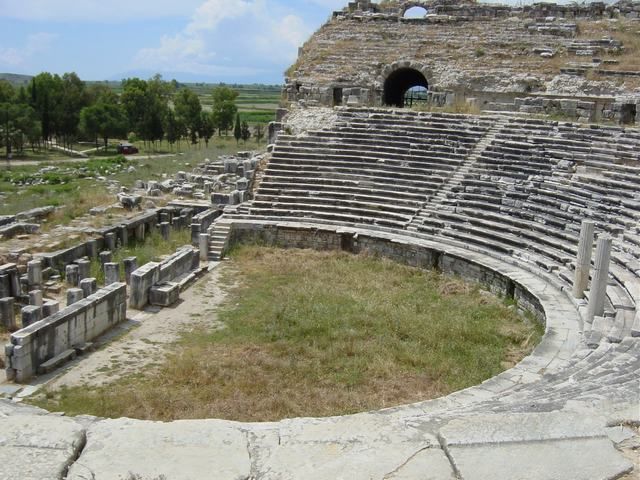
The theater is the most obvious monument. It could hold around 15,000 people, a reminder that Miletos had both wealth and a large civic population. Your guide can place the building within the city’s former public life, rather than treating it as just another impressive stone structure.
The Baths of Faustina offer a different kind of view. Built by Faustina, the wife of Emperor Marcus Aurelius, the baths show how Roman customs and building styles shaped older Greek cities. The remains are notably intact in places, making it easier to understand the practical side of Roman daily life.
The Agora points back to commerce. Miletos once dealt with ships and goods moving across the Mediterranean, while today its marketplace is quiet. That contrast is useful. You can see how a city’s power depended not only on temples and theaters, but also on trade routes, harbor access, and commercial space.
Miletos is less polished than Ephesus. Some people will find that appealing because the site feels less staged and more open to interpretation. Others may prefer the clearer monuments at Ephesus. This is one of the places where a good guide makes a major difference, especially when the remains require more imagination.
Same city, a completely different kind of day:
- PRIVATE NO HIDDEN FEES Ephesus, Mary’s House Guided Tour /GRP OPT
★ 5.0 · 2,455 reviews - For Ship Guests:BEST SELLER EPHESUS PRIVATE TOUR & On Time Return
★ 5.0 · 2,029 reviews - ALL INCLUDED: Ephesus Ruins, Mary’s House Tour incl ENTRY TICKETS
★ 5.0 · 1,670 reviews - Ephesus Temple of Artemis and House of Mary Private Half Day Tour
★ 5.0 · 1,573 reviews
Didyma ends the day with a giant sanctuary
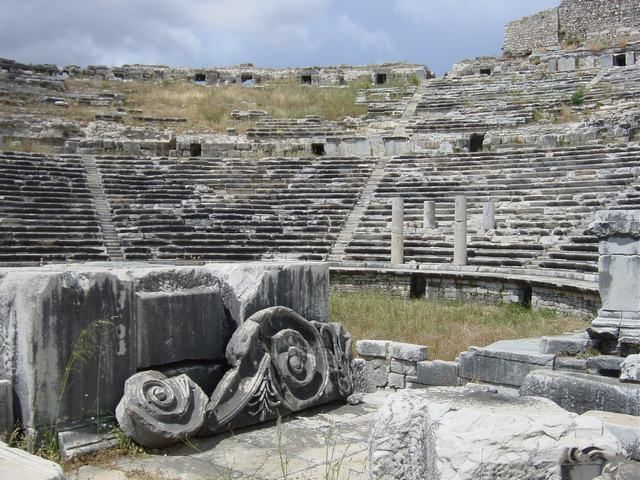
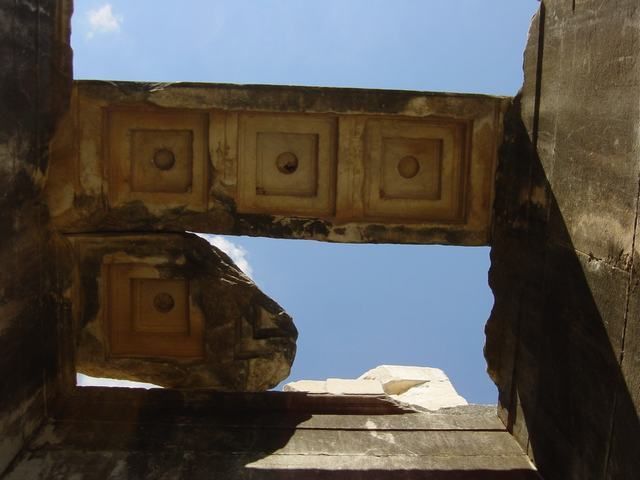
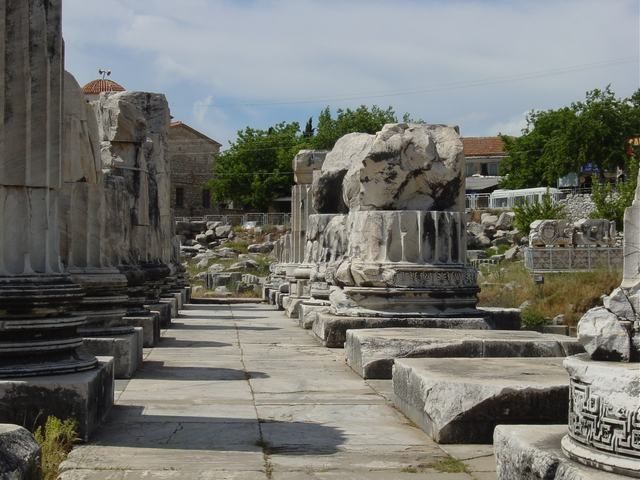
Didyma was not a city in the same sense as Ephesus or Miletos. It was a sanctuary built around the Temple of Apollo, one of the largest temples in the Greek world. Its purpose was religious and prophetic, drawing pilgrims who came to seek answers from the oracle.
The surviving columns are the visual highlight. Three tall, fluted columns remain standing, surrounded by massive architectural fragments. The scale is difficult to grasp from photographs. Walk around the temple rather than stopping only at the entrance, and you will see how ambitious the design was.
The Sacred Way connected the sanctuary with the wider pilgrimage system. Your guide can explain how visitors approached the temple and why prophecy held real political weight. Kings and rulers did not treat these oracles as simple entertainment. Decisions about war, succession, and public policy could be shaped by what was believed to be divine guidance.
Didyma is a strong final stop because it brings mythology and power together. After seeing Roman administration, Greek city planning, trade, and philosophy, you finish at a place built around divine knowledge. The site is also visually different from the other three, so the day does not end with another version of the same ruins.
As with Priene and Miletos, the ground can be rough and the shade limited. By this point, the heat and walking may catch up with you. Bring water, a sun hat, sunglasses, and a camera, and treat the eight-hour schedule as a full physical day rather than a relaxed sightseeing loop.
The guide can make or break the route
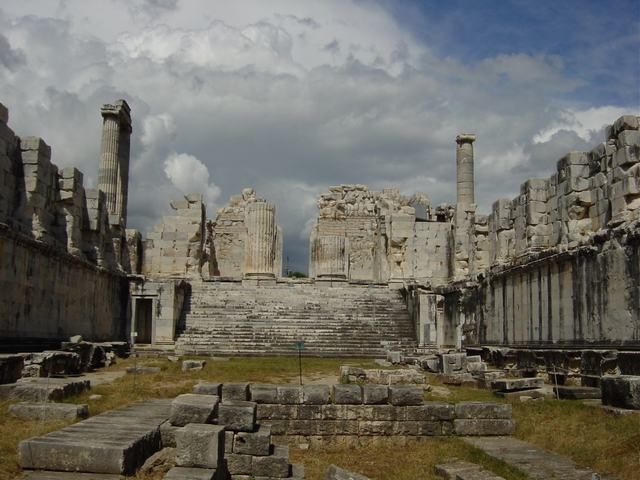
Four sites in one day need clear explanations and good time management. The most praised guides connected with this experience include Olkan and Volkan. One guide, Volkan, has been described as deeply engaged and able to connect the Aegean sites with a much wider story reaching back to early Anatolian civilizations.
That kind of broad context can improve the experience. You will see more than isolated columns if your guide explains how the cities changed under Greek and Roman rule, how geography affected their fortunes, and why one place became a port while another became a religious center.
The driver also matters because the route involves several transfers. Mohammed has been praised for a comfortable driving style, which is useful after walking over uneven ground. The air-conditioned vehicle gives you a chance to cool down between sites.
The listed guide languages include English, German, French, and Dutch in one part of the tour information. The wider activity details also list Spanish, Italian, Greek, Russian, and additional language options. Confirm your preferred language when booking, since the available guide for your date may vary.
Timing, transport, and the private format
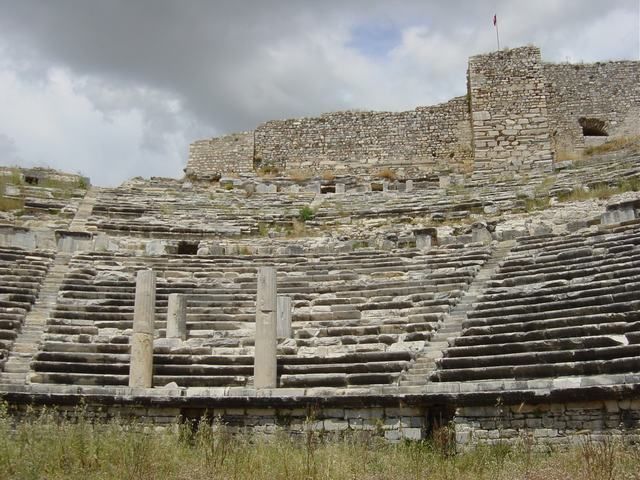
The tour lasts eight hours and includes pickup from Kusadasi port or local hotels. Pickup is also listed for hotels in Aydin and Izmir, so confirm the exact pickup point and timing if you are staying outside Kusadasi.
A private group is useful for this particular itinerary. You can ask for more time at Ephesus if the Roman site is your main reason for coming, or spend longer at Priene and Didyma if architecture and religious history interest you more. The information for the experience also indicates that time and places can be adjusted to suit your sightseeing needs, though the four-site route remains the central plan.
The day will include road time. That is unavoidable when combining four archaeological areas, but the air-conditioned vehicle makes the transfers easier. The benefit is that you reach places that would be difficult to link without a private car.
There is no promise of a leisurely lunch stop or a specific meal included, so plan around the fact that personal expenses are separate. The tour includes the site entries listed in the route, but not personal purchases or anything not specifically named.
Who should book this tour?
I would recommend it to you if you have a serious interest in ancient history and want more than the standard Ephesus visit. It suits independent-minded people who like asking questions, comparing different kinds of ruins, and seeing how cities functioned across several centuries.
It also works well for solo visitors and families who want a private vehicle and a guide focused on their group. The private arrangement can be especially helpful when older relatives need a more flexible pace, though the walking and uneven surfaces still need careful consideration.
I would think twice if you dislike long days, hot archaeological sites, or travel between stops. Ephesus alone offers enough for many visitors, and adding Priene, Miletos, and Didyma means accepting a faster rhythm.
At $210 per person, the value is strongest when you plan to visit all four places anyway. You get transport, a driver, a licensed guide, and entrance fees in one package, with no need to coordinate separate taxis or admissions. For a private day covering this much ground, the price is reasonable, provided you are ready for the physical demands.
FAQ
How long does the tour last?
The tour lasts eight hours.
Where does pickup take place?
Pickup and drop-off are available from Kusadasi port or local hotels. Pickup is also listed for hotels in Aydin and Izmir.
Which archaeological sites are included?
The route includes Ephesus, Priene, Miletos, and Didyma.
Are entrance fees included?
Yes. Entrance fees to the museums and archaeological sites listed in the itinerary are included.
Is this a private tour?
Yes. The experience is offered for a private group.
Which languages are available?
The activity information lists Spanish, English, Italian, Dutch, Greek, German, French, and Russian. Another section specifically lists English, German, French, and Dutch, so confirm your preferred language when booking.
Is the tour suitable for wheelchair users?
No. The tour is listed as unsuitable for wheelchair users.
Should you book it?
Book this tour if you want the full Aegean archaeology picture in one demanding but efficient day. Ephesus gives you Roman scale, Priene shows careful Greek planning, Miletos links a busy port with early philosophy, and Didyma finishes with the force of ancient prophecy.
Skip it if you want a slow, single-site visit or if uneven ground is a serious concern. For everyone else, the combination of private transport, expert guiding, and four distinct sites makes this one of the better ways to move beyond the usual Ephesus stop from Kusadasi.
Just added around Kusadasi
- Ephesus Ancient City Highlight Tour For Cruisers★ 4.8 · 35 reviews
- Shore Excursions: Half Day Ephesus & Şirince Village Tour★ 4.9 · 39 reviews
- Kusadasi: Ephesus and Artemis Skip-the-line Small Group Tour★ 4.9 · 113 reviews
- From Kusadasi Port: Ephesus Full-Day Private Trip★ 4.9 · 20 reviews
- Kusadasi: Ephesus, Mary’s House, Artemis 4 to 6 hours Tours★ 4.7 · 219 reviews
- Private Tour in Ephesus and TraditionalTurkishBath from Port★ 4.7 · 22 reviews
- Ephesus: Full-Day Tour from Kusadasi or Izmir★ 4.3 · 22 reviews
- Private Ephesus, Terrace Houses & Sirince Village Tour★ 5.0 · 30 reviews
Ephesus Tours, compared.
FOR CRUISERS: Skip The Lines PRIVATE EPHESUS TOUR &On Time Return
Read our review →
For Ship Guests:BEST SELLER EPHESUS PRIVATE TOUR & On Time Return
Read our review →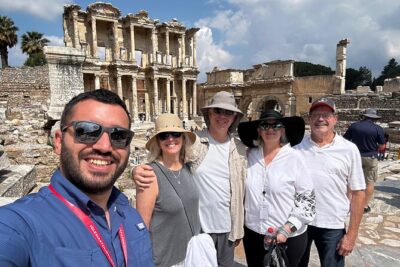
ALL INCLUDED: Ephesus Ruins, Mary’s House Tour incl ENTRY TICKETS
Read our review →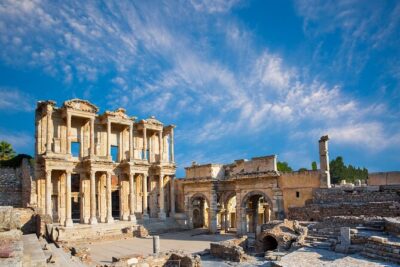
PRIVATE TOUR FOR CRUISERS: Mary’s House (Meryemana) and Ephesus
Read our review →
Top-Rated: Ephesus & Artemis Tour for Cruisers WITH ENTRY TICKETS
Read our review →
SKIP-THE-LINE: Group & Private Ephesus Tour ENTRY FEE & LUNCH
Read our review →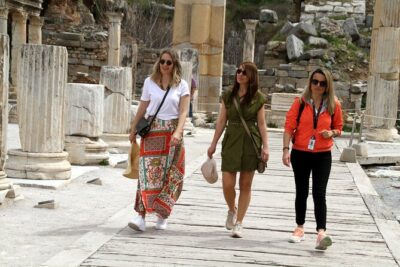
All Inclusive Private Access Ephesus Tour (SKIP-THE-LINE)
Read our review →Browse the lists this tour appears in