
Reviewed · TÜRKIYE
Gobeklitepe, The World’s First Temple
Göbeklitepe asks you to rethink the usual story of civilization. Here, monumental stone circles were built roughly 12,000 years ago, before pottery, cities, and farming had fully taken hold. The carved T-shaped pillars, wild animals, human forms, and open archaeological questions make this more than a quick ancient-site stop. You are looking at one of the earliest known places where people gathered for a shared ritual purpose.
I like two things right away: the private format lets you set the pace, and the route joins Göbeklitepe with Abraham’s Cave, Balıklıgöl, and Harran in one long day. I also like the airport pickup and drop-off, which can turn a flight day into a useful introduction to Şanlıurfa. The tradeoff is cost: at $377.30 per person, this is expensive for a day tour, especially if your group is small and you spend close to three hours in the vehicle.
In This Review
- Key points to know before booking
- Why Göbeklitepe changes the usual history lesson
- Spending two and a half hours among the T-shaped pillars
- Returning to Şanlıurfa at Abraham’s Cave and Balıklıgöl
- Harran, from Abrahamic tradition to Islamic scholarship
- Seeing Harran’s beehive houses and village life
- The private vehicle makes a demanding day easier
- The meal and the taste of Şanlıurfa
- Is $377.30 per person good value?
- Who will get the most from this day?
- Should you book Göbeklitepe, Abraham’s Cave, and Harran?
- FAQ
- Where does the tour start and finish?
- How long does the experience last?
- Is this a private tour?
- Is transportation included?
- Is food included?
- What language is the tour offered in?
Key points to know before booking
- Göbeklitepe is the main event: Allow about two and a half hours for the site, including its carved pillars, sculptures, and archaeological context.
- The route covers a lot of ground: Şanlıurfa, Göbeklitepe, and Harran are not close together, so the private air-conditioned vehicle matters.
- Guiding makes a real difference: Serdar is noted for clear English, while Murad brings a background in history and philosophy to the discussion.
- You get a private day, not a fixed group outing: Only your party participates, and the experience can be personalized.
- The religious stops are active sacred places: Abraham’s Cave and Balıklıgöl connect local tradition, pilgrimage, and legend.
- A regional meal is included: The day ends with traditional Şanlıurfa food before the airport transfer.
Why Göbeklitepe changes the usual history lesson
Many ancient sites impress you with their age. Göbeklitepe does something more unsettling: it challenges the order in which we think human society developed.
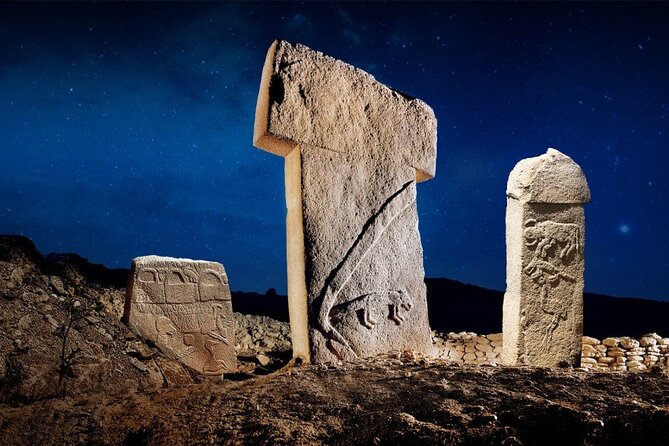
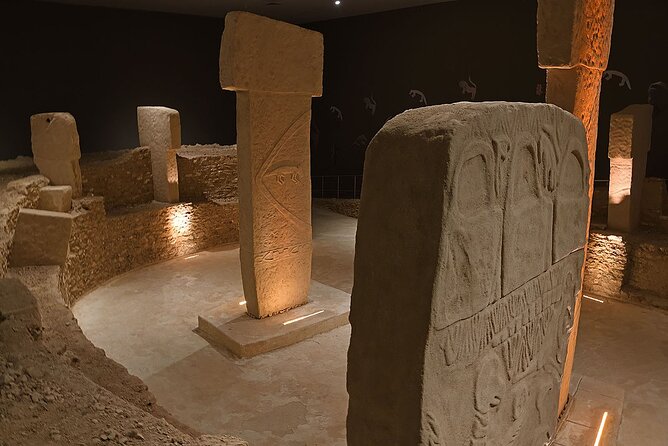
The site dates to the Mesolithic and Pre-Pottery Neolithic periods, around 12,000 years ago. Its builders worked enormous T-shaped stones into planned spaces and decorated them with reliefs of animals, plants, and human features. This happened long before the pyramids, Roman roads, or even widespread pottery.
The old textbook sequence often runs from settled farming to villages, organized religion, and monumental buildings. Göbeklitepe complicates that sequence. The people who built it may not have lived in large permanent cities, yet they had the ability to quarry, shape, move, and arrange heavy stones. The site raises a larger question: did shared ritual gatherings help people organize into more complex communities?
That is why your guide matters. A quick look at the pillars will show you the shapes, but a good explanation connects them to geography, climate, technology, cooperation, and the early development of religion. Murad is described as having advanced training in history and philosophy, and Serdar is known for clear, easy-to-follow English. Ask questions. This is a place where the unanswered parts are as important as the confirmed facts.
Other Turkiye days worth putting on the list:
- Istanbul: Bosphorus Dinner Cruise & Show with Private Table
★ 4.8 · 44,561 reviews - Istanbul: Daytime or Sunset Sightseeing Cruise & Audio Guide
★ 4.8 · 14,430 reviews - Istanbul: Bosphorus Dinner Cruise with Turkish Night Show
★ 4.8 · 10,127 reviews
Spending two and a half hours among the T-shaped pillars
The Göbeklitepe visit lasts about 2 hours and 30 minutes, making it the longest and most important stop of the day. Admission is included.
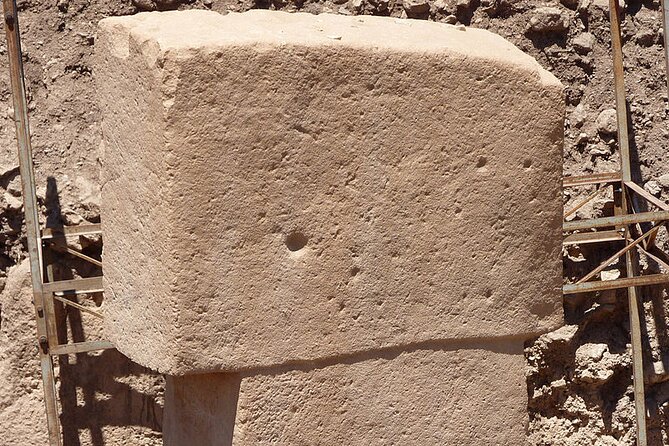
Expect to see the famous T-shaped pillars, central pillars, carved belts, animal reliefs, stylized human figures, and three-dimensional details. The sculptures include birds, predators, snakes, and other wild creatures. Other named objects connected with the site include the Urfa Statue, a totem pole, a life-size human head, a bearded figure, and a porthole stone.
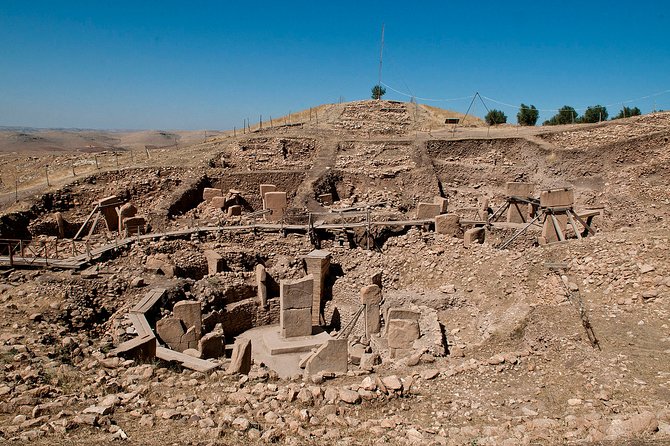
The site is still being excavated by Turkish and German teams. That means you are not walking through a finished ancient city with every building labeled and explained. You are seeing an archaeological project that continues to change what experts think about the early Neolithic period.
This unfinished quality is part of the appeal, but it can also frustrate you if you expect a fully reconstructed monument. Some of the story remains uncertain. You will get more from the visit if you listen carefully to the difference between established evidence and theories about the site’s purpose.
The tour description presents Göbeklitepe as the world’s first temple. That phrase captures its age and ceremonial character, but the site’s exact function remains a subject of study. Your guide can help you understand the evidence without flattening every question into a simple answer.
The weather also matters. Şanlıurfa can be intensely hot, and one account describes temperatures above 40 degrees Celsius. The private air-conditioned vehicle is not a minor luxury here. Carry water, use sun protection, and wear shoes suited to walking over an archaeological site.
Returning to Şanlıurfa at Abraham’s Cave and Balıklıgöl
After Göbeklitepe, the route returns to Şanlıurfa for Balıklıgöl, the holy fishpond beside Abraham’s Cave and the city citadel. This stop takes about 30 minutes and has no separate admission charge.
The local story says that Abraham was thrown into a great fire, which turned into a pond, while the burning wood became fish. The fish are considered sacred, and the area has a strong religious atmosphere. You are not simply checking off another old monument. You are entering a place where legend, devotion, and daily city life meet.
The stop is brief, so do not expect a long museum visit or an extended archaeological lecture. Its value is in the connection to Şanlıurfa’s identity as the City of Prophets. The city’s name also reflects its modern political history. It became Şanlıurfa, meaning glorious Urfa, in recognition of local heroism during the Turkish War of Independence under Mustafa Kemal Atatürk.
The contrast with Göbeklitepe is useful. At the first site, you are dealing with prehistoric stonework and open academic questions. At Balıklıgöl, the focus shifts to a living religious tradition that remains meaningful today.
Harran, from Abrahamic tradition to Islamic scholarship
Harran adds a completely different layer to the day. It is described in biblical and Torah traditions as the city of Abraham, and it was also linked to the ancient worship of the Moon God Sin.
The settlement has passed through the hands of Akkadians, Babylonians, Assyrians, Hittites, Persians, Romans, Byzantines, Seljuks, Ayyubids, and other dynasties. That long succession is not just a list of names. It helps explain why Harran has been a religious center, a trading point, and an agricultural town at different times.
The visit includes the ruins associated with the Grand Mosque and its square tower, a central pool, and the remains of an old university. The tour presents the university as the oldest in known history and the mosque as the first built on Turkish soil. These claims are part of Harran’s local historical identity, though the surviving ruins are fragmentary rather than complete.
Harran had its strongest period as a center of learning from about 718 to 913. Scholars such as Thabit Ibn Qurra and Al-Battani were connected with the city, and Ibn Taymiyyah was also born there. Harran’s intellectual life declined after the Abbasid period, suffered during the Crusades, and was badly damaged when Hulagu Khan’s forces invaded in 1260.
You will see why this place once mattered, but you should set realistic expectations. The ruins are not a fully restored university campus or mosque complex. Much of the experience comes from your guide’s explanation and from imagining the city as a center of mathematics, astronomy, religion, trade, and political power.
Same city, a completely different kind of day:
- Best of Istanbul 1, 2 or 3-Day Private Guided Istanbul Tour
★ 5.0 · 8,922 reviews - FOR CRUISERS: Skip The Lines PRIVATE EPHESUS TOUR &On Time Return
★ 5.0 · 8,527 reviews - Istanbul: Basilica Cistern Fast-Track Entry and Audio Guide
★ 4.6 · 7,521 reviews - Top Choice For Cruisers: Ephesus, Mary’s House WITH TICKETS+LUNCH
★ 5.0 · 7,233 reviews
Seeing Harran’s beehive houses and village life
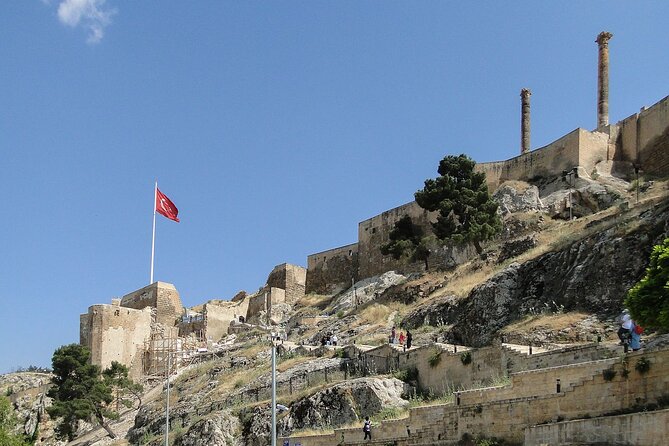
Harran’s distinctive beehive-shaped houses are among the most memorable sights on the route. The tour connects their appearance with older building traditions, while noting that the existing houses do not date directly to the fourth century BC.
A visit to a traditional house may include tea, rock melon, and an introduction to local people. This is one of the more personal parts of the day, because it gives you a glimpse beyond ruins and formal monuments. The experience is not just about taking a picture of an unusual roof. It shows how architecture adapts to heat and local materials.
The itinerary allows about one hour for Harran itself, followed by another 45 minutes at the ruins. That is enough time for a broad look, but not for a slow, detailed study of every remaining wall.
Harran was once known for cotton, honey, sweets, and measuring tools. Its past as a commercial and agricultural center helps balance the focus on religion and scholarship. You see a town shaped not only by prophets and empires, but also by trade, food, farming, and practical crafts.
The private vehicle makes a demanding day easier
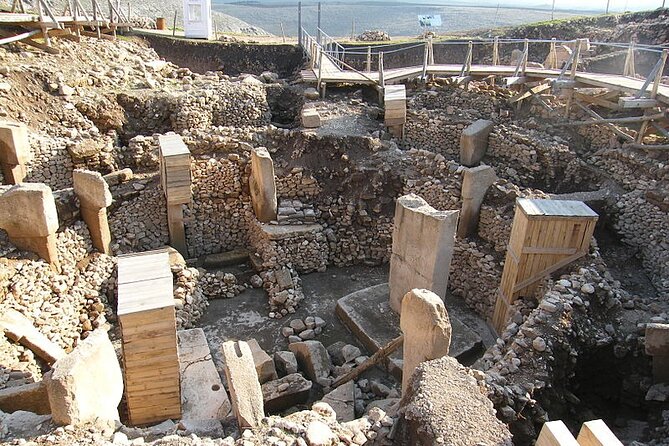
This is an eight-hour experience, and the route covers a wide area. You begin and end at GAP Şanlıurfa Airport, with stops in and around Şanlıurfa and Harran. One account estimates around three hours in the car overall, so you should be comfortable with a road-heavy schedule.
The private air-conditioned vehicle includes Wi-Fi, bottled water, soda, fuel, parking, and private transportation. Those inclusions matter because the day combines several distant sites rather than focusing on one compact historic center.
Airport pickup also removes one awkward part of a short visit. A representative meets you at the arrival gate with your name, then takes you directly into the day’s program. You need to confirm the transportation at least 24 hours in advance and provide the number of people and suitcases. If you use a wheelchair, you should explain in advance how much assistance is needed.
The tour is offered in English. If you need another language, the available information only confirms that Italian interpretation has been arranged on request in at least one case. Do not assume another language is included unless you confirm it before booking.
The meal and the taste of Şanlıurfa
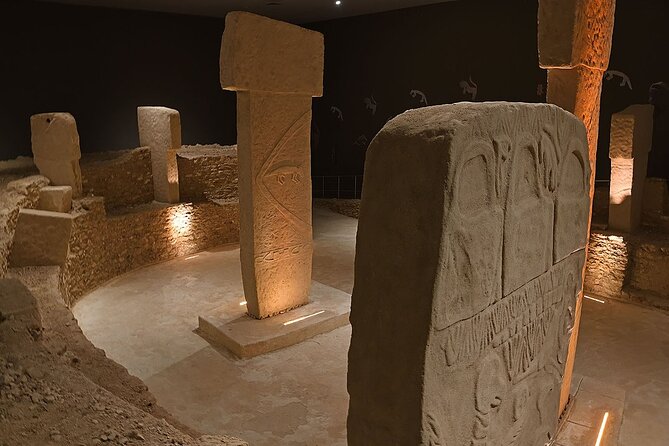
A traditional regional meal is included near the end of the day, before the airport transfer. The schedule describes it as dinner, although meal timing may depend on your flight and the order of the stops.
Şanlıurfa is known for strong regional flavors, and the included meal gives you a chance to try local food without having to search for a restaurant during a packed sightseeing day. One account specifically praised the food and noted that the restaurant was air-conditioned, an important detail when temperatures rise above 40 degrees Celsius.
This is practical rather than luxurious. The meal is part of the route and may not suit every dietary need, so tell the provider about restrictions when you confirm the transfer. The supplied details confirm dinner, but do not provide a fixed menu.
Is $377.30 per person good value?
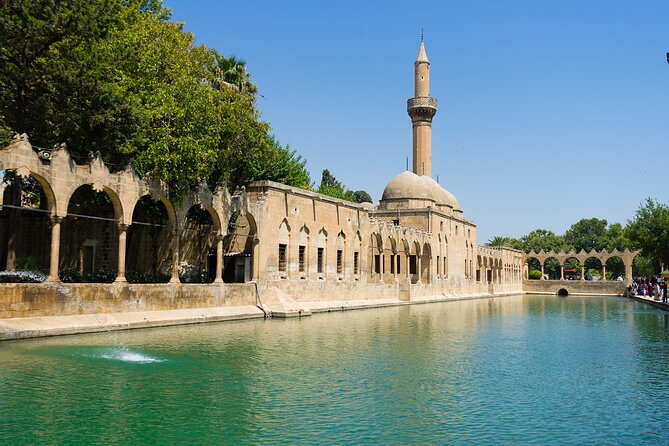
The price is $377.30 per person, which places this firmly in the premium day-tour category. The value depends heavily on your group size and travel plans.
For a solo visitor or a couple, the price may feel steep, especially with several hours spent driving. You are paying for a private vehicle, airport transport in both directions, an English-speaking guide, included site access where stated, Wi-Fi, water, parking, fuel, and a regional meal. You also save the trouble of arranging separate transport to Göbeklitepe and Harran.
For a larger private group, the cost may make more sense because the experience is not shared with strangers. The group discount feature may also improve the value, so check the final rate for your party rather than judging only by the per-person figure.
I would not choose this tour solely for transport. I would choose it if you want one carefully organized day that combines the major sights and gives you a guide to explain the links between prehistoric ritual, Abrahamic tradition, and Islamic scholarship.
The tour is often booked about 27 days ahead, so planning early is sensible if your dates are fixed. The experience is non-refundable and cannot be changed after booking, which makes accurate flight and group details especially important.
Who will get the most from this day?
This tour suits you best if Göbeklitepe is a major reason for visiting southeastern Turkey. It is also a good fit if you have only one day in Şanlıurfa and want to see both the city’s sacred center and the wider region.
History and archaeology fans will get the most from the long Göbeklitepe visit and the discussion of human cooperation, ritual, and early settlement. The tour also works for people who prefer a guide-led day rather than navigating long distances independently.
You should think twice if you dislike long drives, intense heat, or a tightly packed schedule. Harran’s ruins are scattered and partly preserved, and the religious sites may feel more atmospheric than visually grand. Someone seeking a relaxed city day should stay closer to Şanlıurfa instead.
The strongest part of the experience is the guiding. Serdar is described as friendly, punctual, and easy to understand in English. Murad is praised for linking Göbeklitepe to philosophy, geography, climate, and the origins of religion. A driver-guide team, including a driver identified as Ishmar in one account, handles the day’s demanding logistics.
Should you book Göbeklitepe, Abraham’s Cave, and Harran?
Book it if you want the major sites in one private day and you place a high value on clear interpretation. Göbeklitepe alone is worth serious time, and the addition of Balıklıgöl and Harran gives you a wider picture of Şanlıurfa’s religious and cultural past.
Skip it if $377.30 per person feels out of proportion to your budget, or if nearly three hours on the road sounds tiring. You could also prefer a slower visit with more time in Şanlıurfa’s markets and historic streets.
For most people with a short schedule, this is an efficient and thoughtful way to see the region. Just go in expecting a long, warm, road-heavy day, not a leisurely stroll. With the right expectations, it offers one of the most unusual history lessons in Turkey.
FAQ
Where does the tour start and finish?
The tour starts and finishes at GAP Şanlıurfa Airport in Şanlıurfa, Turkey. Airport pickup and drop-off are included.
How long does the experience last?
The tour lasts approximately eight hours. The Göbeklitepe visit takes about two and a half hours, Balıklıgöl about 30 minutes, Harran about one hour, and the Harran ruins about 45 minutes, with additional driving time between stops.
Is this a private tour?
Yes. Only your group participates, and the experience is designed as a personalized private tour.
Is transportation included?
Yes. The tour includes private transportation in an air-conditioned vehicle, along with fuel, parking, bottled water, soda, and Wi-Fi onboard. Domestic flights are not included.
Is food included?
Yes. A traditional regional dinner is included before the airport transfer. The exact menu is not specified.
What language is the tour offered in?
The tour is offered in English. An Italian interpreter was arranged on request in one reported case, but other languages are not confirmed in the supplied details.
Just added around Turkiye
- Whirling Dervish Show★ 4.8 · 21 reviews
- Whirling Dervish Ceremony İn Cappadocia★ 4.5 · 20 reviews
- Cappadocia Atv Tour : Full Extremly Atv Tour (Private Route)★ 4.5 · 66 reviews
- Red Dragon Pirate Boat Trip & Lunch★ 4.1 · 103 reviews
- Underground city tour & optional wine tasting★ 5.0 · 16 reviews
- Whirling Dervish Ceremony★ 4.5 · 35 reviews
- Visit to Cappadocia ceramic workshop and carpet store★ 4.6 · 19 reviews
- Istanbul:Whirling Dervish Ceremony, Mystical Sufi Experience★ 4.1 · 17 reviews