
Reviewed · PAMUKKALE & HIERAPOLIS TOURS
Pamukkale and Hierapolis Full-Day Guided Tour
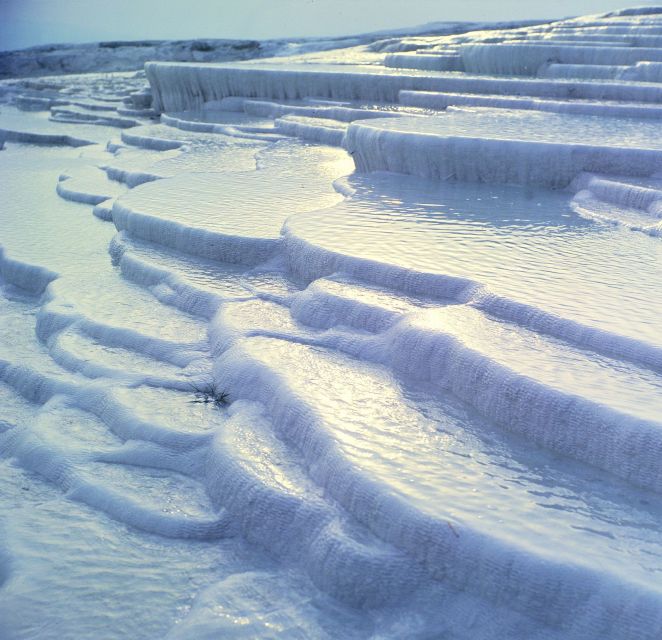
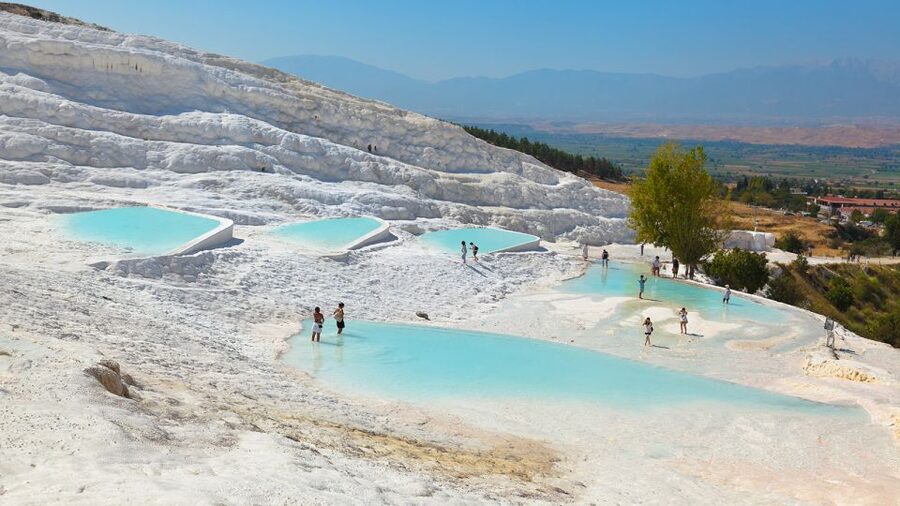
Pamukkale looks almost unreal: bright white limestone terraces spill down the hillside like frozen waterfalls, while warm mineral water trickles through shallow pools. Above them sits Hierapolis, an ancient spa city where Roman visitors came for the hot springs and the sacred vapors linked with Pluto, god of the underworld.
I like this tour for two clear reasons. You get the main ruins and travertines in one well-organized day, and an English-speaking local guide can make the gates, streets, cathedral, and thermal springs far easier to understand. The main caution is value: at $141, you pay a large premium for convenience, and Cleopatra Pool access may require a separate fee.
In This Review
- Key points to know before you book
- Pamukkale’s white terraces are the main event
- Hierapolis explains why people came here
- The hot springs offer a different kind of sightseeing
- A seven-hour schedule gives you the essentials
- The Pamukkale Museum adds useful context
- Lunch and shopping may affect your impression
- What the $141 price really buys you
- The guides receive the most consistent praise
- Who should book this Pamukkale day tour?
- FAQ
- Where does the tour start?
- How long does the tour last?
- What language is the tour conducted in?
- Are entrance tickets included?
- Is hotel transportation included?
- What should I bring?
- Can I cancel the booking?
Key points to know before you book
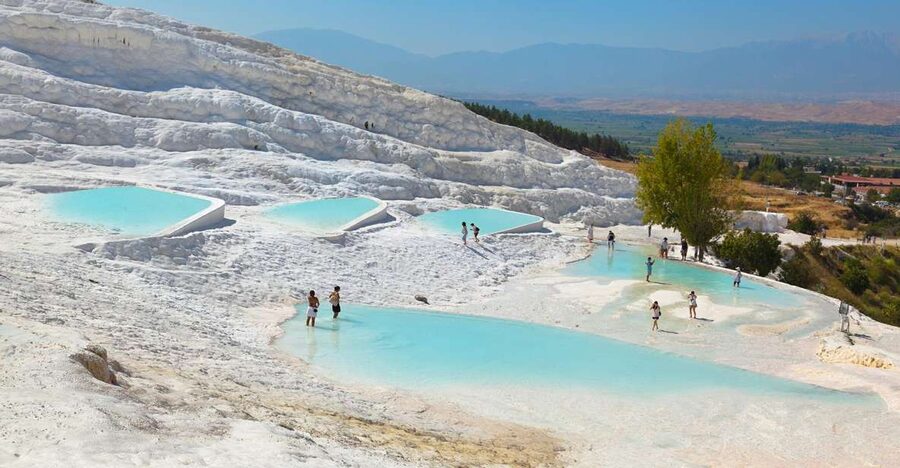
- The white travertines are the visual star: Pamukkale’s mineral terraces are best appreciated on foot, with water levels varying by season.
- Hierapolis adds real historical weight: Domitian Gate, the colonnaded street, cathedral, and hot springs help explain why this was a major ancient spa center.
- The guide can make or break the day: Elvan and Ahmed have been singled out for clear, friendly explanations, but the quality of commentary may vary.
- Cleopatra Pool may cost extra: The advertised entrance includes the main sites, but one stop reported an additional $8 fee for the pool and $1 for a locker.
- Hotel pickup is limited to Pamukkale: You cannot be collected from another city.
- Pack light and wear sensible shoes: Large bags are not allowed, and the stone paths call for comfortable footwear.
Pamukkale’s white terraces are the main event
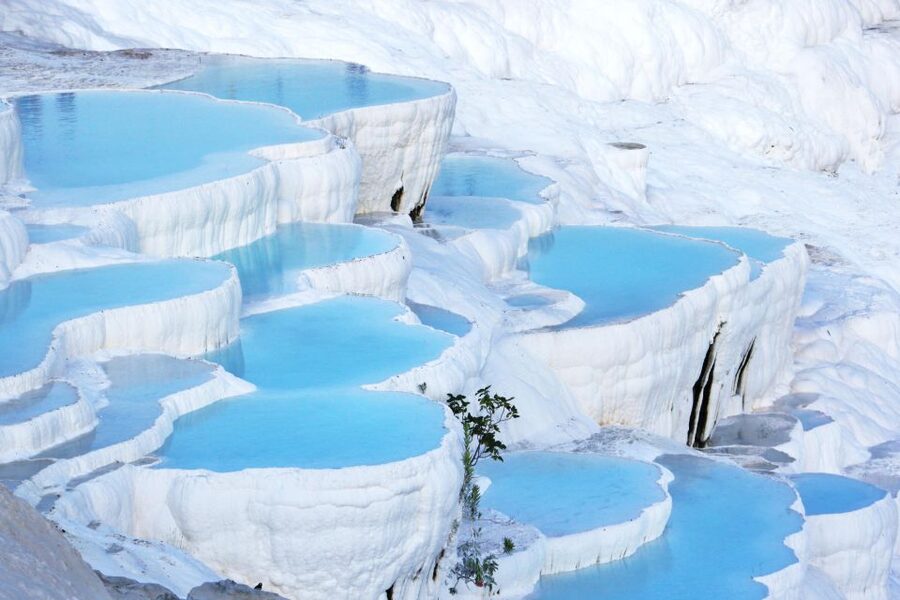
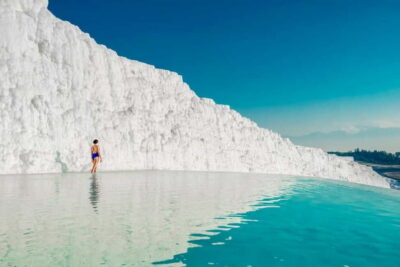
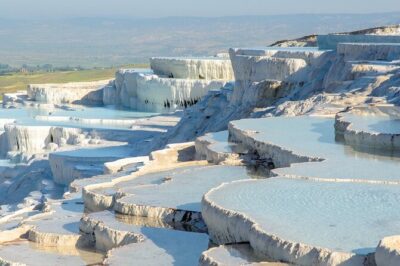
Pamukkale means cotton castle, a fitting name for the pale mineral slopes that spread below the ancient city. Hot spring water has left layers of calcium carbonate on the hillside, forming the famous travertines and shallow pools.
The color and amount of water can change. In some months, you may see more water flowing across the terraces; in others, parts of the surface can look drier. That variation matters because photos often show Pamukkale at its most brilliantly white and full of water, while your visit may look somewhat different.
You should expect time to walk around the travertines rather than simply view them from a coach. Comfortable shoes are essential, and a swimsuit is a smart addition if you plan to use the thermal waters. Large bags are not permitted, so bring only what you need for the day.
The terraces are beautiful, but they are not a conventional swimming pool. The experience is about walking through a remarkable natural formation, pausing for views, and feeling the warm water where access is permitted. Follow your guide’s directions and local rules, since the condition of the pools and accessible areas can change.
More Pamukkale & Hierapolis Tours in Pamukkale
- Pamukkale: Hot Air Balloon Flight with Flight Certificate
★ 4.5 · 277 reviews - From Selcuk/Kusadasi/Izmir: Pamukkale Full-Day Tour
★ 4.6 · 226 reviews - Pamukkale Hot Air Balloon w/Flight Certificates,Champagne Toast & Hotel Transfer
★ 4.5 · 207 reviews
Hierapolis explains why people came here
The ancient city of Hierapolis grew around the hot springs. Its name means Sacred City, and old stories connected its founding with Apollo. The steam rising from the springs was also linked with Pluto and the underworld, giving the site both a religious and medical reputation.
Roman visitors came for the water’s supposed healing qualities. Over time, the springs helped turn Hierapolis into a spa center where people could rest, seek treatment, and take part in the rituals and customs tied to the sacred site.
You will visit several key remains, including the Domitian Gate, the colonnaded street, and the cathedral. These stops give you a useful sense of the city’s structure. The gate marks a formal entrance, the long street shows how the urban center was laid out, and the cathedral points to the later religious life of the site.
The guide matters here. Without context, Hierapolis can look like a wide field of weathered stones. With a good explanation, the ruins become easier to read. Guides Elvan and Ahmed have received especially strong praise for making the history clear and helping people understand what they were seeing.
Do not expect every stone to be restored or every building to be fully explained. The appeal is in seeing the ancient city in relation to its springs and hillside setting. Pamukkale is not just a white mineral formation, and Hierapolis is not just a collection of ruins. Together, they show how nature shaped an entire city.
The hot springs offer a different kind of sightseeing
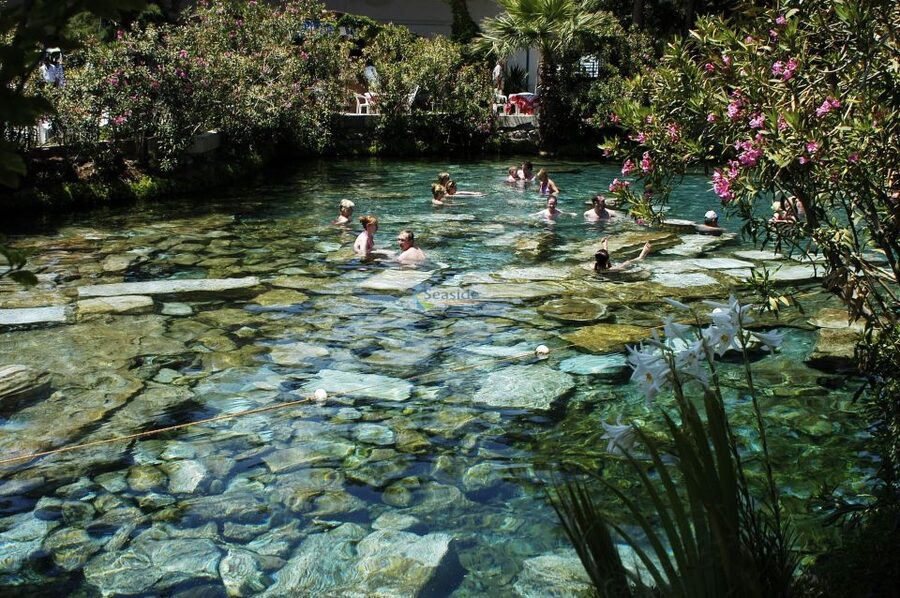
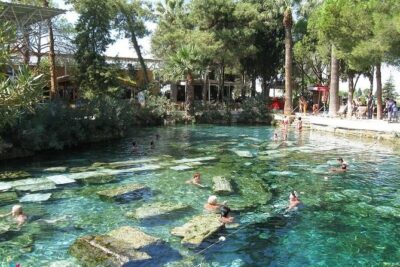
The thermal water is one of the reasons Hierapolis became famous. A soak can provide a welcome change after walking over the archaeological site and travertines, especially during a long day outdoors.
The tour information describes time to relax in the hot springs, but you should check exactly which bathing area is available on your date. Cleopatra Pool has sometimes been under renovation, and access to it has also been reported as an additional charge. One person paid $8 for entry and $1 for a locker, despite the tour’s included entrance tickets.
That distinction is important. The included tickets appear to cover the main archaeological and Pamukkale areas, but they may not cover every optional bathing facility. If the Cleopatra Pool is a must for you, ask the operator before booking what is open and what costs extra.
Bring a swimsuit. One person who visited in December specifically advised doing so, and it is the sort of small preparation that can make the day much better. Drinks are not included, so carry money for refreshments as well.
The springs are historically important, but you should not treat the water as a guaranteed medical cure. The ancient Romans valued its therapeutic powers, yet the tour’s appeal today is the combination of warm water, unusual geology, and an ancient spa setting.
A seven-hour schedule gives you the essentials
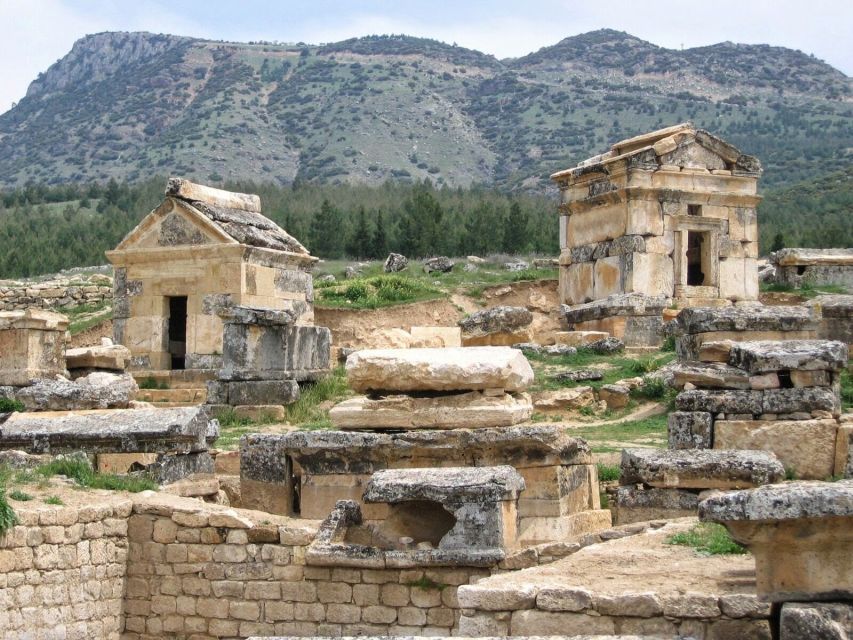
Seven hours is enough to see the main parts of Pamukkale and Hierapolis, but it is not an open-ended exploration. You will need to stay aware of the guide’s timing, particularly if you want time for bathing, museum visits, and photographs.
The day starts with pickup from your hotel in Pamukkale. Transport and return to the hotel are included, which removes the need to arrange separate local transfers. The pickup limit is strict: this tour starts in Pamukkale, and collection from another city is not available.
The usual focus is divided between the ancient city, the terraces, the museum, and the hot springs. A guide will help connect these stops, but the exact order can depend on operating conditions, access, and the day’s schedule.
You may find the seven-hour length comfortable if you want the major sights without spending an entire day on site. One person described the area as small enough to see in a few hours, including Hierapolis. That is useful perspective: this is not an enormous archaeological complex requiring several days.
Still, a guided schedule is less flexible than visiting independently. If you want to linger at one terrace, take a slow soak, or photograph the ruins in your own rhythm, you may feel pressed for time. The tour suits you best if you prefer a clear plan and a guide’s help over complete freedom.
More pamukkale & hierapolis tours in Turkiye:
- Pamukkale Hierapolis and Cleopatra’s Pool Tour with lunch from Antalya
★ 5.0 · 2,188 reviews - From Antalya/Kemer: Pamukkale and Hierapolis Tour with Lunch
★ 4.6 · 1,853 reviews - From Antalya/Kemer: Pamukkale & Hierapolis Day Trip w/Meals
★ 4.7 · 1,387 reviews - Antalya Pamukkale Hot Springs & Hierapolis Tour With Lunch
★ 5.0 · 1,092 reviews
The Pamukkale Museum adds useful context
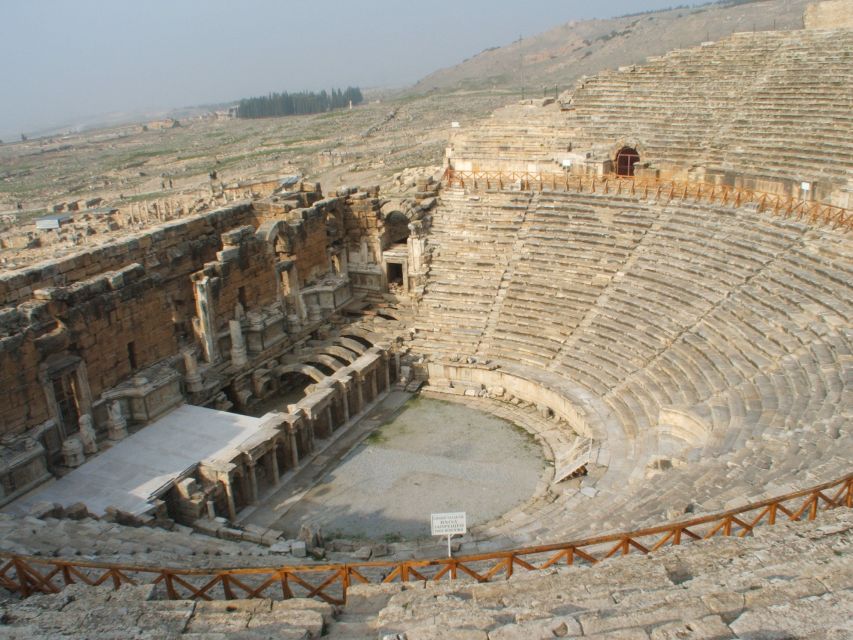
The Pamukkale Museum is included among the planned visits. A museum stop can help you understand objects found in and around Hierapolis, especially when the ruins themselves are spread across an open site.
Do not expect the museum to replace the outdoor visit. Its value is as a supporting stop, giving you a closer look at archaeological material after you have seen the gates, street, and religious remains in place.
If you are mainly visiting for photographs of the terraces, the museum may feel less urgent. If you enjoy connecting artifacts with the places where they were found, it adds another layer to the day. Your guide can also help you decide how much time to give it within the seven-hour program.
Lunch and shopping may affect your impression
The supplied plan includes the principal sights, but one reported day also included a buffet restaurant and a textile outlet. This is worth knowing before you book, since shopping stops can change the feel of a guided excursion.
One person found the buffet simple but excellent. Another described a meal at a remote-looking location as poor and objected to being taken to a textile outlet afterward, where towels and bags were offered for sale. These are sharply different experiences, so I would treat the meal and shopping portions as possible variables rather than a reason to book.
The important question is how much time these stops take. A short meal break can be practical during a seven-hour tour. A sales stop is less useful if you would rather spend that time at Hierapolis or the terraces.
If shopping is not your interest, ask the operator before departure if a textile stop is planned and how long it lasts. That simple question can prevent an unpleasant surprise and help you judge the tour’s value more fairly.
What the $141 price really buys you
At $141 per person, this is not the cheapest way to see Pamukkale. One person calculated that an independent visit could cost under $15 per person, although that estimate does not necessarily include every transport, ticket, guide, or bathing expense.
You are paying for hotel pickup and drop-off, an English-speaking guide, transport, and entrance tickets. That package has real value if you are staying in Pamukkale and want someone else to handle the day’s movement and explanations.
The price is harder to justify if you already have transport, are comfortable visiting ruins without a guide, and want to set your own pace. Pamukkale and Hierapolis are close together, and the main area can be covered in a few hours. Independent visitors also avoid the possibility of an unwanted shopping stop.
The guide is the strongest argument for paying more. Good explanations can turn a visit from a quick walk among ruins into a clearer picture of Roman spa life, sacred beliefs, and the role of the springs. The transport is the second argument, particularly if you value door-to-door convenience.
I would not book this tour solely because the word healing appears in the description. Book it for the practical package and the chance to have the site explained. Also budget for drinks and possibly the Cleopatra Pool, since those costs are not fully covered.
The guides receive the most consistent praise
The strongest pattern in the feedback is the guide’s role. Elvan was praised for being friendly and well informed, while Ahmed was credited with explaining the area’s history in a way that made the day more meaningful. Another person described a guide as positive, funny, helpful, and friendly.
That praise comes with an important qualification: a guided tour depends heavily on who leads it. The listed language is English, but the depth and style of the commentary may differ from one guide to another.
A good guide should help you understand why Hierapolis was built around the springs, what the main gates and streets were used for, and how Pamukkale’s natural deposits shaped the city’s fame. You should also expect time for questions. One person specifically appreciated having a guide who was available for doubts and explanations.
The overall rating of 4.1 from 17 reviews suggests a generally positive but not flawless experience. That seems fair. The core sights are exceptional, and some guides have made the day excellent. The price, optional pool charges, food, and possible shopping stop create the main points of concern.
Who should book this Pamukkale day tour?
I would recommend it if you are staying in Pamukkale, want hotel pickup, and prefer a guide to explain the ruins. It is also a good fit if you want to combine the travertines, Hierapolis, museum, and hot springs without arranging each part yourself.
It may work well for first-time visitors who would otherwise miss the meaning behind the Domitian Gate, colonnaded street, cathedral, and sacred springs. The seven-hour plan gives you a straightforward introduction without requiring several days at the site.
I would think twice if you are traveling on a tight budget or enjoy exploring at your own speed. The high price is difficult to defend when you can visit the compact site independently for much less, and the included ticket wording may not cover Cleopatra Pool or locker charges.
Before booking, confirm three things: the bathing area’s operating status, any extra pool fees, and whether the day includes a textile shopping stop. Those details will tell you if this is the right kind of convenience tour for you.
FAQ
Where does the tour start?
The tour starts from Pamukkale, with pickup at your hotel. Pickup from another city is not available.
How long does the tour last?
The tour lasts seven hours. Starting times depend on availability.
What language is the tour conducted in?
The live tour guide speaks English.
Are entrance tickets included?
Entrance tickets are included for the tour. Cleopatra Pool access may require an additional fee, and a locker may also cost extra.
Is hotel transportation included?
Yes. Hotel pickup and drop-off are included for hotels in Pamukkale.
What should I bring?
Bring comfortable shoes and a swimsuit if you plan to use the thermal waters. Drinks are not included, and large bags or luggage are not allowed.
Can I cancel the booking?
You can cancel up to 24 hours in advance for a full refund. The reserve now and pay later option allows you to hold a place without paying immediately.
More Full-Day in Turkiye
- Full Day Cappadocia Red and Green Combined Day Tour
★ 4.7 · 1,998 reviews - Full Day Cappadocia Tour( Red Tour + Underground City )
★ 5.0 · 1,862 reviews - Istanbul: Full-Day Highlights Tour with Guide and Lunch
★ 4.6 · 1,662 reviews - From Istanbul: Full-Day Princes Island Tour with Lunch
★ 4.0 · 1,550 reviews
Just added around Turkiye
- Full Day Cappadocia Highlights Private Tour (Car and Guide )★ 5.0 · 61 reviews
- Cappadocia Sunrise Camel Safari★ 4.5 · 28 reviews
- Cappadocia South Tour (Pro Guide, Tickets, Lunch, Transfer incl)★ 5.0 · 208 reviews
- Cappadocia Romantic Dinner İn The Valley with Concept★ 4.5 · 17 reviews
- Cappadocia Shared Transfer From/To Kayseri or Nevşehir Airport★ 4.5 · 64 reviews
- Cappadocia Red Tour (with zelve Open Air Museum and Paşabağ)★ 5.0 · 50 reviews
- Red (North) Tour Cappadocia (small group) with lunch and ticket★ 5.0 · 173 reviews
- Full day Cappadocia red tour with lunch★ 5.0 · 62 reviews
Pamukkale & Hierapolis Tours, compared.
Pamukkale Hierapolis and Cleopatra’s Pool Tour with lunch from Antalya
Read our review →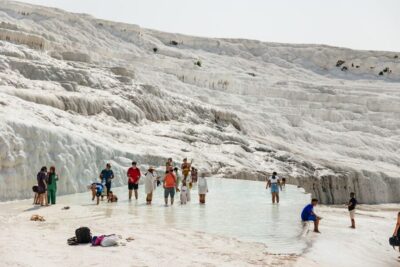

Antalya Pamukkale Hot Springs & Hierapolis Tour With Lunch
Read our review →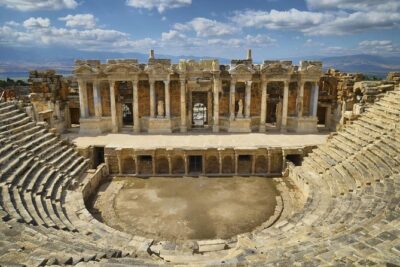
Full-Day Tour of Pamukkale from Antalya with Lunch
Read our review →

Full-Day Tour to Pamukkale From Marmaris w/ Breakfast & Lunch
Read our review →Browse the lists this tour appears in