
Reviewed · WORKSHOPS
Cappadocia Pottery Workshop Class
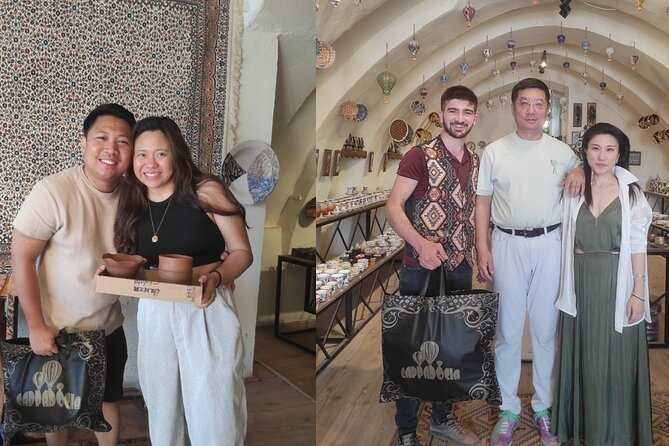
Cappadocia’s pottery tradition comes alive in Avanos, where you watch a skilled artist turn a lump of clay into a shaped vessel, then take a turn at the wheel yourself. The workshop draws on a family craft tradition said to span more than 300 years, and the demonstration is the clearest window into the skill behind those elegant ceramic pieces.
I like the low $10 price and the chance to handle clay rather than only admire finished work in a shop. I also like the relaxed extras: free tea, coffee, and water, plus time to browse the gallery after the lesson.
The main caution is timing. The advertised activity lasts about an hour, but the hands-on molding can be brief if the group is hurried. If you want a serious pottery lesson, this is not it. Think of it as a friendly introduction with a creative souvenir.
In This Review
- Key points to know before you go
- Avanos is the right place for a pottery lesson
- The opening demonstration shows what your hands are up against
- Your turn at the clay wheel
- What happens to the pot you make
- Gallery time brings a different kind of pottery lesson
- Free drinks and a friendly pace
- Is $10 good value?
- Who will enjoy this workshop most?
- Practical details that affect your visit
- My call: book it for a taste, not a full lesson
- FAQ
- Where does the pottery workshop take place?
- How long does the activity last?
- Is transportation included from Goreme?
- What is included in the price?
- Is the workshop offered in English?
- Can I cancel for a full refund?
Key points to know before you go
- The workshop takes place in Avanos, Cappadocia’s pottery center, not in Goreme itself.
- A skilled artist begins with a demonstration, showing how clay is centered, shaped, and turned into pottery.
- You get help while making your own piece, with all necessary equipment and clay supplied.
- The group size is limited to 10 people, though the exact amount of hands-on time can still vary.
- Tea, coffee, and water are free, a useful touch during a short lesson.
- Gallery purchases are separate, and the selection ranges from simple household pieces to very expensive designer ceramics.
Avanos is the right place for a pottery lesson
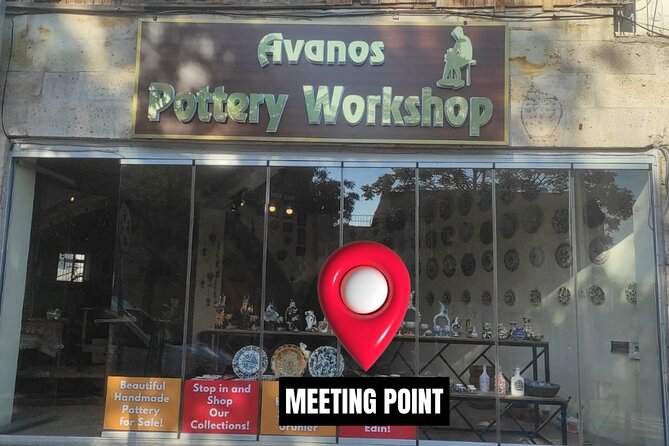
The workshop meets at Kybele Boutique Ceramic, at Alaaddin, Sanayi Cd. No. 33, in Avanos. That setting matters. Avanos is the Cappadocian town most closely linked with pottery, thanks to its clay-rich soil and long ceramic tradition.
If you are staying in Goreme, remember that this is not a walk-around-the-corner activity. The advertised experience includes no transportation, so you need to arrange your own way to Avanos. The venue is near public transportation, and one account specifically notes that having a car makes reaching it easier.
I would place this workshop alongside a visit to Avanos rather than treat it as a stand-alone trip from Goreme. You can make the class part of a wider day out, then explore the town instead of spending more time and money traveling only for a one-hour activity.
Arrive at the exact meeting point on time. The instructions ask you not to arrive earlier or later, so do not assume there will be a flexible check-in window. Your confirmation is sent when you book, and the ticket is mobile, which keeps things simple at the door.
A few more Goreme trips to weigh up
- Cappadocia Cooking Class
★ 5.0 · 29 reviews - Istanbul:Original Turkish Mosaic Lamp Workshop w/ Snacks
★ 4.9 · 3,077 reviews - Istanbul: Perfume Making Workshop with Bosphorus View
★ 5.0 · 2,985 reviews
The opening demonstration shows what your hands are up against
The class begins with a display of traditional pottery-making techniques. Watch closely here. The artist may make the process look effortless, but centering clay and keeping a vessel balanced requires control, pressure, and practice.
The demonstration is more than a quick show. It gives you a useful sense of how a plain lump of mud becomes a vase or another shaped object. You also receive some background on the role of clay in Turkish culture, adding context before you sit down to work.
The craft has a family connection at this venue. One especially memorable instructor described in the experience is a young granddaughter of the family’s oldest member, with more than 13 years of practice behind her. Her age may surprise you, but the point is clear: this is a living skill passed between generations, not simply a decorative display arranged for visitors.
I recommend watching the artist’s hands rather than only the finished form. Notice how little force is needed when the clay is centered, and how quickly too much pressure can change the shape. That short lesson helps you understand why handmade ceramics cost more than factory-made bowls.
Your turn at the clay wheel
After the demonstration, you mold clay with help from the instructor. The class supplies the necessary equipment, so you do not need to bring tools, an apron, or materials. You can try shaping a vase or another simple object, depending on the instructor’s direction and the time available.
This is the most enjoyable part, but it is also where expectations matter. You are not signing up for a long studio course. Several comments about the experience praise the instructor’s patient, one-on-one help, while also wishing for more independence and more time at the wheel.
That balance is easy to understand. Beginners need close guidance, especially when the clay starts to wobble. A helpful instructor can rescue a piece that is losing its shape, but that also means you may spend more time following instructions than experimenting with your own design.
One account described the actual pottery attempt as lasting about a minute. Another described the whole visit as taking around 10 minutes and feeling rushed. Those accounts do not match the advertised one-hour format, but they give you an important practical warning: ask at the start how much time each person will receive.
If you are visiting as a pair, make sure both people are included in the clay portion. The activity is sold per person, and the included pottery trial is intended for the booked participants. Clarify this before the lesson begins if the group is busy.
A group limit of 10 should help, but it does not guarantee a long turn. Ten people sharing a wheel, instructor, or demonstration can still mean limited practice time. If you care most about the making itself, go in with modest expectations and speak up politely if you need another minute.
What happens to the pot you make
The included item is the mud pot you create. That sounds like a simple souvenir, but fresh clay is not ready to pack into your suitcase. It needs time to dry and then must be fired before it becomes a durable ceramic object.
Because of that process, you may not leave with a finished, glazed pot in hand. One family account noted that children could shape pottery but could not take their pieces home because drying and firing take time. Ask the staff what happens to your piece after the class, including whether collection or shipping is possible.
The experience does not specify a firing or delivery arrangement, so do not assume one is included. The $10 cost covers the free pottery trial, equipment, drinks, and the created mud pot, but any later service should be confirmed directly at the workshop.
This is also a good reason to enjoy the act of making rather than judge the class only by the object you carry away. Your first pot may lean, bulge, or look nothing like the instructor’s. That is normal. The value is in feeling the clay respond and seeing how quickly a skilled hand can correct it.
Same city, a completely different kind of day:
- Cappadocia Hot Air Balloon Ride / Royal Balloon
★ 5.0 · 6,829 reviews - Cappadocia Hot Air Balloon Ride/ Turquaz Balloons
★ 5.0 · 3,330 reviews - Cappadocia Sunset ATV Tour
★ 5.0 · 2,984 reviews - Cappadocia Sunrise Hot Air Balloon Flight / Discovery Balloons
★ 5.0 · 2,882 reviews
Gallery time brings a different kind of pottery lesson
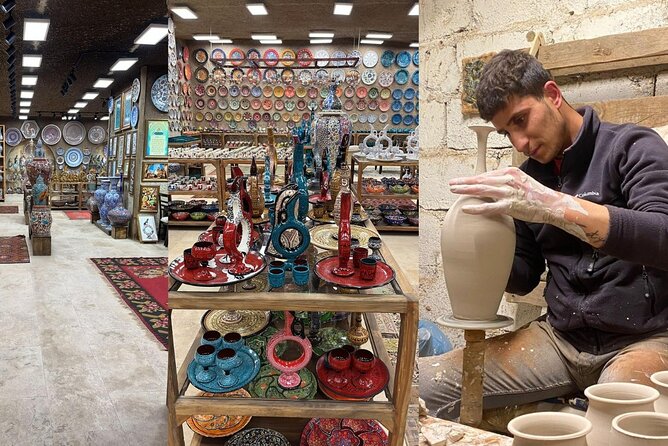
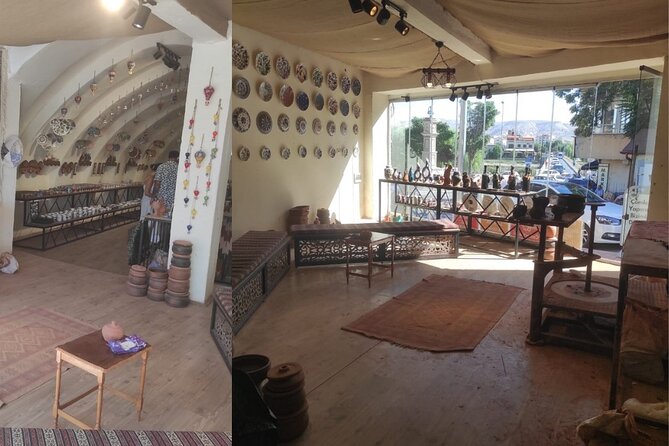
After the hands-on portion, you can walk through the gallery at your own pace. The display includes traditional handicrafts, everyday household ceramics, and more elaborate designer pieces.
Prices can vary wildly. Items have been described as ranging from about 10 Turkish lira to as much as 3 million Turkish lira. That spread tells you to browse carefully and ask about prices before deciding that a piece is within your budget.
I like having the gallery visit after the demonstration. Once you have struggled with the clay yourself, you see finished ceramics differently. The smooth curves, painted details, and balanced proportions no longer look effortless.
You are not required to buy anything. Still, the setting clearly gives you the chance to shop, and an account of the visit described a 50 percent discount offered on selected purchases after the workshop. Treat that as something to confirm on the day, not as a guaranteed part of the booking.
If you do buy, think about transport. A small ceramic bowl is easier to protect than a large vase, and you should ask how fragile pieces are packed for travel. The workshop information does not promise shipping, so get clear answers before paying for an expensive item.
Free drinks and a friendly pace
Tea, coffee, and water are included. These are small extras, but they make the visit feel less like a quick sales stop and more like a social introduction to the craft.
The staff has received strong praise for being warm and helpful, especially during the shaping session. A patient instructor can make a big difference when you are trying clay for the first time. You can also use the drinks and gallery time to slow down after the demonstration instead of rushing straight back outside.
At the same time, friendliness does not replace hands-on time. If the instructor is serving a full group, the experience may feel more like a demonstration with brief participation than a private lesson. That is the key distinction to keep in mind when booking.
The workshop is offered in English, which should make the basic instruction accessible to English-speaking visitors. The available information does not identify the instructor by name, so do not expect a particular teacher unless the operator confirms one before your visit.
Is $10 good value?
At $10 per person, this is an inexpensive way to add a local craft activity to a Cappadocia trip. The price includes the pottery trial, equipment, your clay creation, and tea, coffee, and water. For a short cultural stop, that is good value.
The price looks especially fair if you want a first try at pottery, have children who enjoy making things, or plan to shop for ceramics afterward. You are paying for access, instruction, and a chance to work with clay, not for a finished professional pot or a full studio course.
Value becomes less clear if your main goal is extended wheel time. A one-hour advertised duration can pass quickly once you allow for the demonstration, explanations, individual turns, and gallery visit. If you receive only a minute or two at the clay, you may feel the lesson is more promotional than practical.
I would book it as a light, affordable activity, not as the main cultural event of your Cappadocia visit. Before starting, ask how the hour is divided and whether every booked person gets an individual turn. That simple question can prevent disappointment.
Who will enjoy this workshop most?
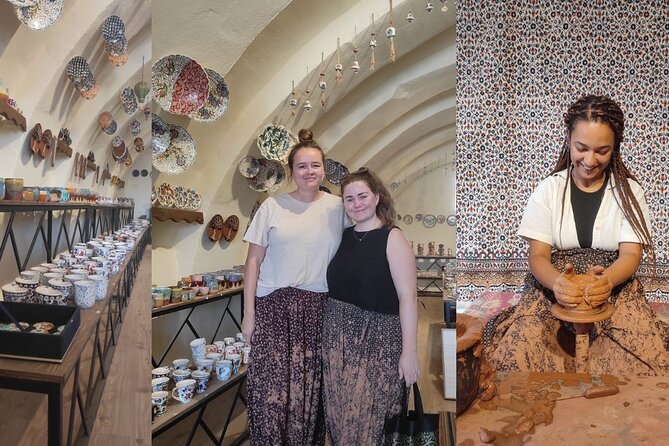
This suits you if you want a hands-on introduction without committing half a day to a formal class. It also works well for couples, families, and first-time pottery makers who are happy to receive close guidance.
Children can take part, but parents should ask what will happen to their pieces afterward. The clay may need drying and firing, so a child may not be able to carry home a finished item that same day.
The workshop is also useful for anyone curious about buying Cappadocian ceramics. You get a quick look behind the finished products, and that makes gallery browsing more meaningful. Even if you buy nothing, you gain a better sense of why handmade pieces differ in shape, detail, and price.
I would be more cautious if you are an experienced potter or want to choose your own designs. The lesson seems built around basic shaping with instructor support, and one account specifically wished for more freedom and more time.
Practical details that affect your visit
The activity lasts approximately one hour and ends back at the meeting point. There is no hotel pickup or return transportation included, so plan the route to Avanos yourself.
The group maximum is 10 people. That is small enough for a personal feel in theory, but the amount of individual attention depends on how the session is run. Arrive ready to begin at the stated time, since the instructions stress punctuality.
Most people can participate, and the venue is near public transportation. The experience is offered in English and uses a mobile ticket, so keeping the confirmation on your phone should be sufficient.
Free cancellation is available if you cancel at least 24 hours before the local start time. Cancellations made inside that window are not refunded, and late changes are not accepted.
My call: book it for a taste, not a full lesson
I would book the Cappadocia Pottery Workshop if I wanted a cheap, easy introduction to Avanos ceramics, especially as part of a day that already included the town. The demonstration, family craft connection, gallery, and chance to shape clay create a pleasant mix of culture and activity.
I would not book it expecting a long private lesson, a finished fired pot, or complete freedom to create a personal design. Ask how much wheel time you will receive, confirm that every person in your booking gets a turn, and clarify what happens to the piece afterward.
At $10, the risk is low. Just keep the experience in the right category: a short pottery encounter with a gallery visit, not a serious ceramics course.
FAQ
Where does the pottery workshop take place?
The workshop meets at Kybele Boutique Ceramic, Alaaddin, Sanayi Cd. No. 33, 50500 Avanos, Nevşehir, Türkiye.
How long does the activity last?
The advertised duration is approximately one hour, and the activity ends back at the meeting point.
Is transportation included from Goreme?
No. Transportation is not included. You must make your own way to the meeting point in Avanos.
What is included in the price?
The price includes a free pottery trial, all necessary equipment, tea, coffee, water, and the mud pot you create.
Is the workshop offered in English?
Yes. The experience is offered in English.
Can I cancel for a full refund?
Yes, if you cancel at least 24 hours before the local start time. Cancellations or changes made less than 24 hours before the experience are not refunded or accepted.
Just added around Goreme
- Full Day Cappadocia Highlights Private Tour (Car and Guide )★ 5.0 · 61 reviews
- Cappadocia Sunrise Camel Safari★ 4.5 · 28 reviews
- Cappadocia South Tour (Pro Guide, Tickets, Lunch, Transfer incl)★ 5.0 · 208 reviews
- Cappadocia Shared Transfer From/To Kayseri or Nevşehir Airport★ 4.5 · 64 reviews
- Cappadocia Romantic Dinner İn The Valley with Concept★ 4.5 · 17 reviews
- Cappadocia Red Tour (with zelve Open Air Museum and Paşabağ)★ 5.0 · 50 reviews
- Red (North) Tour Cappadocia (small group) with lunch and ticket★ 5.0 · 173 reviews
- Full day Cappadocia red tour with lunch★ 5.0 · 62 reviews
Workshops, compared.
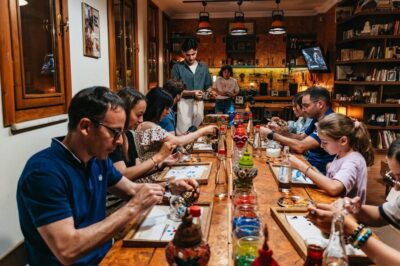
Original Turkish Mosaic Lamp Workshop w/ Snacks
Read our review →

Turkish Coffee Making and Fortune Telling Workshop
Read our review →
Turkish Mosaic Lamp Workshop with Bosphorus View
Read our review →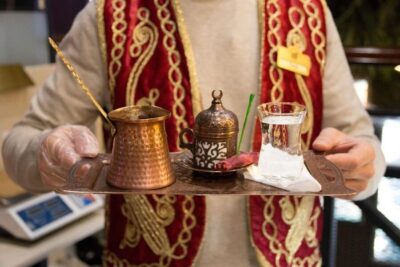
Turkish Mosaic Lamp Workshop in Galata – All Included
Read our review →
Turkish Coffee Making and Fortune Telling Workshop
Read our review →Browse the lists this tour appears in