
Reviewed · EPHESUS TOURS
From Istanbul: 2 Days Private Pamukkale and Ephesus Tour
Pamukkale’s white thermal terraces and Ephesus’ grand Library of Celsus make an unusually strong two-day pairing. One stop is shaped by hot mineral water; the other by Roman engineering, trade, and worship. You get both without arranging domestic flights, hotels, airport rides, and local guides yourself.
I like the private format, which gives your group room to ask questions and sometimes add a short stop. I also like the tidy transport plan: flights, hotel pickup, airport transfers, a Kusadasi overnight, breakfast, and two lunches are bundled together. The catch is that museum entry fees, Cleopatra’s Pool, dinner, and personal expenses are extra, so the $350 price is not the final amount.
In This Review
- Key points to know
- Why this two-day pairing works from Istanbul
- Walking barefoot across Pamukkale’s white terraces
- Hierapolis, a Roman city above the springs
- Lunch and the practical side of day one
- An overnight in Kusadasi with breakfast
- Ephesus and the Library of Celsus
- The House of Mother Mary and the Temple of Artemis
- Guides, transport, and the private-group advantage
- What the $350 price really covers
- What to pack for the two days
- Who should book this Pamukkale and Ephesus tour?
- FAQ
- What is included in the $350 tour price?
- Are entrance fees included?
- Is dinner included?
- Which languages are available?
- Is the tour private?
- Where do I stay overnight?
- Can I enter the water at Pamukkale?
- Can the activity order change?
- Should you book it?
Key points to know
- Pamukkale is a barefoot experience: Bring swimwear, a towel, sunscreen, and a change of clothes if you plan to enter the warm water.
- Hierapolis adds real archaeological depth: You will see a Roman theater, necropolis, and ancient pool above the terraces.
- Ephesus gets the longest historical focus: The Library of Celsus, Great Theatre, and Temple of Hadrian form the core of the visit.
- Kusadasi makes the overnight practical: You sleep near the second day’s sights instead of returning to Istanbul between stops.
- Private guiding is a major advantage: Guides such as Cetin, Bilal, and Cargi have been praised for clear explanations and local knowledge.
- The flight schedule controls the pace: The order of stops can change, so keep both days flexible.
Why this two-day pairing works from Istanbul
Pamukkale and Ephesus are both in western Turkey, but they offer very different experiences. Pamukkale is about geology, bathing, and a hilltop Roman spa city. Ephesus is about streets, monuments, religion, and daily life in one of the ancient world’s major cities.
Trying to connect both places independently from Istanbul can mean juggling domestic flights, long road transfers, hotel arrangements, and local transport. This tour takes care of that chain. You are collected from your hotel lobby, taken to the airport, flown to Denizli, driven to Pamukkale, and then transferred to Kusadasi for the night.
The private group setup matters here. A guide can adjust explanations to your interests, answer questions as they come up, and sometimes make an extra stop when the schedule allows. Families may especially appreciate not having to match the pace of a large coach group.
Still, this is a full two days. Airport transfers, flight times, road journeys, sightseeing, and two lunches all fit into a compact schedule. You gain efficiency, but not much spare time. Keep your first and last days in Istanbul free of important plans in case flight times affect the order.
More Ephesus Tours in Istanbul
- 4 Days Turkey Tour – Cappadocia, Ephesus and Pamukkale Tour
★ 5.0 · 138 reviews - 6 Days Turkey Tour Cappadocia, Pamukkale, Ephesus, Gallipoli Troy
★ 5.0 · 109 reviews - 7 Days Best of Turkey Tour: Istanbul-Cappadocia-Ephesus-Pamukkale
★ 5.0 · 91 reviews
Walking barefoot across Pamukkale’s white terraces
Pamukkale means cotton castle, a fitting name for the bright mineral terraces that spill down the hillside. Warm, calcium-rich water has formed these pale pools over time, creating one of Turkey’s most unusual natural sights.
You will remove your shoes and walk along the permitted terrace paths. The water is warm, but the stone can feel uneven and slippery. Comfortable shoes are essential for the approach and the rest of the site, while a small towel and spare clothes are useful if you get wet.
The visual effect changes with the light and the amount of water flowing through each section. Some pools may be full and blue-white; others may be shallow or dry. That variation is part of the site’s character, but you should not expect every terrace to look like a full natural swimming pool.
Bring sunglasses and a hat. The bright stone reflects strong sunlight, and there may be little shade. Sunscreen is also sensible. The supplied packing advice includes swimwear, a towel, and a change of clothes, which tells you how practical this part of the day can be.
One important detail: Cleopatra’s Pool is not included. You can visit the ancient pool as part of the Hierapolis area, but entering the pool requires a separate payment. If bathing there matters to you, budget for that extra cost and bring suitable clothing.
Hierapolis, a Roman city above the springs
Pamukkale is more than a pretty natural site. At the top of the hill sits Hierapolis, an ancient city built around the hot springs. Romans came here for the water, and the ruins show how a spa settlement grew into a major urban center.
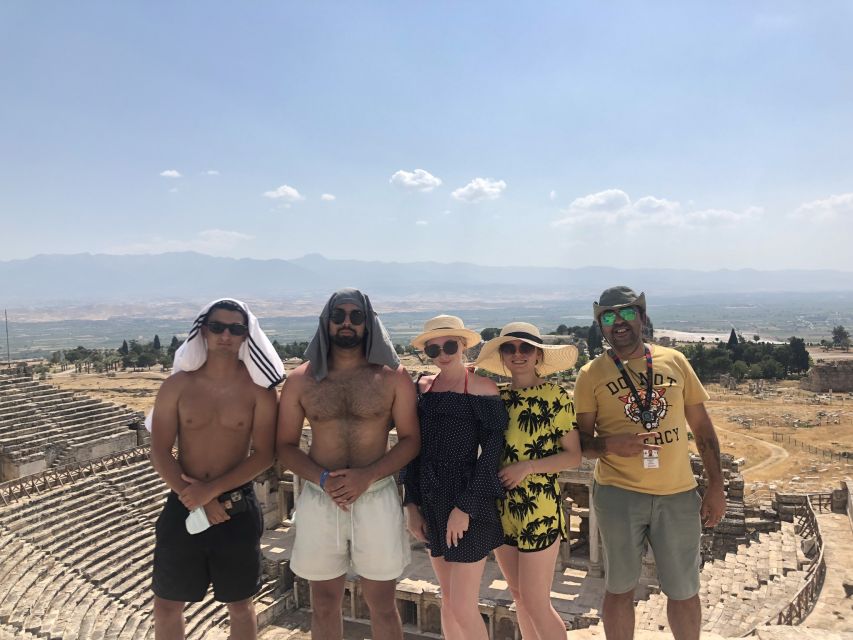
Your guide will point out the Roman theater, whose surviving structure gives you a sense of the city’s public life. The necropolis is another major feature. Its tombs stretch through the ancient city and show how important Hierapolis became as a place of healing and pilgrimage.
The ancient pool, often called Cleopatra’s Pool, adds a more personal angle. Instead of only looking at ruins, you can see how the spring water remained part of the site’s appeal. The separate entrance fee is the main limitation, especially if you already feel the tour price is high.
A licensed guide is useful at Hierapolis because the ruins can seem scattered at first. A good explanation connects the theater, baths, streets, tombs, and springs into one story. Guides named Cetin, Bilal, and Cargi have received particularly strong praise for explaining both archaeology and geology in clear terms.
Lunch and the practical side of day one
Lunch is included on both days, and the first meal features local flavors. This saves you from searching for a restaurant during a tightly planned sightseeing day.
Do not expect the tour to function like a free food tour. Meals are part of the transport schedule, and the second lunch is served at a handicraft center. After eating, you will see Turkish handmade crafts. That can be interesting if you want a look at local production, but it also means some of your time is connected to a shopping setting.
The arrangement is worth knowing in advance. If you prefer to spend every spare minute at archaeological sites, the handicraft stop may feel like a detour. If you enjoy seeing local crafts and want a break from ruins, it gives the second day a different rhythm.
More Pamukkale & Hierapolis Tours in Istanbul
- Private 4 Days Turkey Tour from Istanbul to Cappadocia, Ephesus, Pamukkale
★ 5.0 · 80 reviews - 4 Day Turkey Tour: Cappadocia, Ephesus, Pamukkale by Plane
★ 4.5 · 32 reviews - From Istanbul: Private Pamukkale and Hierapolis Day Tour
★ 4.2 · 19 reviews
An overnight in Kusadasi with breakfast
After Pamukkale and Hierapolis, you are driven to Kusadasi for the night. This is a sensible base for Ephesus, and it prevents the exhausting mistake of trying to return to Istanbul after the first day.
The accommodation includes breakfast. One stay mentioned by name is Efe Boutique Hotel, where a sea view was part of the appeal. The exact hotel may vary, so treat the hotel category and location as more reliable than any specific room feature.
The overnight also gives you a small reset between the natural sights of Pamukkale and the dense archaeology of Ephesus. You can relax in the evening, although dinner is not included. Plan to pay for that meal yourself.
The hotel transfer is included, but keep your phone ready. One useful practical tip is to have mobile internet available. Some transfer drivers may not speak English, and a translation app can help prevent confusion at hotel pickups. Confirm the hotel name and keep the tour operator’s contact details handy.
Ephesus and the Library of Celsus
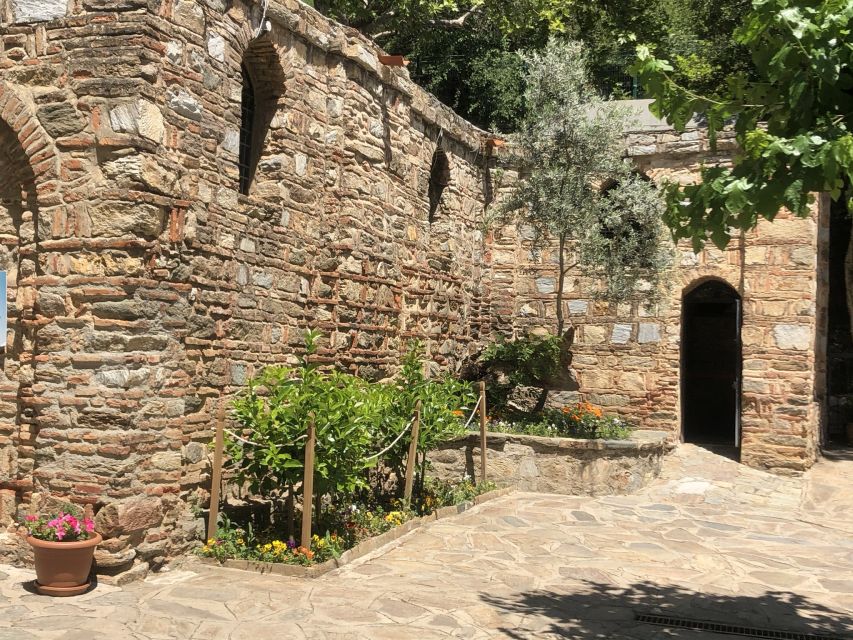
Ephesus is the centerpiece for many people on this trip. Once a major Roman city, it offers a connected sequence of streets, public buildings, theaters, and religious sites rather than a single isolated monument.
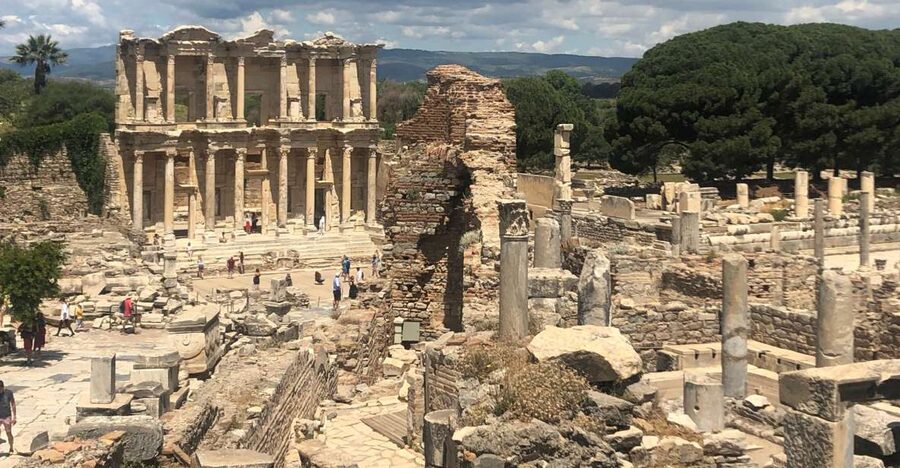
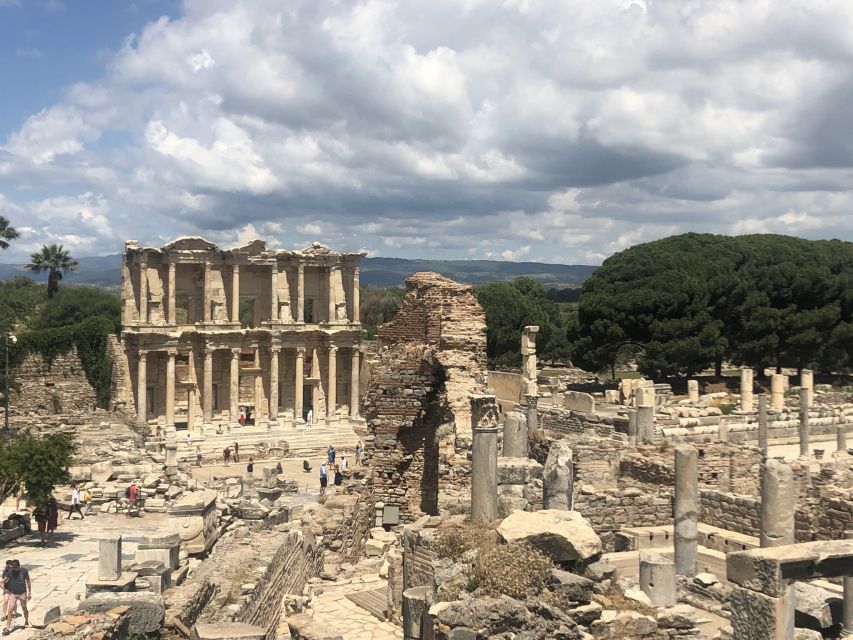
The Library of Celsus is the familiar highlight. Its restored facade has columns, statues, and a strong sense of theater. It was built as a memorial to Tiberius Julius Celsus Polemaeanus and once held a large collection of scrolls. Your guide can help separate what is original from what has been reconstructed.
The Great Theatre is another memorable stop. Its scale shows how public performances, speeches, and civic gatherings shaped city life. From its seating area, you can understand the size of the ancient population and the importance of public spectacle.
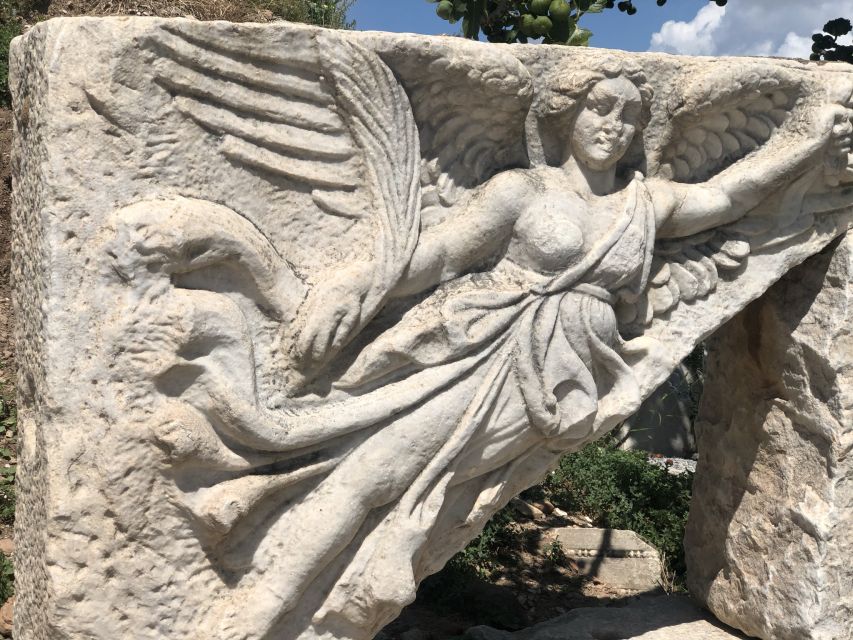
The Temple of Hadrian adds a smaller but finely detailed monument to the route. Its carved doorway and decorative elements make it a useful reminder that Ephesus was not only about huge buildings. Small architectural details often reward a slower look.
Wear shoes with firm soles. Ancient paving can be uneven, and you will spend a good part of the visit walking outdoors. Sun protection matters here too, especially because the bright stone and open streets can make the heat feel stronger.
The House of Mother Mary and the Temple of Artemis
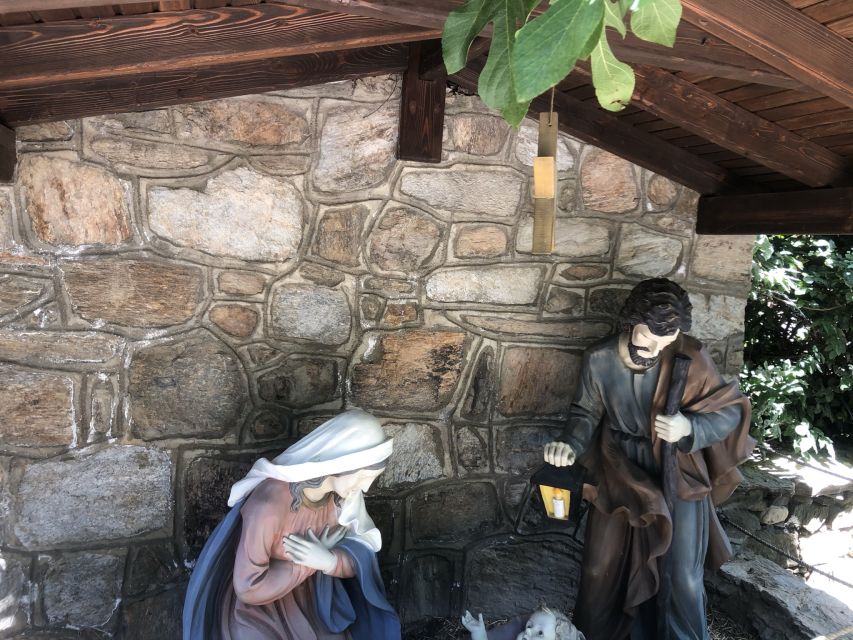
The House of Mother Mary is a sacred site associated with the final years of the Virgin Mary. It is also a place of pilgrimage, so the mood differs from the open-air streets of Ephesus.
Expect a quieter stop and a chance to pause. The importance of the site is religious rather than archaeological alone, and your guide can explain its place in Christian tradition. Dress and behave respectfully, as you would at any active place of worship.
The Temple of Artemis is a very different sight. It was one of the Seven Wonders of the Ancient World, but only limited remains are visible today. Do not arrive expecting another Ephesus. The value lies in understanding the temple’s former scale and importance, even though the surviving ruins are sparse.
This is where a guide makes the difference. Without context, a few stones can be easy to overlook. With the story of the temple’s fame, destruction, rebuilding, and religious role, the stop becomes more meaningful.
Guides, transport, and the private-group advantage
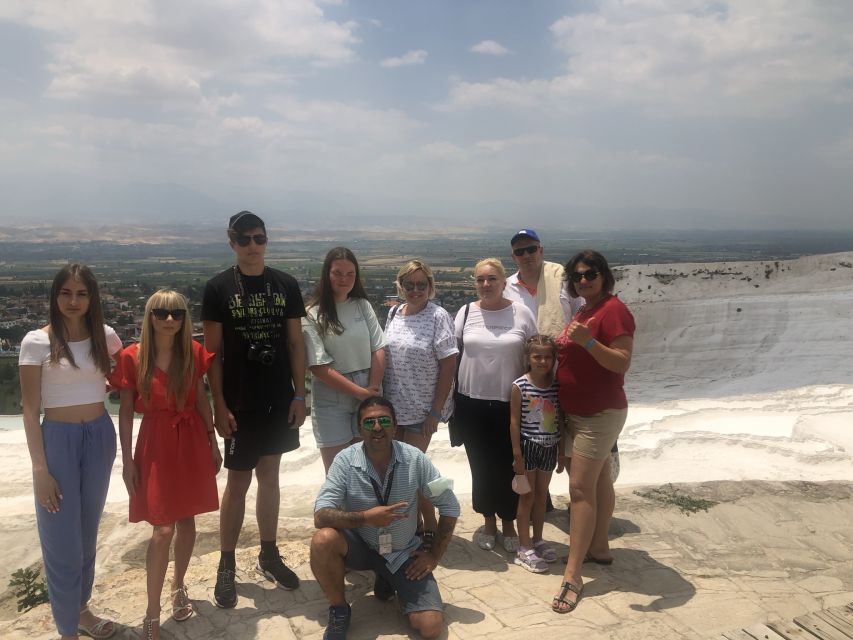
The guide is central to the quality of this tour. Names associated with the experience include Cetin, Bilal, and Cargi, sometimes written as Cargi or Char without the Turkish letters. The strongest guide qualities are clear communication, strong archaeological and geological explanations, and familiarity with the local area.
A private group means the experience is not built around a fixed coach commentary. You can ask why a monument matters, request more detail about Roman life, or ask practical questions about food, transport, and local customs.
Transport is another strong point. Domestic flights and airport transfers are arranged, and the car or vehicle used for local travel has been described as comfortable. That matters after walking across Pamukkale and through Ephesus.
The weak point is coordination. Your schedule depends on flight times, and the order of activities can change. Transfer drivers may also have limited English. Keep your passport with you, watch your phone for messages, and allow your guide or agency time to confirm each pickup.
The tour is advertised in English and Spanish. Wheelchair access is also listed, but Pamukkale’s uneven terraces and ancient surfaces can still make some portions challenging. If you use a wheelchair, confirm which parts of each site can be reached comfortably before booking.
What the $350 price really covers
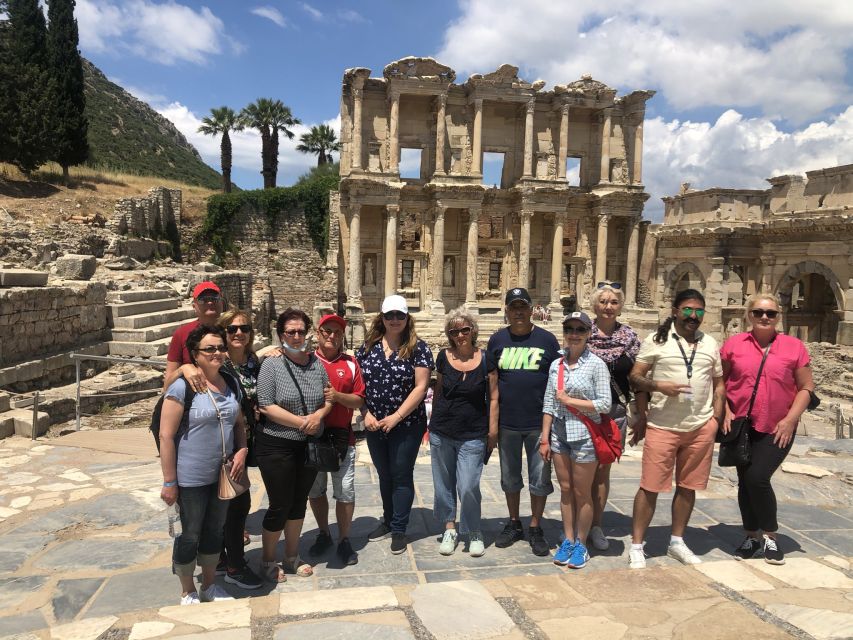
At $350 per person, this is not simply a guided sightseeing day. The price includes hotel pickup and drop-off in Istanbul, domestic flights, airport transfers, one night of accommodation with breakfast, two lunches, and a professional licensed guide.
That bundle can be good value if you want to see both sites without arranging the moving parts yourself. Domestic airfare alone can vary, and the cost of private road transfers between airports, Pamukkale, Kusadasi, and Ephesus would quickly add up.
The price does not cover entrance tickets to museums, Cleopatra’s Pool, dinner, gratuities, or personal spending. Those additions are important when you compare this tour with a cheaper group option. Ask for the current entrance costs before departure, since ticket prices can change.
The handicraft-center lunch stop may also affect your sense of value. It is included and practical, but part of the second day is tied to viewing Turkish handmade goods. You should know that before choosing a private tour focused only on ruins.
Free cancellation up to 24 hours before departure and reserve-now, pay-later booking make the financial commitment easier. The key question is not only the headline price. It is how much you value having flights, hotel, and transfers handled in one package.
What to pack for the two days
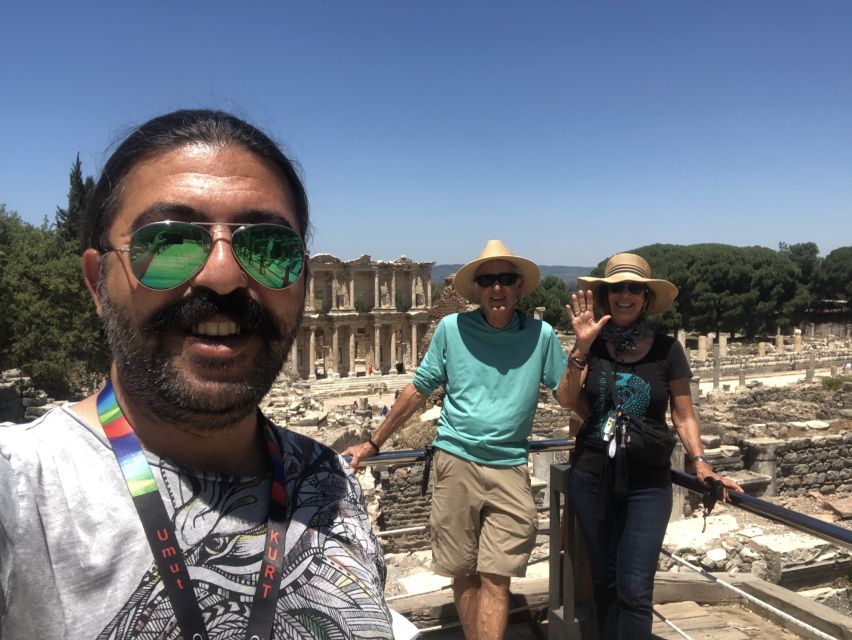
Keep your passport accessible for the domestic flights. Pack comfortable walking shoes, sunglasses, a sun hat, sunscreen, and a camera.
For Pamukkale, add swimwear, a towel, and spare clothes. Even if you decide not to enter Cleopatra’s Pool, you may encounter warm water and wet stone during the terrace walk.
A phone with mobile internet is especially useful. The tour operator handles the transport, but a translation app may help when speaking with transfer drivers who do not use English.
Because dinner is not included, carry a way to pay for your evening meal and other personal expenses. Gratuities are also separate.
Who should book this Pamukkale and Ephesus tour?
I would recommend it to you if you are based in Istanbul and want to add western Turkey without spending several days planning transport. It suits first-time visitors who value a private guide, a compact schedule, and airport logistics handled for them.
Families can benefit from the private setting, since the pace is easier to manage than on a large group excursion. History-minded visitors will get the most from the guide’s explanations at Hierapolis, Ephesus, and the Temple of Artemis.
It is less suitable if you want long, unplanned time at each site or dislike fixed meal stops. The two-day plan is efficient, not leisurely. You also need to accept extra entrance fees and the possibility that flight schedules will rearrange the order.
FAQ
What is included in the $350 tour price?
The price includes hotel pickup and drop-off, domestic flight tickets, airport transfers, one night of accommodation with breakfast, two lunches, and a professional licensed tour guide.
Are entrance fees included?
No. Museum entrance fees are not included. Cleopatra’s Pool also requires a separate entrance payment.
Is dinner included?
No. Dinner is not included, so you need to arrange and pay for your evening meal in Kusadasi.
Which languages are available?
The tour offers live guiding in English and Spanish.
Is the tour private?
Yes. It is organized for a private group rather than a shared coach group.
Where do I stay overnight?
You stay in Kusadasi for one night. The exact hotel can vary, and Efe Boutique Hotel is one accommodation associated with the experience.
Can I enter the water at Pamukkale?
You can walk barefoot along the terraces and feel the warm water. Cleopatra’s Pool is optional and requires a separate entrance fee. Swimwear, a towel, and spare clothes are recommended.
Can the activity order change?
Yes. The order of the stops may change depending on the flight schedule for your chosen dates.
Should you book it?
Book this tour if your priority is maximum sightseeing with minimum planning. The strongest value comes from combining flights, transfers, a Kusadasi hotel, lunches, and a private guide in only two days.
Before paying, set aside money for site entrances, Cleopatra’s Pool, dinner, and gratuities. Confirm your flight times, keep mobile internet available, and be ready for a brisk schedule. If those conditions suit you, this is a practical way to connect two of western Turkey’s finest ancient and natural sights from Istanbul.
More 2-Day Experiences in Istanbul
- Istanbul: 1 or 2-Day Hop-On-Hop-Off Bus Tour Ticket
★ 4.1 · 863 reviews - Istanbul: 1 or 2-Day Private Guided Tour with Hotel Transfer
★ 4.7 · 438 reviews - From Istanbul: 2-Day All-Inclusive Cappadocia Guided Trip
★ 4.9 · 380 reviews - Istanbul: 2-Day Cappadocia Trip with Flights and Cave Hotel
★ 4.7 · 318 reviews
Just added around Istanbul
- Topkapi Palace&Harem-Guided Tour-Skip lines- All tickets inc★ 4.8 · 66 reviews
- Istanbul: Topkapi Palace Skip-the-Line Ticket & Guided Tour★ 4.2 · 178 reviews
- Istanbul Highlights Small-Group Walking Guided Tour★ 4.4 · 179 reviews
- Istanbul: Private Guided Food Tour with 10 Tastings★ 4.7 · 49 reviews
- Istanbul: Belly Dancing, Show, & Dinner at Sultana’s Ticket★ 3.8 · 71 reviews
- Istanbul: Private Local Food & Markets Experience★ 4.9 · 27 reviews
- Skip-the-Line Hagia Sophia Digital Tickets w/Audio Guide★ 4.3 · 23 reviews
- Istanbul: Guided Shopping Trip with Turkish Coffee Tasting★ 4.7 · 37 reviews
Ephesus Tours, compared.
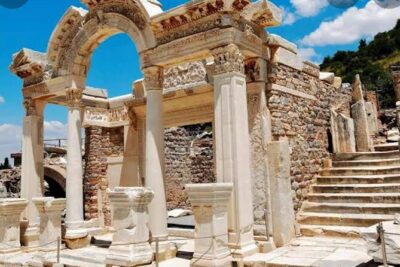
FOR CRUISERS: Skip The Lines PRIVATE EPHESUS TOUR &On Time Return
Read our review →
For Ship Guests:BEST SELLER EPHESUS PRIVATE TOUR & On Time Return
Read our review →
ALL INCLUDED: Ephesus Ruins, Mary’s House Tour incl ENTRY TICKETS
Read our review →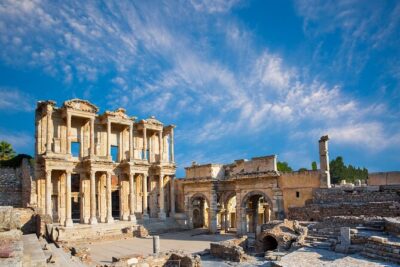
PRIVATE TOUR FOR CRUISERS: Mary’s House (Meryemana) and Ephesus
Read our review →
Top-Rated: Ephesus & Artemis Tour for Cruisers WITH ENTRY TICKETS
Read our review →
SKIP-THE-LINE: Group & Private Ephesus Tour ENTRY FEE & LUNCH
Read our review →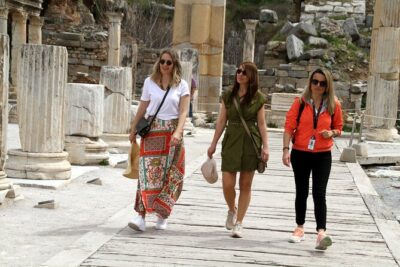
All Inclusive Private Access Ephesus Tour (SKIP-THE-LINE)
Read our review →Browse the lists this tour appears in