
Reviewed · MUSEUMS
Turkish and Islamic Arts Museum: Entry Ticket & Audio Guide
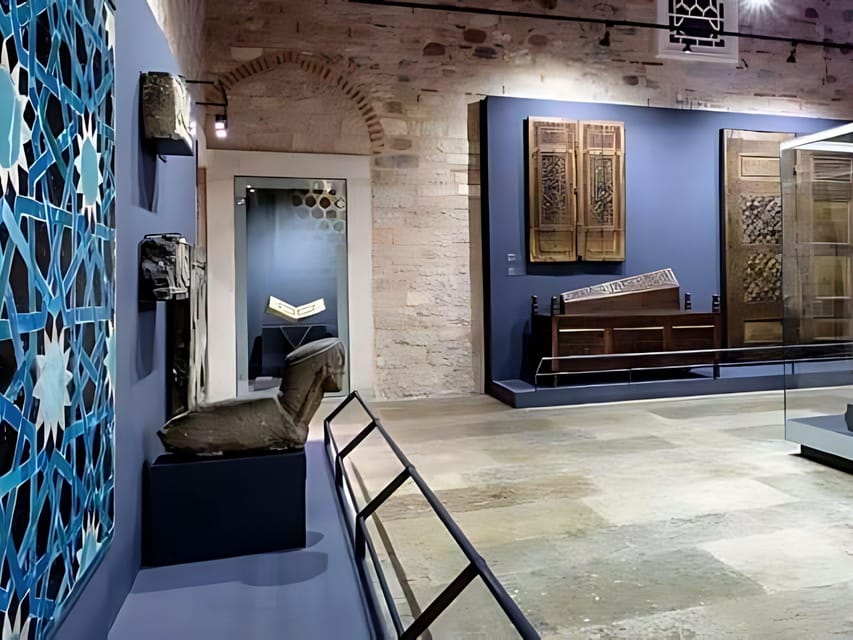
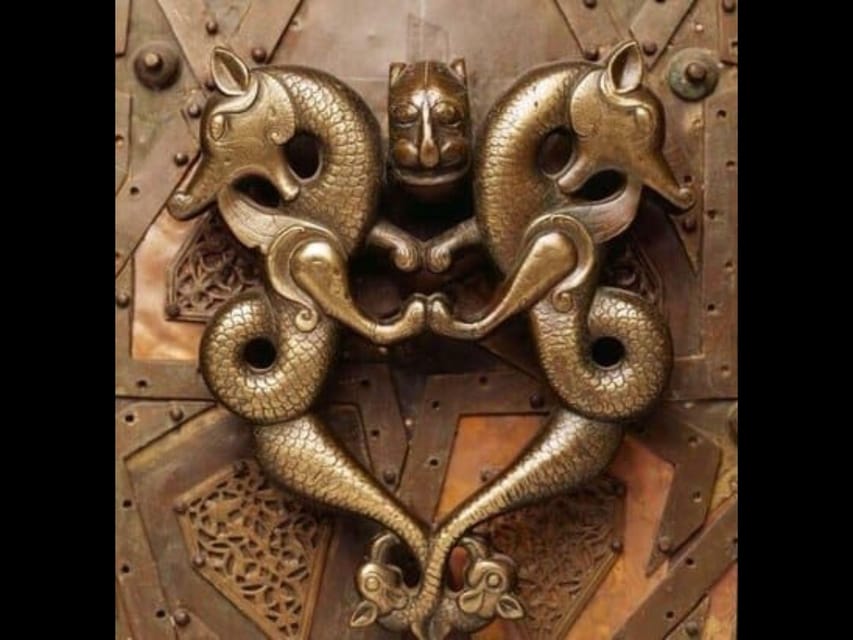
The finest reason to visit the Turkish and Islamic Arts Museum is the setting: Ibrahim Pasha Palace, a 16th-century landmark directly beside Sultanahmet Square. Inside, carpets, manuscripts, calligraphy, ceramics, metalwork, and religious relics tell the story of Islamic art across several centuries.
I like the extensive carpet collection, which gives you a clear look at Seljuk and Ottoman design. I also like the 25-language audio guide, especially if you want context without joining a guided group. The main caution is technical: the ticket QR code and audio link arrive in separate emails, and one visitor had trouble opening the guide on an Apple device after buying the ticket the same day.
In This Review
- Key points to know before you go
- Why Ibrahim Pasha Palace makes the visit special
- The carpet rooms deserve your best attention
- Manuscripts and calligraphy reward a slower pace
- Ceramics, glass, metal, and wood broaden the collection
- Religious relics add a serious historical dimension
- Using the audio guide without losing your independence
- Getting there from Sultanahmet and the Asian side
- What the $28 price really buys you
- Who should book this experience
- Should you book the Turkish and Islamic Arts Museum ticket?
- FAQ
- Where is the Turkish and Islamic Arts Museum?
- How do I reach the museum by public transportation?
- How can I reach the tramway from Istanbul’s Asian side?
- Is transportation included in the ticket?
- Does the ticket include a live guided tour?
- How many languages are available for the audio guide?
- Can I skip all lines with the QR ticket?
- How will I receive the ticket and audio guide?
- Can I cancel the booking?
Key points to know before you go

- Ibrahim Pasha Palace setting: The museum occupies a landmark beside the Blue Mosque, making it easy to add to a Sultanahmet sightseeing day.
- Carpets are the main attraction: See finely worked Seljuk designs and ornate Ottoman rugs, with patterns and colors that reward close looking.
- Audio guide in 25 languages: Choose from English, Turkish, Arabic, French, German, Spanish, Chinese, Japanese, Korean, Urdu, and other languages.
- QR ticket saves time at ticket sales: You can skip the ticket line, but security screening remains mandatory and an entrance line may still form.
- Religious objects carry special meaning: The collection includes fragments said to be from the Prophet Muhammad’s beard and a footprint.
- Good value for a focused museum visit: At $28, the ticket makes the most sense if you value the audio commentary and plan to spend real time with the collection.
Why Ibrahim Pasha Palace makes the visit special
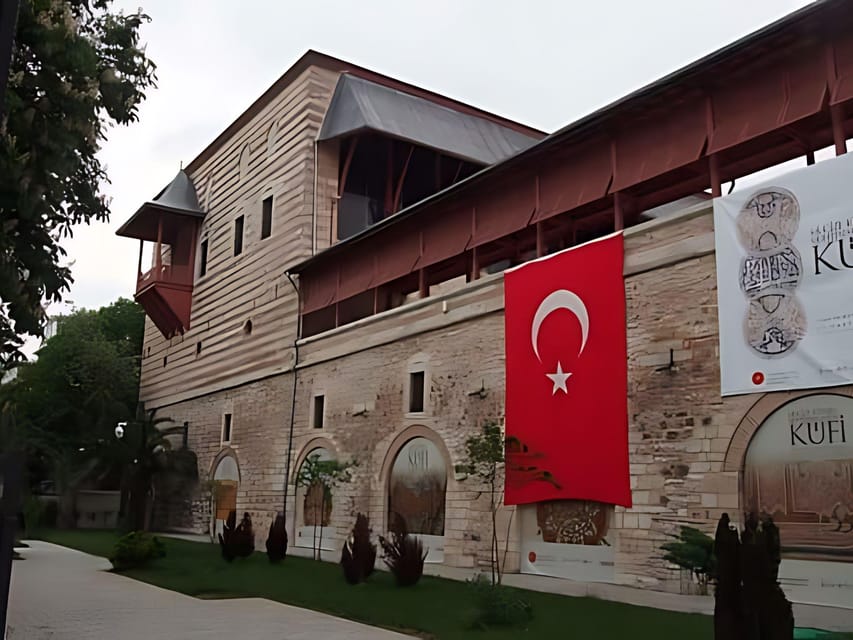
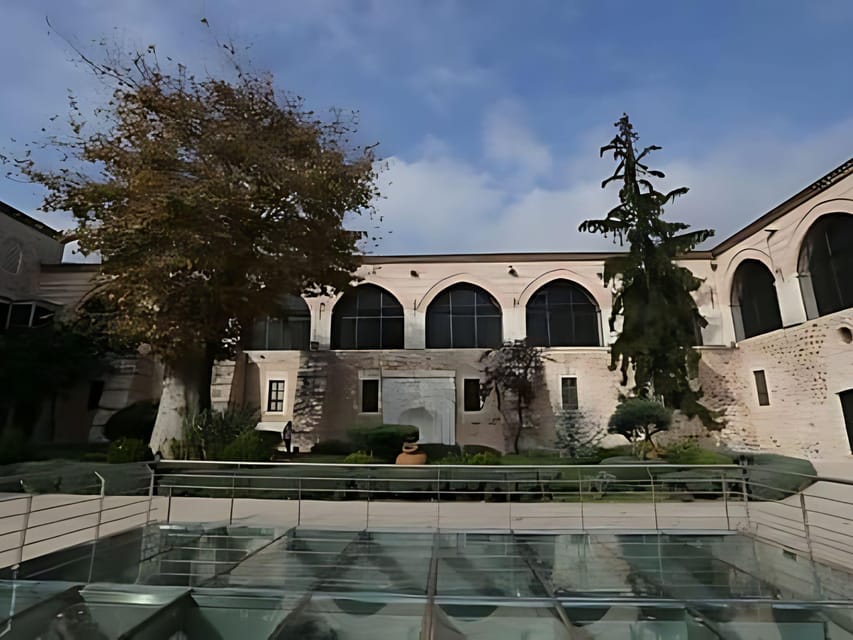
Many Istanbul museums rely on their objects to create a sense of place. Here, the building does part of the work. The Turkish and Islamic Arts Museum occupies Ibrahim Pasha Palace, a famous 16th-century landmark on Sultanahmet Square.
That location matters because you can combine the museum with the Blue Mosque and other nearby sights without crossing the city. The entrance is close to the Blue Mosque, and the museum fits neatly into a day in Istanbul’s Fatih district.
The palace setting also gives the collection a more personal scale. You are not simply moving through a modern display hall. You are seeing art in a building connected to the Ottoman period, which helps the carpets, woodwork, manuscripts, and metal objects feel tied to the city around you.
I would plan this as a calm stop between larger attractions. Sultanahmet can be full of people and activity, so the museum offers a chance to slow down and look closely. It is not an enormous institution that demands a whole day. Your ticket is valid for one day, and most people will want to fit it around the rest of their old-city plans.
A few more Istanbul trips to weigh up
- Istanbul: Hagia Sophia Skip-the-Line Ticket & Museum Option
★ 3.7 · 4,958 reviews - Istanbul: Hodjapasha Whirling Dervishes Show & Exhibition
★ 4.4 · 4,790 reviews - Istanbul: Topkapi Palace & Harem Museum Ticket & Audio Guide
★ 4.1 · 3,977 reviews
The carpet rooms deserve your best attention
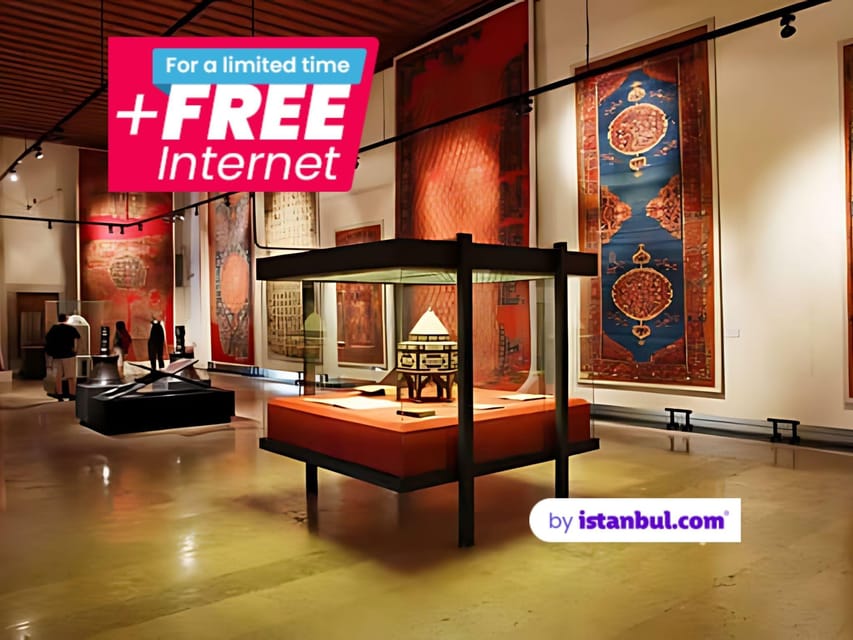
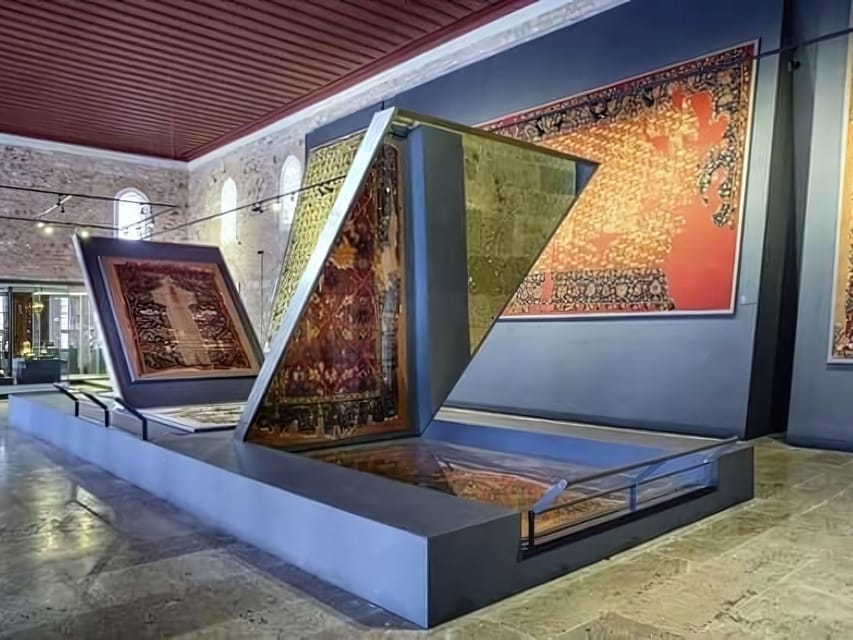
Start with the carpets if you want the clearest introduction to the museum. Textiles are easy to pass quickly, but that would be a mistake. The collection includes old Seljuk designs and elaborate Ottoman examples, showing how Islamic artists used repeated shapes, borders, and carefully balanced color.
The best way to view these pieces is to notice the structure rather than simply asking if you like the colors. Look at the central field, the border, and the way small motifs repeat across the surface. The patterns can appear simple from a distance, yet the workmanship becomes clearer when you stand close.
You will also see how carpet design changed over time. Seljuk pieces offer one visual language, while Ottoman rugs show different levels of ornament and pattern. The collection brings these changes together in one place, which makes it useful even if you do not know much about textile art.
I especially like this part of the museum for visitors who want something specific to focus on. A large collection can blur together, but carpets give you a natural comparison point. Look at two pieces side by side and ask how their borders, shapes, and colors differ.
The drawback is that the collection may interest art lovers more than people seeking dramatic architecture or a fast sightseeing stop. If you have only a few minutes, you will see the displays, but you will miss much of what makes them worthwhile.
Manuscripts and calligraphy reward a slower pace
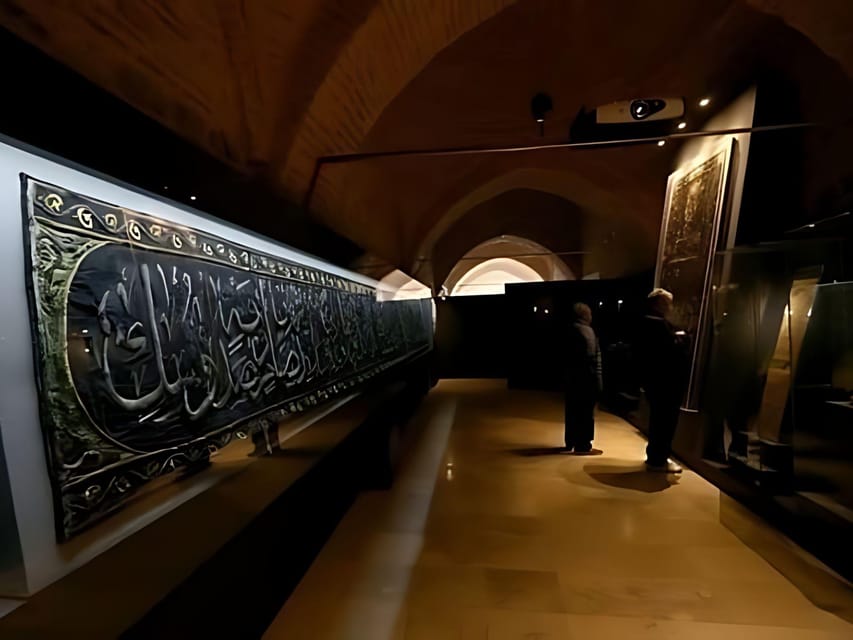
The museum also contains ancient manuscripts and examples of Islamic calligraphy. These works ask for more patience than a large carpet or striking metal object. Their importance often lies in the detail of the script, the care of the page, and the way words become part of the design.
An audio guide can help here. Without some explanation, a manuscript case may look quiet and difficult to read. With context, you can pay attention to the writing style, the materials, and the role of the object in religious and cultural life.
You should not expect to read every page. Instead, look for the visual order of the script and the decoration around it. The display connects art and writing in a way that is central to Islamic culture, where calligraphy has long held a special place.
This section also suits you if you prefer objects that reward close observation rather than quick photographs. The collection moves beyond the familiar image of Ottoman palaces and mosques, showing the skill involved in books, pages, and written ornament.
Ceramics, glass, metal, and wood broaden the collection
The museum is not only about carpets and manuscripts. Its displays include ceramics, glasswork, metalwork, and beautiful wooden relics. These sections help you see how many forms Islamic art can take.
Ceramics offer a different way to study color and pattern. Glass and metal objects bring attention to shape, surface, and practical use. Wooden pieces show how artisans worked with a material that could be carved, shaped, and decorated.
I like this range because it prevents the visit from becoming a single-subject exhibition. You can move from large textiles to small objects and compare the skills involved. A carpet depends on weaving and design, while a metal or wooden object asks you to notice carving, construction, and surface detail.
The audio guide is useful when you do not know which objects deserve more time. Use it as a filter, not as a demand to listen to everything. Select the sections that interest you, then look around without constantly checking your phone.
Because the guide is delivered digitally, bring your own charged device and prepare before entering. The audio link arrives separately from the entry QR code. A same-day booking created a problem for one person using an Apple device, and the workaround came too late to be useful once the museum had no WiFi available. I would open the guide before leaving your hotel or while you still have a reliable connection.
Same city, a completely different kind of day:
- Istanbul: Bosphorus Dinner Cruise & Show with Private Table
★ 4.8 · 44,561 reviews - Istanbul: Daytime or Sunset Sightseeing Cruise & Audio Guide
★ 4.8 · 14,430 reviews - Istanbul: Bosphorus Dinner Cruise with Turkish Night Show
★ 4.8 · 10,127 reviews - Best of Istanbul 1, 2 or 3-Day Private Guided Istanbul Tour
★ 5.0 · 8,922 reviews
Religious relics add a serious historical dimension
Among the most significant objects are religious relics, including fragments of the Prophet Muhammad’s beard and a footprint. These are not simply decorative pieces. They carry religious meaning for many people and help explain why this museum matters beyond its artistic value.
Approach this section with respect and patience. You may find the objects small compared with the carpets and architectural details, but their importance is not based on size. The displays connect the museum to the devotional life of the Islamic world.
This is also one reason the audio guide can be valuable. A short explanation may provide the background needed to understand why a relic has drawn attention over centuries. The information helps you look beyond the case itself and consider the role these objects play in faith and memory.
If your main interest is secular art, you can still appreciate the craftsmanship and setting, but this section may not hold your attention as long. If you want a broader view of Islamic culture, it adds an important dimension to the visit.
Using the audio guide without losing your independence
The ticket includes an audio guide in 25 languages. The available choices include English, German, Russian, Persian, Arabic, French, Italian, Chinese, Dutch, Spanish, Hindi, Romanian, Ukrainian, Korean, Turkish, Bulgarian, Polish, Swedish, Japanese, Indonesian, Greek, Hungarian, Portuguese, Urdu, and Croatian.
That range is one of the strongest parts of the package. You do not need to depend on English signage or join a scheduled group. You can move at your own speed, pause when an object catches your eye, and skip sections that do not interest you.
The audio guide is not the same as a personal guided tour. No live guide is included, so you will not have someone beside you to answer questions or change the route to suit your interests. For independent sightseeing, that is a fair trade. For anyone who wants conversation and expert discussion, the package may feel limited.
Pay close attention to the delivery process. You receive the entry QR code and audio guide link in separate emails from Istanbul Tourist Pass. Check both before you leave, and make sure the guide opens on your phone. Since security lines cannot be skipped and there may be an entrance line, you do not want to spend that time trying to solve a download problem.
Getting there from Sultanahmet and the Asian side
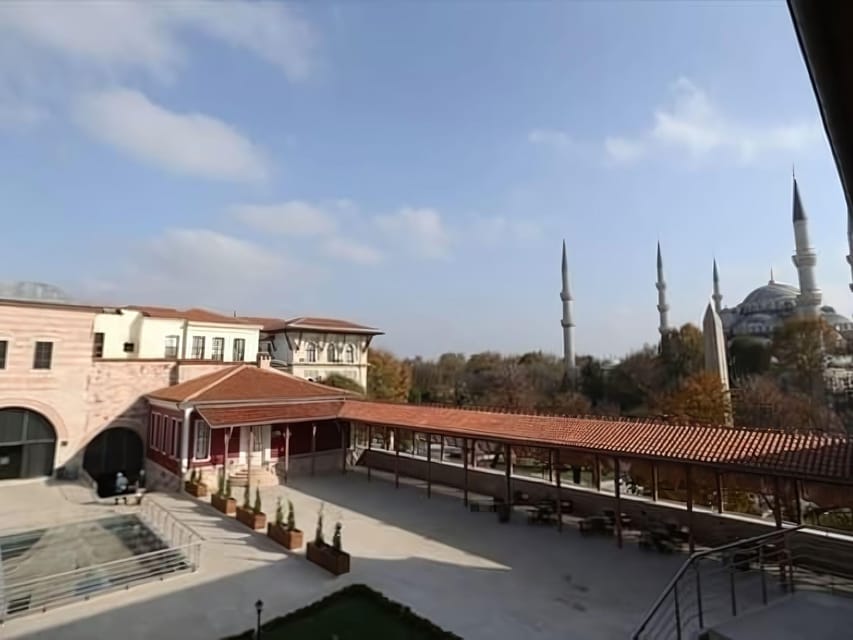
The museum is in Sultanahmet Square, close to the Blue Mosque in Istanbul’s Fatih district. The simplest public transport option is the Kabatas to Bagcilar tramway. Get off at Sultanahmet station, then walk about five minutes to the museum.
If you are coming from Istanbul’s Asian side, ferries from Kadikoy or Uskudar take you to Eminonu. From there, connect with the tramway toward Sultanahmet.
Transportation is not included in the $28 price, so budget separately for your ferry or tram fare. The location keeps those extra costs manageable, and the museum is easier to reach than a sight located outside the old city.
Give yourself a little extra time for the final approach. Sultanahmet Square is a major meeting point for both local people and international visitors, so finding the general area is simple, but the square can be active and crowded. The Blue Mosque is your best landmark.
What the $28 price really buys you
At $28 per person, this is not the cheapest museum entry in Istanbul. The value depends on how you use the ticket.
The price includes entry and the audio guide, not transportation or a live guided tour. If you would only walk through the displays for a short time, the cost may feel high. If you enjoy carpets, Islamic art, manuscripts, and historical objects, the audio commentary makes the ticket more useful.
The skip-the-ticket-line feature can also save time, particularly during a full sightseeing day. Be clear about what it does not do. You still need to pass through security, and an entrance line may remain. The QR ticket reduces one part of the wait, not every part.
Flexible booking adds some practical value. You can reserve now and pay later, and cancellation is free up to 24 hours in advance for a full refund. That works well when your Istanbul schedule depends on weather, ferry plans, or the timing of nearby sights.
The overall rating is 4.2 from 19 reviews, with especially strong praise for the audio guide and the museum itself. One Turkish booking received a five-star rating, and another five-star review from Norway described a strong personal liking for the Islamic museum and recommended it to others. A French-language comment also called it very beautiful and interesting. The one clear warning concerns same-day audio access, not the collection.
Who should book this experience
I would recommend this museum to you if you like decorative arts, religious objects, Ottoman culture, or quiet museum time between major Istanbul sights. It is also a good choice if you want information in your own language without paying for a private guide.
Families and mixed-interest groups may find the collection useful because it covers several types of art. One person can focus on carpets, another on manuscripts, and another on metal or wooden objects. The self-guided format lets everyone move at a different pace.
You may want to skip it if your priority is only grand architecture, panoramic views, or a short photo stop. The museum asks for attention. Its best objects reveal their quality slowly, especially the carpets and written works.
It is also not the right product if you expect a guide to lead you from room to room. The included audio guide is digital, and transportation is your responsibility.
Should you book the Turkish and Islamic Arts Museum ticket?
Book it if you want a focused look at Islamic art in a historic palace beside the Blue Mosque. The combination of location, carpet collection, religious relics, and 25-language audio guide makes the $28 price reasonable for an art-minded visit.
Book before the day of your visit if possible. Open the audio link in advance, save both emails, and do not confuse the ticket-line benefit with a security-line pass. With those simple preparations, you can spend your time looking at the objects instead of troubleshooting your phone.
FAQ
Where is the Turkish and Islamic Arts Museum?
The museum is in Ibrahim Pasha Palace at Sultanahmet Square, very close to the Blue Mosque in Istanbul’s Fatih district.
How do I reach the museum by public transportation?
Take the Kabatas to Bagcilar tramway and get off at Sultanahmet station. The museum is about a five-minute walk from the station.
How can I reach the tramway from Istanbul’s Asian side?
You can take a ferry from Kadikoy or Uskudar to Eminonu, then connect with the Kabatas to Bagcilar tramway.
Is transportation included in the ticket?
No. Transportation fees are not included, so you must pay separately for the tram, ferry, or other transport you use.
Does the ticket include a live guided tour?
No. The package includes a digital audio guide, but it does not include a live guided tour.
How many languages are available for the audio guide?
The audio guide is available in 25 languages, including English, Turkish, Arabic, French, German, Spanish, Chinese, Japanese, Korean, Portuguese, Urdu, and Croatian.
Can I skip all lines with the QR ticket?
You can skip the ticket line, but security screening is still required. An entrance line may also be present.
How will I receive the ticket and audio guide?
The entry QR code and audio guide link arrive in separate emails from Istanbul Tourist Pass.
Can I cancel the booking?
Yes. You can cancel up to 24 hours in advance for a full refund. You can also reserve now and pay later.
More Audio Tours in Istanbul
- Istanbul: Hagia Sophia Skip-the-Line Ticket with Audio Tour
★ 4.4 · 1,767 reviews - Istanbul: Bosphorus Cruise w/Audio Guide and Sunset Option
★ 3.9 · 1,758 reviews - Istanbul: Basilica Cistern Skip-the-Line Entry & Audio Guide
★ 4.6 · 1,477 reviews - Istanbul: Hagia Sophia Skip-the-Ticket Line & Audio Guide
★ 4.3 · 1,469 reviews
Just added around Istanbul
- Whirling Dervish Ceremony★ 4.5 · 35 reviews
- Istanbul:Whirling Dervish Ceremony, Mystical Sufi Experience★ 4.1 · 17 reviews
- Turkish Dance Show at Hodjapasha Cultural Centre in Istanbul★ 4.7 · 56 reviews
- Turkish Tapas – Meze Cooking for Beginners in Istanbul★ 4.5 · 16 reviews
- Istanbul Sultanahmet Turkish Bath Sultan Suleyman Bath★ 3.7 · 38 reviews
- Turkish Marbling Paper Ebru Art Workshop★ 5.0 · 44 reviews
- Flying Dress Photography on an Iconic Rooftop in Istanbul★ 5.0 · 87 reviews
- istanbul airport transfer★ 3.5 · 43 reviews
Museums, compared.

Hagia Sophia Skip-the-Line Ticket & Museum Option
Read our review →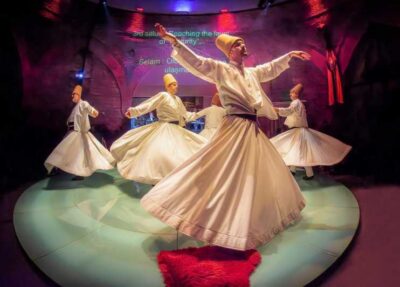
Hodjapasha Whirling Dervishes Show & Exhibition
Read our review →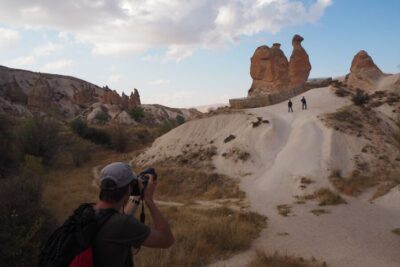
Small-Group Red Tour, Open Air Museum with Lunch
Read our review →Istanbul Hodjapasha Whirling Dervishes Show & Exhibition
Read our review →
Topkapi Palace and Harem Museum Tour with Ticket
Read our review →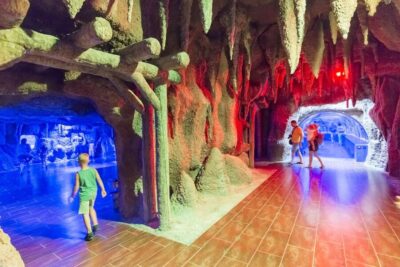
Official Museum Pass for 12 Most Popular Museums
Read our review →
Hagia Sophia Mosque and Museum Skip-The-Line Combo
Read our review →Browse the lists this tour appears in