
Reviewed · 2-DAY EXPERIENCES
From Istanbul: Troy and Gallipoli 2-Day Trip
Gallipoli is the heart of this two-day trip. You move through Anzac Cove, military cemeteries, trenches, memorials, and battle sites with a guide who can explain how this narrow peninsula shaped Turkish, Australian, and New Zealand memory. I especially like the carefully chosen Gallipoli route and the chance to pair it with Troy, rather than making two separate trips from Istanbul.
I also like the central 4-star overnight stay and the practical transport by air-conditioned vehicle and ferry. The main drawback is time: the Istanbul transfers are long, and Troy can feel hurried, particularly if your guide keeps the group moving quickly.
In This Review
- Key points at a glance
- Why Gallipoli gives this trip its purpose
- The Gallipoli route from Brighton Beach to Chunuk Bair
- One night in Çanakkale, with a practical overnight break
- Troy, from the wooden horse to nine layers of settlement
- The long road from Istanbul to the Dardanelles
- What the $886 price means
- The museums and what is not included
- Who will get the most from this two-day trip
- Should you book it?
- FAQ
- How long is the tour?
- Where does pickup take place in Istanbul?
- Is hotel pickup included?
- What language is the tour conducted in?
- Where do you stay overnight?
- What meals are included?
- Are ferry tickets included?
- Are museum entrance fees included?
- What should you bring?
- Can you cancel the booking?
Key points at a glance
- Gallipoli is the emotional center: Anzac Cove, Lone Pine, the 57th Regiment Memorial, and Chunuk Bair bring the 1915 campaign into clear focus.
- The stops are short: Most Gallipoli visits last around 10 to 15 minutes, so listen closely and keep your walking shoes ready.
- Troy adds an entirely different era: You’ll see the wooden Trojan Horse, city walls dating back about 3,700 years, and remains from Troy I through Troy IX.
- The trip includes useful extras: Hotel accommodation, dinner, Day 1 lunch, ferry tickets, and hotel pickup are covered.
- Guide quality matters: Guides called Burak, Barkut, Charles, and Cindy have led different departures, but names and assignments can change.
- The price suits convenience seekers: At $886 per group of up to one person, the value rests mainly in private booking convenience, transport, guiding, and the overnight stay.
Why Gallipoli gives this trip its purpose
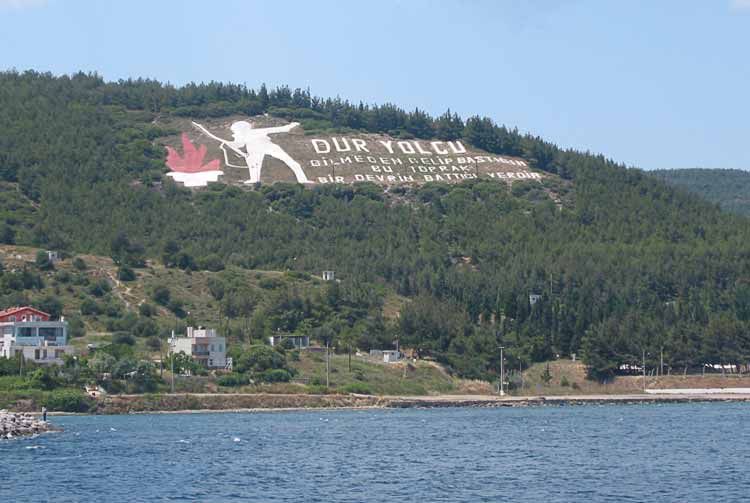
The Gallipoli portion is not a quick photo stop. It follows the story of the campaign through the ground where it happened, from the beaches used for the landing to the ridges and memorials tied to the fighting. You visit Brighton Beach, Beach Cemetery, Anzac Cove, Ariburnu Cemetery, and the Anzac Commemorative Site.
At Anzac Cove, the small scale of the shoreline helps explain the difficulty of the landing. The surrounding hills and tight coastal strip made movement hard, and your guide can connect the geography to the military decisions of 1915. This is one reason I prefer a guided visit here. Without context, several memorials and cemetery stops could blur together.
The pace is brisk. Allow roughly 10 to 15 minutes at many stops, enough to walk around, read the main inscriptions, and take photographs, but not enough for a long private visit at every site. Keep your passport or ID card, phone, water, and sunglasses close by, and wear shoes that handle uneven ground.
A few more Istanbul trips to weigh up
- From Istanbul: Sapanca and Masukiye Day Trip with Lunch
★ 4.0 · 1,036 reviews - Istanbul: Bursa & Uludag Mountain Day Trip w/ Opt. Cable Car
★ 3.7 · 447 reviews - Istanbul Shore Excursion: Istanbul in One Day Sightseeing Tour
★ 4.0 · 273 reviews
The Gallipoli route from Brighton Beach to Chunuk Bair
The afternoon begins after lunch in Eceabat, a local meal included in the trip. From there, the route moves through the main memorial sites.
Brighton Beach introduces the coastal setting and the planned landing area. It is a useful first stop because you begin with the shoreline before moving inland to cemeteries and battle positions.
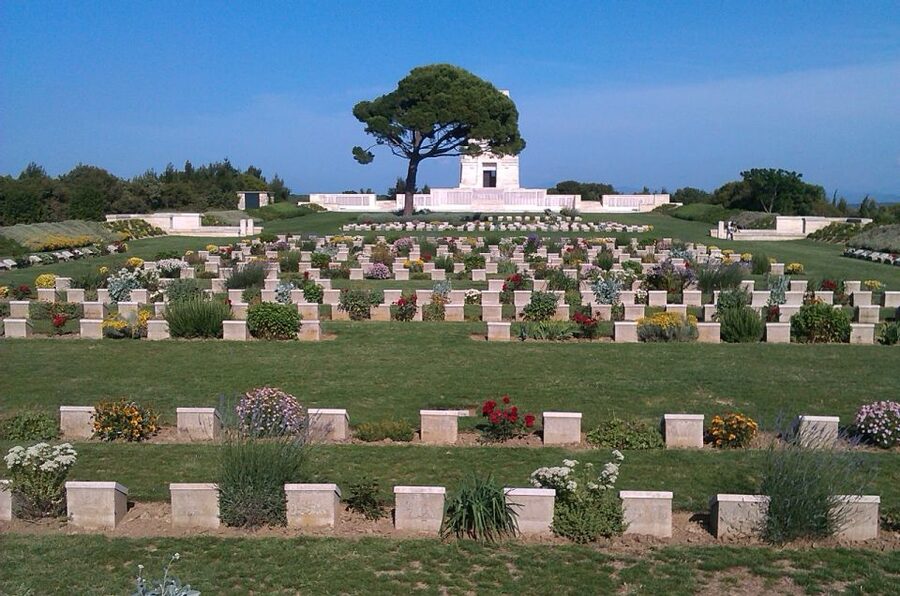
At Beach Cemetery, the names and dates make the campaign personal. The cemetery visit is quiet and compact, so you have time to pause, but not an unlimited amount of time. I would use this stop for reflection rather than trying to rush through every inscription.
Anzac Cove and Ariburnu Cemetery are among the most important places on the route. The cove is tied directly to the landing, while the cemetery gives you a more intimate sense of the human cost. The guide’s explanation matters here, especially if you do not already know the sequence of the campaign.
The Anzac Commemorative Site provides another place to consider the connection between the battlefield and national memory. You also see the Respect to Mehmetcik Statue, which brings the Turkish side of the campaign into the tour. That balance is important. This is not presented only through an Australian or New Zealand lens.
The route continues to the Lone Pine Australian Memorial, one of the best-known Australian memorial sites on the peninsula. It is a major stop, but the tight schedule means you should expect a focused visit rather than a long period of quiet study.
At Johnston’s Jolly, you see Turkish and Allied trenches and tunnels. This is one of the most useful stops for understanding how close the opposing positions could be. The physical remains give you something concrete to picture, though the walking surface may be uneven.
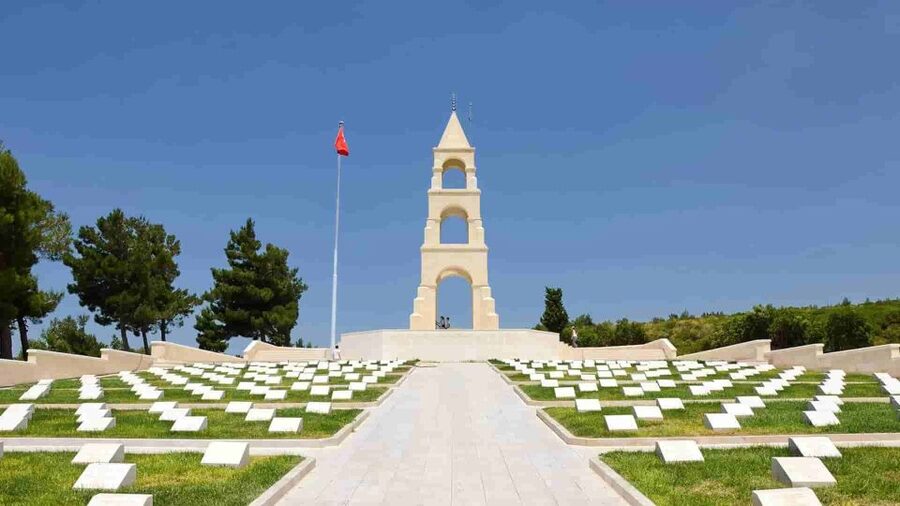
The 57th Regiment Turkish Memorial honors the Turkish troops who fought and died during the campaign. The Nek adds another important part of the story, while Chunuk Bair New Zealand Memorial completes the main route. By the end of the afternoon, you have covered the principal Australian, New Zealand, and Turkish sites.
The tour returns to Eceabat at about 6 p.m. Some departures use guides called Charles, Burak, or Barkut. Burak and Barkut have been singled out for energetic, engaging explanations, while Charles has been praised for making the Gallipoli section especially clear. The actual guide depends on the departure date.
One night in Çanakkale, with a practical overnight break
The accommodation is a 4-star hotel in Çanakkale, with dinner included. The hotel has been described as central and comfortable, which is welcome after a full afternoon outside and a long morning transfer from Istanbul.
The dinner arrangement is less flexible. Drinks are not included, and one account found the meal limited to certain included dishes, with no option to add an alcoholic drink at the hotel restaurant. If you want more choice, budget for your own meal at another restaurant. The restaurant staff can help, but that alternative meal would be at your own cost.
The trip gives you a free morning on Day 2. That is a useful cushion after Gallipoli, but the schedule does not provide a listed morning activity. You should treat it as free time rather than expect another guided visit. The Troy tour begins at about 1:30 p.m.
Troy, from the wooden horse to nine layers of settlement
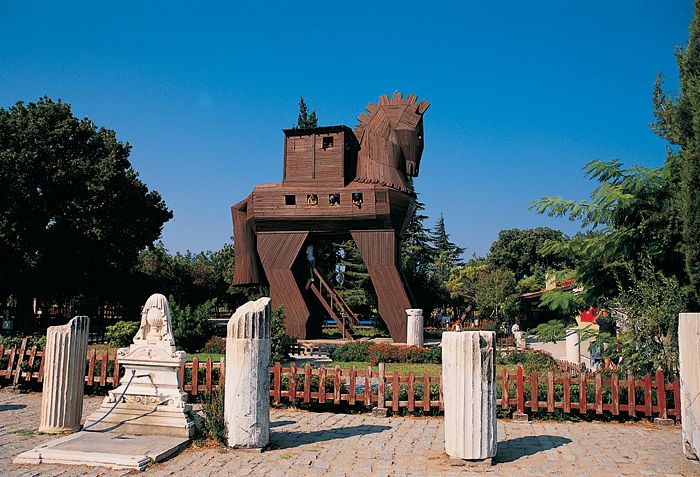
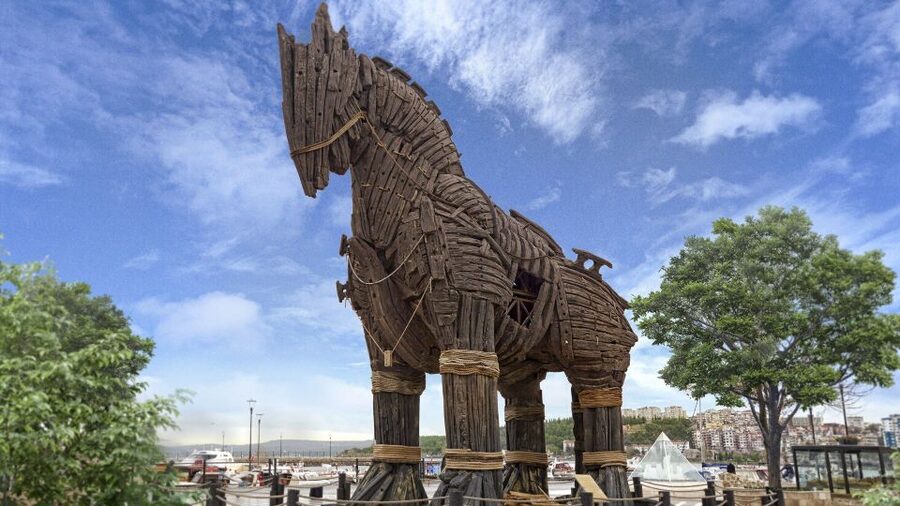
Troy is often reduced to the wooden horse, but the archaeological site is more interesting than the famous image suggests. The visit begins with the Trojan Horse, which provides the familiar link to the story of Achilles and Paris. It is an easy starting point, but the real value comes from seeing the layers of settlement around it.
You visit the sacrificial altars, the approximately 3,700-year-old city walls, and the houses of Troy I, dated to about 3000 to 2500 B.C. These remains show that Troy was not just a single city from a single moment. The site contains multiple settlements built, damaged, and rebuilt over long periods.
The route also includes the Bouleuterium, or senate building, and the Odeon, a concert hall. These structures help you picture civic life, not just walls and ruins. Current excavations are also visible, giving you a direct look at the fact that archaeological work here continues.
You’ll see remains identified as Troy I through Troy IX. That range is one of the strongest reasons to add Troy to a Gallipoli trip. Gallipoli asks you to think about one campaign in 1915. Troy asks you to sort through centuries of settlement, legend, archaeology, and changing interpretations.
The weak point is the schedule. The tour leaves Troy at approximately 5:30 p.m., then begins the return to Istanbul at 6 p.m. One departure found the Troy guide, Cindy, highly informative, while another felt the guide was watching the clock from the start. That difference matters because Troy benefits from patience. If you want long time for photographs or detailed archaeological study, this may feel too compressed.
Same city, a completely different kind of day:
- Istanbul: Bosphorus Dinner Cruise & Show with Private Table
★ 4.8 · 44,561 reviews - Istanbul: Daytime or Sunset Sightseeing Cruise & Audio Guide
★ 4.8 · 14,430 reviews - Istanbul: Bosphorus Dinner Cruise with Turkish Night Show
★ 4.8 · 10,127 reviews - Best of Istanbul 1, 2 or 3-Day Private Guided Istanbul Tour
★ 5.0 · 8,922 reviews
The long road from Istanbul to the Dardanelles
The first pickup is around 6 a.m. from the Taksim area, with Sultanahmet pickups usually around 6:30 to 7 a.m. You then travel toward Eceabat, arriving at about noon. This is a serious transfer, not a quick day trip.
The vehicle is described as non-smoking, air-conditioned transport. Ferry tickets for the Kilitbahir, Eceabat, and Çanakkale crossing are included, which saves you from arranging the Dardanelles portion yourself. The ferry also gives the journey a useful geographical connection, since the strait is central to both the Gallipoli campaign and the region’s wider past.
Pickup details can be confusing. The operator name may not always match the name shown on the vehicle, and a small bus might stop near your hotel rather than directly in front. One departure also had a pickup point changed late the previous day. Confirm the meeting point and vehicle details carefully, and do not assume a bus waiting outside your hotel is automatically yours.
Hotels outside the centrally served areas may be given an alternative meeting point. The supplier advises this during booking confirmation. Pickup is included from centrally located hotels in Istanbul, but you need to provide your hotel name.
After Troy, the return to Istanbul is scheduled for about 6 p.m., with arrival around 11 p.m. That makes the second day long, especially after the afternoon archaeology visit. It is efficient, but it is not restful.
What the $886 price means
The listed price is $886 per group of up to one person. That wording makes the cost look closer to a private booking rate than a standard per-seat group excursion, so check the final booking total carefully before paying.
For the right person, the price covers several items that would otherwise take planning: Istanbul hotel pickup, air-conditioned transport, ferry tickets, a Gallipoli battlefield tour, a Troy tour, one hotel night, Day 1 lunch, and dinner. You are also paying for a guide and for avoiding the need to coordinate transport between Istanbul, Eceabat, Çanakkale, and Troy.
The value is strongest if you are traveling alone and want one organized arrangement for both destinations. It is also useful if you do not want to rent a car or work out the ferry and regional connections yourself.
The value is weaker if you already have transport or only want to visit one site. Drinks, Day 2 lunch, and entrance fees for the Archaeological and Naval museums are not included. The supplied schedule emphasizes Gallipoli and Troy, so you should not assume the museums are part of the core guided program. If those museums matter to you, ask about their timing and entrance costs before booking.
The museums and what is not included
The highlights include a visit to the Archaeological and Naval museums in Çanakkale, but entrance fees are excluded. Because the itinerary provides no fixed museum visit time in the day-by-day schedule, confirm whether your departure includes them as a planned stop or leaves them as an optional addition.
Day 1 lunch in Eceabat is included and has been described as a generous, ordinary local meal. It should keep you going through the afternoon, but do not book this trip for a special food experience.
Day 2 lunch is not included. The free morning gives you a chance to arrange food before the 1:30 p.m. Troy departure, but no meal is supplied in the package. Carrying a small snack may be sensible, especially since the return to Istanbul is late.
Who will get the most from this two-day trip
I would recommend this experience to you if Gallipoli is a priority and you also want to see Troy without arranging a second regional trip. The guided battlefield visits are the strongest part, and the route includes the main memorials associated with Australian, New Zealand, and Turkish forces.
It also suits solo visitors who value a bundled transfer, hotel, meals, and ferry arrangements. The English-language guiding is another practical advantage, and the guides can make the military sites far easier to understand than a self-guided visit.
You should think twice if you dislike early starts, long road transfers, or firm schedules. You should also look elsewhere if you want extended time at Troy, a slow archaeological visit, or full control over meals and museum stops.
Free cancellation is available up to 24 hours before departure, and you can reserve now and pay later. Those terms help if your Istanbul plans are still moving, but they do not change the demanding pace of the itinerary.
Should you book it?
Book this tour if your main goal is to understand Gallipoli and fit Troy into the same trip with minimal planning. The best guides, including Burak, Barkut, and Charles on different departures, can make the battlefield visits memorable and humane rather than a string of names and dates.
Book it with realistic expectations. The first day is long, the Gallipoli stops are short, the dinner has limited choice, and Troy may feel rushed. If you accept that tradeoff, this is a practical way to connect two very different chapters of the Dardanelles region in just two days.
FAQ
How long is the tour?
The experience lasts two days. The first day begins with early morning pickup in Istanbul and ends after the Gallipoli tour. The second day includes Troy and a return to Istanbul around 11 p.m.
Where does pickup take place in Istanbul?
Pickup is included from centrally located hotels. Taksim pickups are listed around 6 a.m., while Sultanahmet pickups are generally scheduled between 6:30 and 7 a.m.
Is hotel pickup included?
Yes. Hotel pickup and return to your hotel are included for centrally located Istanbul hotels. Hotels that are not accessible may be assigned an alternative meeting point.
What language is the tour conducted in?
The live guided tour is conducted in English.
Where do you stay overnight?
You spend one night at a 4-star hotel in Çanakkale, with dinner included.
What meals are included?
Day 1 lunch in Eceabat and dinner at the hotel are included. Lunch on Day 2 is not included, and drinks are also excluded.
Are ferry tickets included?
Yes. Ferry tickets for the Kilitbahir, Eceabat, and Çanakkale crossings are included.
Are museum entrance fees included?
No. Entrance fees for the Archaeological and Naval museums are not included.
What should you bring?
Bring your passport or ID card, comfortable shoes, and sunglasses.
Can you cancel the booking?
You can cancel up to 24 hours in advance for a full refund. The activity also offers a reserve-now, pay-later option.
Just added around Istanbul
- Topkapi Palace&Harem-Guided Tour-Skip lines- All tickets inc★ 4.8 · 66 reviews
- Istanbul: Topkapi Palace Skip-the-Line Ticket & Guided Tour★ 4.2 · 178 reviews
- Istanbul Highlights Small-Group Walking Guided Tour★ 4.4 · 179 reviews
- Istanbul: Private Guided Food Tour with 10 Tastings★ 4.7 · 49 reviews
- Istanbul: Belly Dancing, Show, & Dinner at Sultana’s Ticket★ 3.8 · 71 reviews
- Istanbul: Private Local Food & Markets Experience★ 4.9 · 27 reviews
- Skip-the-Line Hagia Sophia Digital Tickets w/Audio Guide★ 4.3 · 23 reviews
- Istanbul: Guided Shopping Trip with Turkish Coffee Tasting★ 4.7 · 37 reviews
2-Day Experiences, compared.

1 or 2-Day Private Guided Tour with Hotel Transfer
Read our review →
2 Day All Inclusive Cappadocia Tour from Istanbul with Optional Balloon Flight
Read our review →

2-Day Cappadocia Trip with Flights and Cave Hotel
Read our review →
2-Day Guided Cappadocia Tour with Cave Hotel Option
Read our review →Browse the lists this tour appears in