
Reviewed · OLD CITY & HISTORIC PENINSULA TOURS
Istanbul: Basilica Cistern Skip-the-Ticket-Line Guided Tour
The Basilica Cistern is Istanbul’s most atmospheric ancient sight: a forest of columns, dim lights, still water, and the famous upside-down Medusa heads beneath the old city. This short tour gives the place a human voice instead of leaving you to wander among pillars without knowing what you’re seeing.
I like the small groups of up to 10, which make it easier to hear the guide, and I like the direct focus on the cistern’s engineering and legends. Guides such as Can, also called Dr. Can in one account, have earned especially warm praise for clear explanations and thoughtful answers.
The main catch is simple but important: the 35€ entry fee is not included in the advertised $23 price. You pay the current admission charge in cash to the guide before entering, and even skip-the-line groups can face a wait when the cistern is very busy.
In This Review
- Key points at a glance
- Why the Basilica Cistern feels unlike Istanbul’s other sights
- Meeting behind the Blue Mosque tram stop
- What the skip-the-line arrangement really means
- Paying 35€ separately and judging the value
- Inside the cistern: columns, water, and controlled light
- The Medusa heads and the stories beneath them
- The guide makes the short format work
- Timing, crowds, and the best use of 30 minutes
- Who should book this experience
- Booking, cancellation, and simple preparation
- Should you book the Basilica Cistern guided tour?
- FAQ
- How long does the Basilica Cistern guided tour last?
- Is the Basilica Cistern entry ticket included?
- Where do I meet the guide?
- How early should I arrive?
- What language is the tour offered in?
- How large is the group?
- Is the Basilica Cistern tour wheelchair accessible?
- Can I cancel for a refund?
Key points at a glance
- Medusa heads beneath the city: Learn why the two carved heads are placed sideways and upside down.
- A 30-minute guided visit: This is a focused introduction, not a long museum-style tour.
- Small groups: The maximum of 10 people helps keep the commentary personal.
- Meeting point by the Blue Mosque: Find the guide in Mehmet Akif Ersoy Park, near the Firuz Aga Mosque.
- Entry fee paid separately: Bring cash for the current 35€ admission charge.
- Best for curious first-time visitors: The guide adds context that is easy to miss on your own.
Why the Basilica Cistern feels unlike Istanbul’s other sights
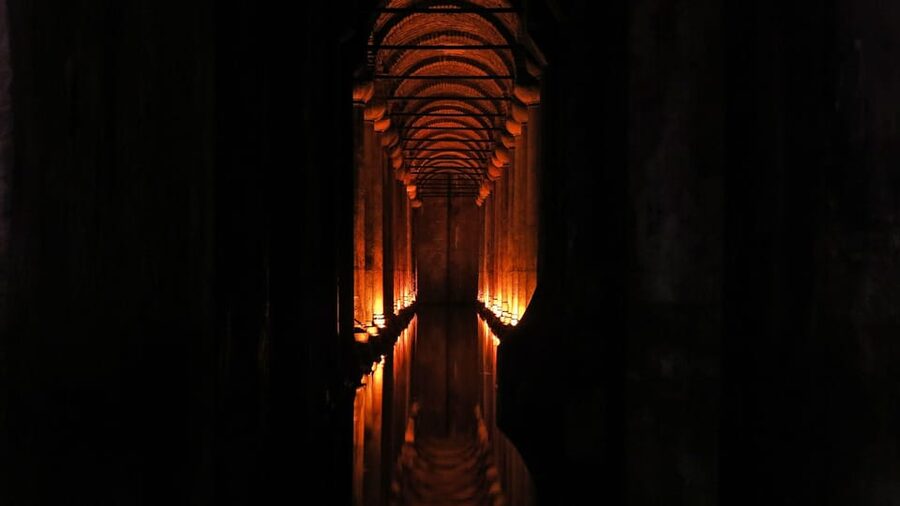
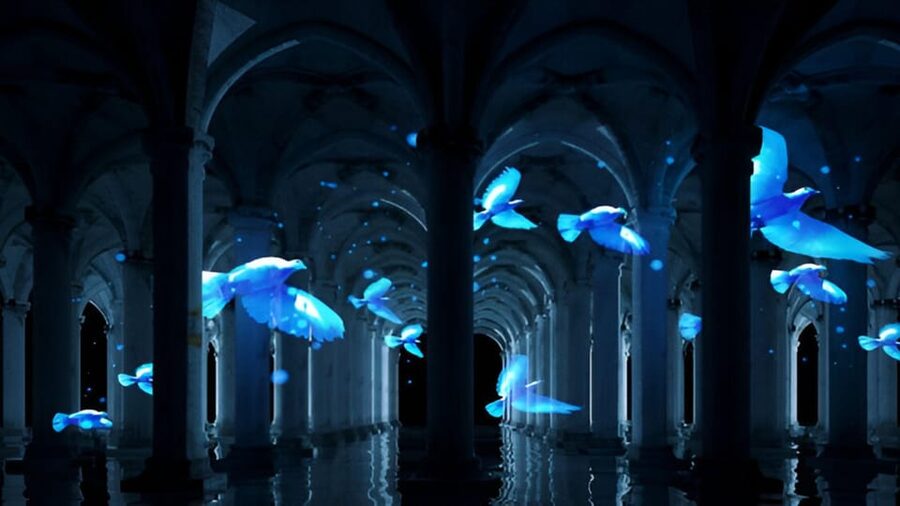
Above ground, Sultanahmet is filled with mosques, museums, and busy streets. Below it, the Basilica Cistern offers a sudden change of mood. You pass into a cool, shadowy chamber where rows of columns disappear into the gloom and the water catches the colored light.
I find the cistern memorable because it does not look like a conventional ruin. It is not a broken wall or an open courtyard. It is a working piece of old city infrastructure, built underground and supported by hundreds of columns. The quiet water and echoing space make the place feel almost theatrical, but the engineering is the real story.
This guided visit is aimed at helping you read that setting. Instead of seeing only handsome columns, you learn how an underground reservoir helped supply Constantinople and how Roman building methods made such a huge chamber possible.
The tour lasts about 30 minutes. That is enough time for a clear overview and the major sights, but you should not expect an extended architectural lecture or a leisurely, independent exploration lasting several hours.
More old city & historic peninsula tours in Istanbul:
- Istanbul: Basilica Cistern Fast-Track Entry and Audio Guide
★ 4.6 · 7,521 reviews - Istanbul: Hagia Sophia Skip-the-Line Ticket & Museum Option
★ 3.7 · 4,958 reviews - Istanbul: Topkapi Palace & Harem Museum Ticket & Audio Guide
★ 4.1 · 3,977 reviews
Meeting behind the Blue Mosque tram stop
The meeting point is in Mehmet Akif Ersoy Park, behind the Sultanahmet Blue Mosque tram stop and near the Firuz Aga Mosque. Look for the guide holding a black atourguideinconstantinople flag.
This location is convenient if you are already visiting the Blue Mosque, Hagia Sophia, Topkapi Palace, or other Sultanahmet sights. It is less convenient if you arrive without allowing time to orient yourself, so use the exact Google Maps listing for atourguideinconstantinople before setting out.
Arrive 15 minutes early. That matters here because the guide may be organizing several people, checking the group, and collecting admission money. Last-minute calls can be missed while the guide is helping other participants.
The activity ends back at the same meeting point. That makes it easy to continue sightseeing in the historic center after the cistern visit.
What the skip-the-line arrangement really means
The skip-the-line feature is useful, particularly when the entrance area is crowded. You avoid the regular ticket-purchasing process and join the arranged entry with your guide.
Still, keep your expectations realistic. Skip-the-line does not mean a guaranteed instant entrance. At very busy times, even groups with priority arrangements may need to wait. One particularly useful piece of practical feedback is that the entrance can become crowded enough for every type of group to slow down.
The time you save will depend on the crowd when you arrive. I would still choose this option if your day in Sultanahmet is tightly planned, because it reduces one layer of uncertainty. Just do not schedule another attraction down to the minute immediately afterward.
The guide also handles the admission process, but you must bring the money. The advertised activity price is $23 per person, while the current cistern entrance fee is listed as 35€ per person. Those are separate charges, and the entry price can change under the museum’s pricing policy.
Paying 35€ separately and judging the value
At first glance, $23 for a 30-minute tour may seem reasonable. The real cost is higher once you add the 35€ admission fee, so you should compare the full amount rather than judging the tour price alone.
The value comes from three things: the line arrangement, the small group, and the guide’s interpretation. If you simply want to look at the columns and take a few pictures, paying for a guide may feel unnecessary. If you want to understand why the cistern was built, what the Medusa carvings mean, and how the structure worked, the added cost makes more sense.
This is not the right choice for someone seeking the cheapest possible entrance. It is better suited to you if you prefer a short, organized visit and want to make the most of a famous sight without spending time guessing at its purpose.
Bring cash to the meeting point for the 35€ admission. Do not assume that paying online for the activity covers your entry. This is the detail most likely to catch people off guard.
A few more Istanbul trips to weigh up
- Istanbul: Blue Mosque & Hagia Sophia Guided Tour w/ Tickets
★ 4.8 · 3,600 reviews - Istanbul: Basilica Cistern Skip-the-Line Entry Ticket
★ 4.6 · 2,270 reviews - Istanbul: Hagia Sophia Skip-the-Line Ticket and Audio Guide
★ 4.3 · 2,246 reviews - Istanbul: Basilica Cistern & Hagia Sophia Combo Ticket
★ 4.6 · 1,990 reviews
Inside the cistern: columns, water, and controlled light
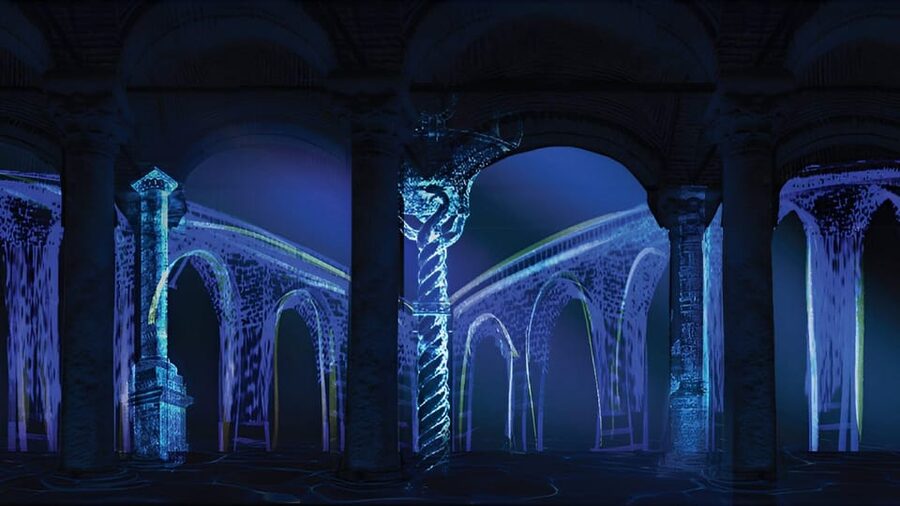
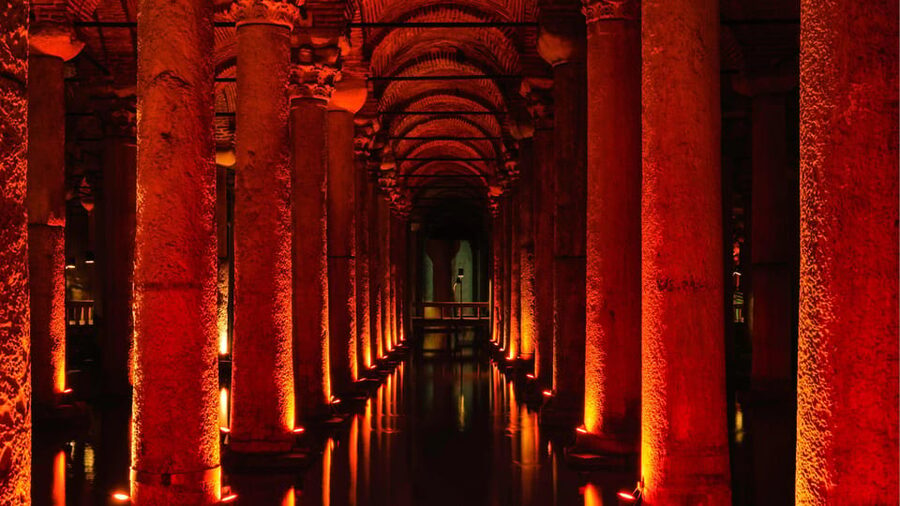
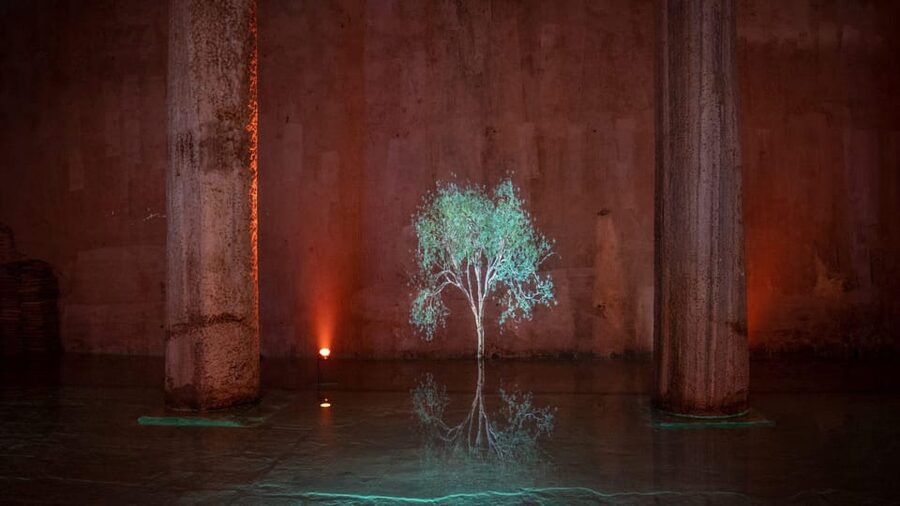
Once inside, the main experience is visual. You move among tall columns, dark water, and illuminated surfaces that give the chamber its eerie character. The lighting draws attention to the repeating lines of stone and the reflections below.
The cistern’s beauty depends on atmosphere, but the guide helps keep the visit from becoming only a photo stop. You learn about the structure’s ancient engineering and the methods used to create such a broad underground reservoir.
The space can feel enclosed. The activity is specifically not suitable for people with claustrophobia, and that warning deserves attention. You are underground, surrounded by columns, with a ceiling overhead and limited natural light. Most people will find the setting atmospheric, but it is not a comfortable environment for everyone.
Wear comfortable shoes. The tour is short, but you will be walking and standing among the columns. Flash photography is not allowed, so use the existing lighting and follow the site’s rules rather than trying to overpower the atmosphere with a flash.
The Medusa heads and the stories beneath them
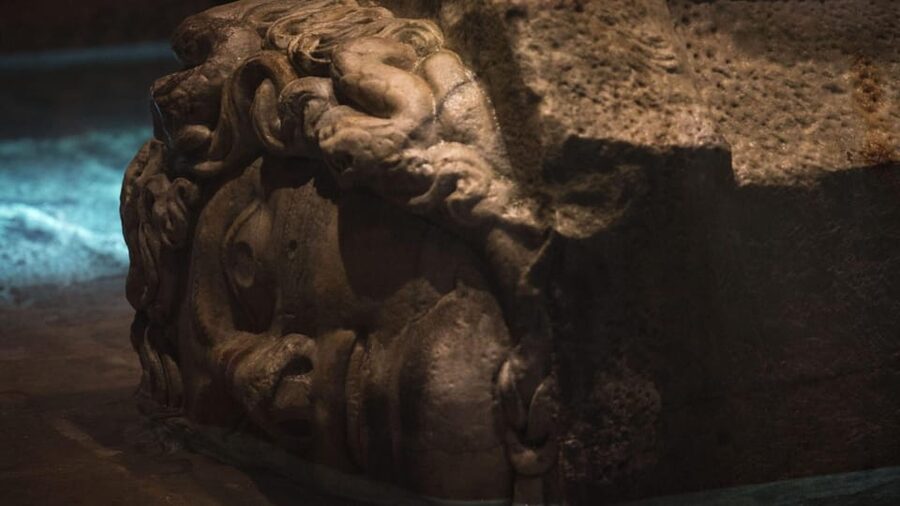
The two Medusa heads are the cistern’s most famous details. One is placed upside down and another on its side, which naturally raises the question: why?
Your guide explains the legends and the possible practical reasons behind their placement. The myths give the sculptures their drama, while the architectural explanation helps you see them as reused building material as well as symbols tied to ancient stories.
This is where a guide earns much of the fee. Without context, you may notice the unusual position, take a photograph, and move on. With a good explanation, the heads become a compact lesson in Roman-era reuse, old beliefs, and the way later generations gave new meaning to ancient stone.
Do not expect the tour to solve every mystery. The value is in hearing the main theories and understanding why the Medusa heads have become such a lasting part of the cistern’s identity.
The guide makes the short format work
A 30-minute visit leaves little room for wandering off or asking endless questions, so the guide needs to be focused. The strongest feedback points to clear, lively explanations and guides who can manage a group without losing the thread.
Can receives especially strong praise for his command of the site and his willingness to answer questions. One small group ended up booking two additional tours with him, which suggests that his appeal goes beyond simply getting people through the entrance.
Other accounts describe the guide as punctual, efficient, and helpful with advice about places to eat and things to do in Istanbul. That extra local guidance can be useful if this is one of your first stops in the city, though you should treat it as a bonus rather than the main reason to book.
The small-group limit of 10 is another practical strength. The cistern can be noisy, and a huge group would make it harder to stay close and hear. A smaller group also gives you a better chance to ask a question about the Medusa heads or the building process.
Timing, crowds, and the best use of 30 minutes
Check the available starting times when booking. The supplied information does not identify one universally best time, and crowd levels can change during the day.
I would allow more than 30 minutes around the activity. You need time to find the park, meet the guide, pay the separate entry fee, and account for a possible entrance wait. Arriving exactly at the advertised start time is risky.
The short length can be an advantage. You can fit the cistern between other Sultanahmet sights without giving up half a day. It also works well if you prefer a quick introduction before returning later on your own, though the activity itself is designed as a single guided visit.
Crowds can affect the experience inside as well as at the entrance. The guide may need to pause, gather the group, or move to a place where everyone can hear. That is normal in a popular underground attraction, but it means the tour may feel more efficient than relaxed.
Who should book this experience
I would recommend it to a first-time visitor who wants the Basilica Cistern explained rather than merely photographed. It is also a good fit if you value a small group, need help with the entrance process, or have limited time in Istanbul.
History fans and architecture-minded visitors will get the most from the discussion of Roman engineering. People who enjoy legends will appreciate the Medusa story. Even if you are not normally drawn to ancient infrastructure, the unusual setting makes the visit easy to remember.
You may want to skip it if you are determined to pay only the lowest possible admission cost, dislike guided sightseeing, or feel uncomfortable in enclosed underground spaces. You should also avoid booking it if you cannot bring cash for the separate entry fee.
The activity is wheelchair accessible according to the supplied details, but the practical experience may still depend on conditions at the site and the route being used that day. If accessibility is essential for your plans, confirm the current arrangements before booking.
Booking, cancellation, and simple preparation
You can cancel up to 24 hours in advance for a full refund, and the reserve-now-pay-later option keeps you from paying the activity charge immediately. Those terms are useful when your Istanbul schedule may change.
The essential preparation is straightforward:
- Arrive 15 minutes early.
- Save the meeting point in Google Maps.
- Look for the black atourguideinconstantinople flag.
- Bring comfortable shoes.
- Carry cash for the current 35€ entry fee.
- Leave your flash turned off.
The biggest practical mistake is confusing the tour price with the total cost. The second is assuming skip-the-line means no possible waiting. If you plan around both points, the experience should feel much smoother.
Should you book the Basilica Cistern guided tour?
Book it if you want a compact, well-organized introduction to one of Istanbul’s most unusual sights, especially if you value an English-speaking guide and a group capped at 10 people. The strongest part is the interpretation: the columns, water, and Medusa heads become far more interesting when someone explains what you are looking at.
Skip it if you only want the lowest admission price or prefer to explore in silence. At $23 plus a separate 35€ entry fee, this is not a bargain entrance ticket. It is a short guided experience whose value depends on how much you want the stories and engineering explained.
For most first-time visitors with room in the Sultanahmet schedule, I would book it, arrive early, bring the cash, and treat the 30 minutes as a focused lesson beneath the city.
FAQ
How long does the Basilica Cistern guided tour last?
The guided activity lasts about 30 minutes. Check availability for the exact starting times.
Is the Basilica Cistern entry ticket included?
No. The activity price does not include admission. The listed entry fee is 35€ per person, paid in cash to the guide before the activity begins, and the current price may change.
Where do I meet the guide?
Meet behind the Sultanahmet Blue Mosque tram stop in Mehmet Akif Ersoy Park, near the Firuz Aga Mosque. The guide will hold a black atourguideinconstantinople flag.
How early should I arrive?
Arrive 15 minutes before the scheduled start. Last-minute calls about the meeting point may be missed while the guide is assisting other people.
What language is the tour offered in?
The live guided tour is offered in English.
How large is the group?
The activity uses small groups limited to 10 participants.
Is the Basilica Cistern tour wheelchair accessible?
The activity is listed as wheelchair accessible. Confirm current site arrangements if you need specific accessibility support.
Can I cancel for a refund?
Yes. You can cancel up to 24 hours in advance for a full refund. The reserve-now-pay-later option also lets you hold a place without paying the activity charge immediately.
Just added around Istanbul
- Topkapi Palace&Harem-Guided Tour-Skip lines- All tickets inc★ 4.8 · 66 reviews
- Istanbul: Topkapi Palace Skip-the-Line Ticket & Guided Tour★ 4.2 · 178 reviews
- Istanbul Highlights Small-Group Walking Guided Tour★ 4.4 · 179 reviews
- Istanbul: Private Guided Food Tour with 10 Tastings★ 4.7 · 49 reviews
- Istanbul: Belly Dancing, Show, & Dinner at Sultana’s Ticket★ 3.8 · 71 reviews
- Istanbul: Private Local Food & Markets Experience★ 4.9 · 27 reviews
- Skip-the-Line Hagia Sophia Digital Tickets w/Audio Guide★ 4.3 · 23 reviews
- Istanbul: Guided Shopping Trip with Turkish Coffee Tasting★ 4.7 · 37 reviews
Old City & Historic Peninsula Tours, compared.

Hagia Sophia Skip-the-Line Ticket & Museum Option
Read our review →
Blue Mosque & Hagia Sophia Guided Tour w/ Tickets
Read our review →
Private Turkish Bath, Massage, and Spa in Old City
Read our review →
Old City, Waterfalls, Olympos Cable Car, Boat
Read our review →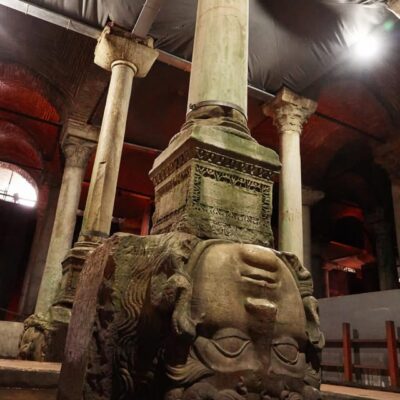
Hagia Sophia Skip-the-Line Ticket and Audio Guide
Read our review →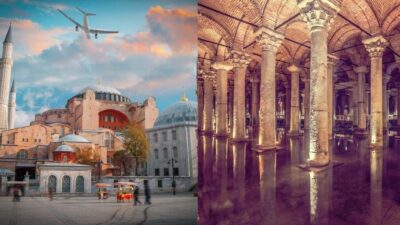
Browse the lists this tour appears in