
Reviewed · SKIP THE LINE
Istanbul: Dolmabahce Palace and Harem Skip-the-Line Ticket
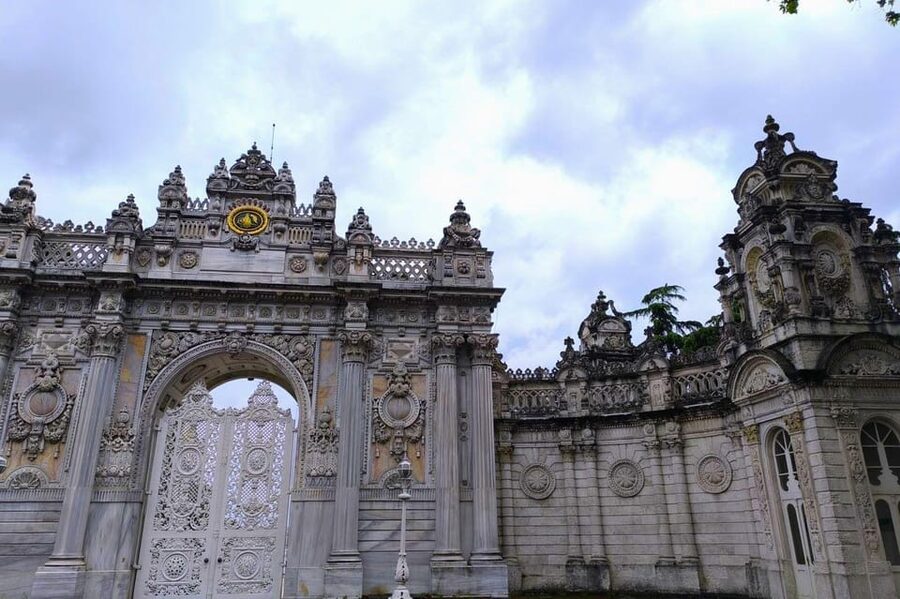
Dolmabahçe Palace is Ottoman grandeur turned up to full volume: gold trim, crystal chandeliers, formal halls, a family Harem, and gardens beside the Bosphorus. I like the skip-the-ticket-line entry, which can save real time at a popular Istanbul sight, and the included audio guide, which gives needed context when signs are limited.
You also get access to the Selamlık, Harem, and Painting Museum with one ticket. The main catch is that photography is not allowed inside, and some rooms are viewed from behind barriers rather than entered. Audio equipment has also been unreliable for some visitors, so this is best for people who can take the palace at an unhurried pace.
In This Review
- Key points to know before you go
- Why Dolmabahçe feels different from Topkapı
- Starting at the entrance with a digital ticket
- The Selamlık and the palace’s grandest rooms
- The Harem, where the palace becomes more personal
- The Painting Museum and a quieter finish
- Using the audio guide without a human guide
- Gardens, Bosphorus views, and a useful break
- Is the $62 price good value?
- Timing, clothing, and practical planning
- Who will enjoy this palace visit most?
- Should you book the Dolmabahçe Palace ticket?
- FAQ
- Is this a guided tour?
- What areas does the ticket include?
- What languages are available for the audio guide?
- Do I still need to pass through security?
- What should I bring to Dolmabahçe Palace?
- Is photography allowed inside the palace?
Key points to know before you go

- The palace sits beside the Bosphorus: Its gardens and waterfront setting are a major part of the experience, not just a backdrop.
- One ticket covers three areas: Visit the formal Selamlık, the Harem, and the Painting Museum.
- Security still takes time: Skip-the-line means you pass the ticket queue, but everyone must go through security.
- The audio guide is essential for context: It is offered in 10 languages, though the equipment and language availability can vary.
- Plan for a long visit: Two and a half hours is a sensible minimum, while a relaxed visit can take about four hours.
- Bring your passport or ID: You exchange it for the audio guide and need the device number to get your ID back.
Why Dolmabahçe feels different from Topkapı
Topkapı Palace gives you courtyards, tiled rooms, and a stronger sense of an older Ottoman court. Dolmabahçe belongs to a later period, when Ottoman rulers embraced a grand European style. The result is more formal, more glittering, and at times almost overwhelming.
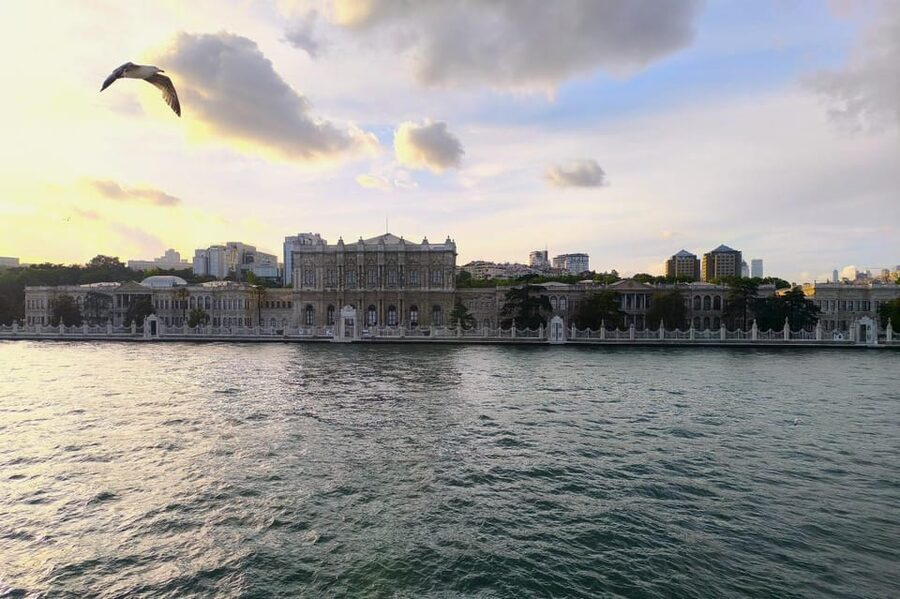
The palace was built on Istanbul’s European shore, where the Bosphorus gives the grounds a fine outdoor setting. You get gardens, water views, ornamental details, and a sense of how carefully the palace was positioned for ceremony and display.
Inside, the scale changes quickly. The Selamlık was the public and administrative part of the palace, where state business took place. The Harem was the private section for the sultan’s family. That division helps you understand the building as more than a collection of beautiful rooms. It shows how public power and family life were separated inside the imperial residence.
I find Dolmabahçe most rewarding when you pay attention to that contrast. The ceremonial rooms are designed to impress. The Harem offers a quieter look at domestic life, though you still view much of it as part of a controlled route.
A few more Istanbul trips to weigh up
- Istanbul: Hagia Sophia Skip-the-Line Ticket & Museum Option
★ 3.7 · 4,958 reviews - Istanbul: Basilica Cistern Skip-the-Line Entry Ticket
★ 4.6 · 2,270 reviews - Istanbul: Hagia Sophia Skip-the-Line Ticket and Audio Guide
★ 4.3 · 2,246 reviews
Starting at the entrance with a digital ticket
This is an independent visit, not a guided walk with a person leading your group. You go to Dolmabahçe Palace on your own, pass through the security area on the left side, and scan your ticket before entering.
The ticket process is generally simple, but you need to prepare properly. The e-tickets are sent by email one day before your selected date. Keep the QR code for every person in your party available on your phone. Saving tickets to a wallet app may not be enough if the individual codes are not visible.
The skip-the-line benefit applies to the ticket queue, not security. That distinction matters at busy times. You still need to pass the required security check, but you avoid waiting to buy or collect a standard admission ticket.
Bring your passport or ID card. Before entering the palace, you exchange your ID for an audio guide. Keep the device number safe, because you need it to reclaim your ID when leaving. This is a small procedure, but forgetting the number can make the exit needlessly awkward.
The Selamlık and the palace’s grandest rooms

Begin with the Selamlık, the palace’s formal section. This is where the Ottoman sultans handled state affairs, received officials, and staged important ceremonies. The rooms are built to impress from the moment you enter.
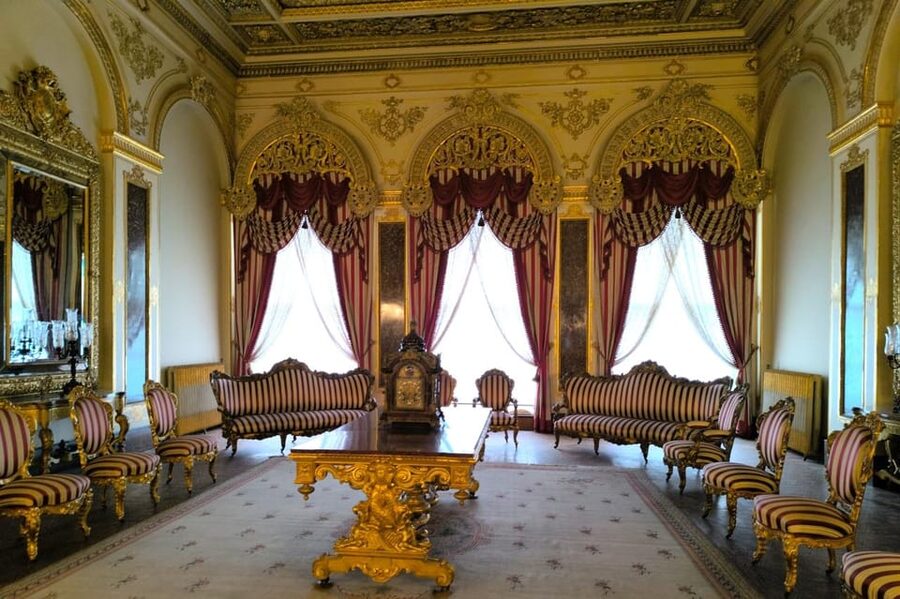
Look for the Crystal Staircase, one of the palace’s signature features. Gold decoration, polished surfaces, and crystal lighting create a setting that feels deliberately theatrical. The main halls continue that theme, with large chandeliers and ornate interior details at nearly every turn.
The most famous object is the enormous Bohemian crystal chandelier in the ceremonial area. It is the kind of feature that can make you stop even if you have already seen grand European palaces. The chandelier is not simply decoration. It captures the palace’s purpose: showing wealth, power, and modern taste to official visitors.
You should not expect a normal house tour where you wander freely into every room. Routes are controlled, and several interiors are viewed from doorways or behind barriers. Crowds can gather at the most famous rooms, making it harder to see the details.
That limitation is worth knowing before you pay. The building remains impressive, but the experience is more like following a protected museum route than exploring a lived-in residence. If you want to study furniture, ceilings, and chandeliers at length, allow extra time and be patient when the route slows.
Photography is not permitted inside. That can be disappointing, especially after seeing the ornate staircase and ceremonial spaces. On the other hand, the rule keeps the route moving and encourages you to look carefully rather than spend the visit behind a phone screen. The gardens and exterior areas offer many good photo opportunities.
The Harem, where the palace becomes more personal
The Harem was home to the sultan’s family and offers a different mood from the Selamlık. Its rooms still contain lavish decoration, but the purpose was private life rather than official ceremony.
I like including the Harem because it gives the palace a more human scale. After the wide halls and formal spaces of the Selamlık, the family section helps you think about daily routines, household structure, and the people who lived behind the palace’s public face.
The Harem is smaller and somewhat cozier than the main palace route, though it can still take time. You move through rooms at a measured pace and listen to the audio commentary for background. Some people find the Harem less immediately dramatic than the ceremonial areas, but it adds meaning to the visit.
If you are short on time, the Harem alone may be a reasonable compromise, according to the practical shape of the visit. If you have booked the full ticket, though, I would not rush through it. The palace’s public rooms show imperial power, while the Harem explains how the royal household functioned.
Expect plenty of walking and standing. A full morning can approach three hours, and a slower visit with breaks can last about four hours. That makes comfortable shoes more useful than formal clothing.
Same city, a completely different kind of day:
- Istanbul: Bosphorus Dinner Cruise & Show with Private Table
★ 4.8 · 44,561 reviews - Istanbul: Daytime or Sunset Sightseeing Cruise & Audio Guide
★ 4.8 · 14,430 reviews - Istanbul: Bosphorus Dinner Cruise with Turkish Night Show
★ 4.8 · 10,127 reviews - Best of Istanbul 1, 2 or 3-Day Private Guided Istanbul Tour
★ 5.0 · 8,922 reviews
The Painting Museum and a quieter finish
The Painting Museum adds an artistic side to the palace visit. Its collection presents Ottoman works and helps place the interiors within a wider world of court art and cultural change.
It is not as immediately famous as the chandelier or the Bosphorus gardens, but it rewards visitors who want more than grand architecture. After the palace’s heavy decoration, the paintings offer another way to understand the tastes and interests of the Ottoman court.
Allow enough time for it rather than treating it as an afterthought. The combined ticket includes the Painting Museum, so there is no need to decide at the entrance whether to add it later.
Conditions can change at individual sections. One past visit found the Clock Museum and Crystal Pavilion closed for restoration, despite their appearance in the ticket description. If either area is important to you, check the current situation on arrival and keep your expectations flexible.
Using the audio guide without a human guide
The audio guide is included and available in English, French, German, Russian, Italian, Spanish, Polish, Arabic, Chinese, and Turkish. For most people, it is the key to making sense of the rooms.
The palace does not rely on extensive written signs to explain everything. Without commentary, you may see a grand staircase, a huge hall, or a decorated family room without understanding its role. The audio guide supplies the basic story and points out details you might otherwise pass.
Some equipment has not worked perfectly, and the language selected during booking may not always be available when you arrive. Test the device before setting off. If the audio cuts out or fails to switch properly, return to the staff desk rather than carrying a silent guide through the entire route.
You should also remember that this is not a private tour. There is no named guide, no group briefing, and no one to answer follow-up questions as you walk. The tradeoff is freedom. You can linger at a chandelier, move ahead when a room is crowded, or take a garden break without keeping pace with a group.
Gardens, Bosphorus views, and a useful break
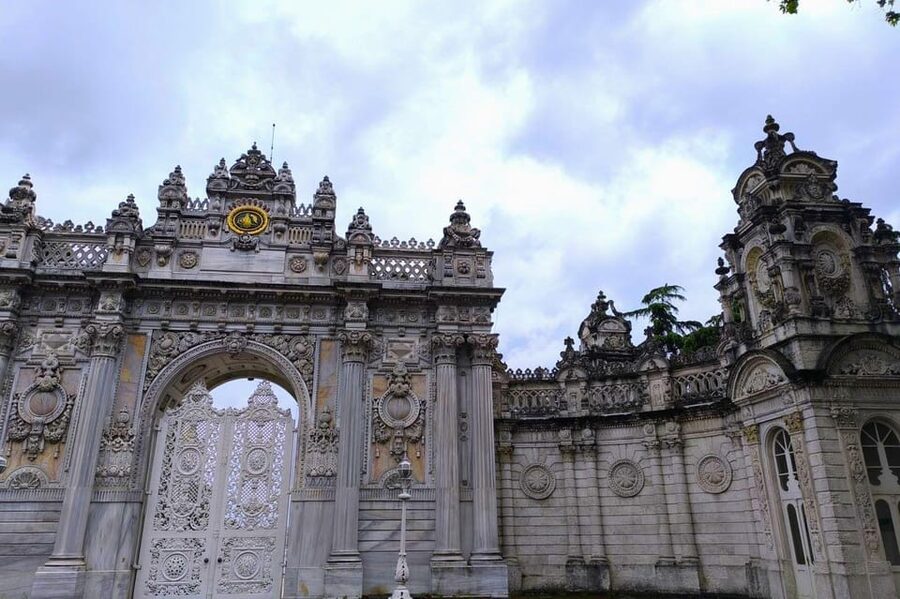
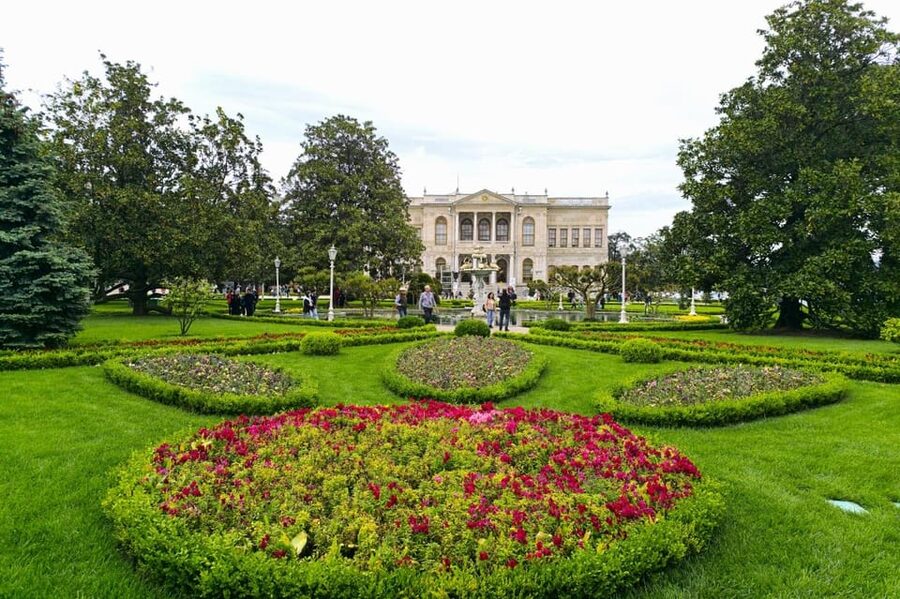
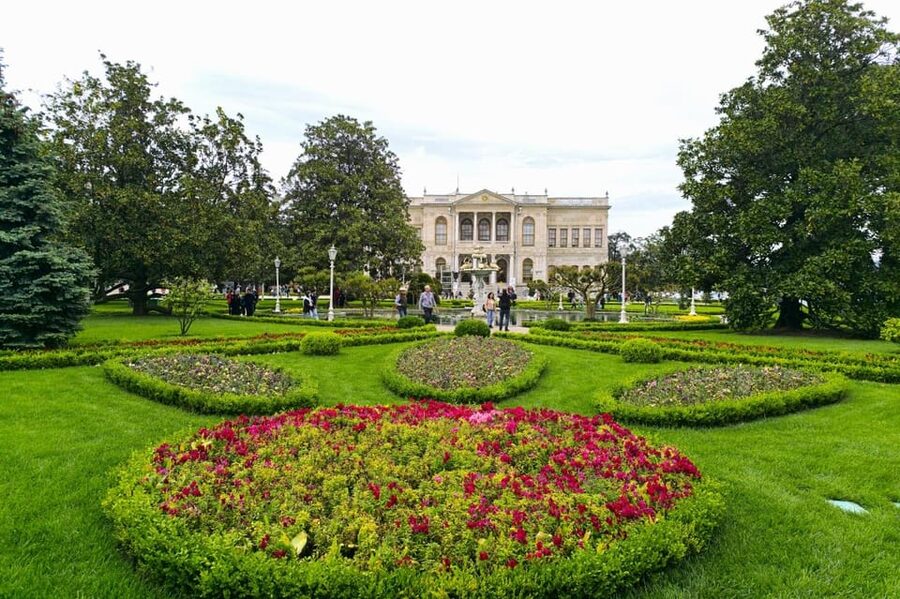
The outdoor areas are one of Dolmabahçe’s strongest features. The grounds are well kept, and the Bosphorus gives you open views after the enclosed palace route.
I recommend saving time for the gardens rather than treating them as the path to the exit. The outdoor setting softens the heavy interiors and gives you a chance to rest, take photographs, and look back at the palace facade.
The gardens also help break up the visit. A leisurely stop between the palace and Harem routes can make the long morning easier. There is a café on the grounds serving sandwiches and drinks, which is useful if you spend several hours at the site.
This is particularly helpful for families and anyone who does not want to rush from one decorated room to another. Baby strollers are not allowed, however, and luggage or large bags cannot be brought in. Pack lightly and plan around those limits.
Is the $62 price good value?
At $62 per person, this is not a bargain admission ticket. The value depends on how much you want to see and how much time you place on avoiding the ticket queue.
The price includes access to three substantial areas, a multilingual audio guide, and skip-the-ticket-line entry. If you plan to visit the Selamlık, Harem, and Painting Museum in one day, the package is easier to justify than a basic palace admission with no context.
The strongest value comes during busy periods. A pre-purchased ticket can save you from spending part of your morning in the ticket line. If there is no queue on your chosen day, the time-saving advantage naturally feels smaller, but having the ticket in hand still simplifies entry.
The price feels less attractive if you are rushed, mainly interested in outdoor views, or likely to skip the Painting Museum and Harem. It also feels harder to justify when restoration blocks a feature you especially wanted to see.
My advice is to treat the cost as payment for convenience and coverage, not for a private guide. You are buying independent access to the main sections, not a personal historian or a fully escorted tour.
Timing, clothing, and practical planning
Dolmabahçe Palace is open from 9:00 AM to 5:30 PM, except on Mondays. Last admission is at 3:30 PM. Check the available starting time when booking, but do not assume the selected time creates a strict timed entry slot. Earlier entry has sometimes been possible when the palace is open and tickets are accepted.
A morning visit gives you the best chance of having enough time for all three areas. Arriving late in the afternoon could leave you rushing, especially if security takes time or a section is crowded.
There is no strict dress code, but modest, comfortable clothing is the sensible choice. Cover your shoulders and knees, particularly in ceremonial or religiously significant spaces. Comfortable shoes matter more than style because the visit involves a long indoor route and outdoor grounds.
Wheelchair access is available. Strollers and large bags are not allowed, so families should make arrangements before arrival.
Keep your phone charged. You need it for the QR codes, and it is wise to have the ticket email accessible rather than relying only on a saved wallet pass.
Who will enjoy this palace visit most?
I would recommend it to first-time Istanbul visitors who want to see the Ottoman Empire’s later, more European face. It suits anyone who enjoys architecture, decorative arts, court life, and waterfront settings.
History-minded visitors will get the most from the audio guide. The palace can look like a series of lavish interiors if you do not know which rooms were public, which were private, and why the building mattered.
It is also a good choice for independent sightseers. You set your own pace and do not need to meet a guide or join a group. The tradeoff is that you must manage the tickets, audio device, route, and timing yourself.
I would be cautious if you dislike crowds, cannot stand for long periods, or want to photograph every interior. The route can feel restricted, some rooms are not open for walk-in viewing, and photography indoors is forbidden.
If your Istanbul schedule is very tight, compare Dolmabahçe with Topkapı Palace before booking both. One visitor found Dolmabahçe less compelling than Topkapı when time was limited. I see them as different experiences, but you may prefer Topkapı if older Ottoman architecture and courtyards matter more to you.
Should you book the Dolmabahçe Palace ticket?
Book it if you want the full palace experience, especially the Selamlık, Harem, gardens, and Painting Museum, and you value skipping the ticket queue. The Bosphorus setting, grand ceremonial rooms, and Bohemian crystal chandelier make this one of Istanbul’s more memorable palace visits.
Go in with realistic expectations. You will not freely enter every room, indoor photography is not allowed, and the audio device may need checking. Bring your ID, keep every QR code ready, allow at least two and a half hours, and choose another day if your schedule lands on Monday.
At $62, it makes the most sense for a careful, unhurried visit to all included sections. If you only have an hour or two, or mainly want palace photographs, the price may not feel worthwhile.
FAQ
Is this a guided tour?
No. You enter Dolmabahçe Palace independently with your e-ticket. An audio guide is included, but there is no tour guide leading you through the palace.
What areas does the ticket include?
The ticket is valid for the Selamlık, Harem, and Painting Museum. Some additional areas may be closed for restoration, so access to every feature can vary.
What languages are available for the audio guide?
The audio guide is offered in English, French, German, Russian, Italian, Spanish, Polish, Arabic, Chinese, and Turkish. Availability should be checked when you collect the device.
Do I still need to pass through security?
Yes. Skip-the-ticket-line entry lets you pass the ticket queue, but security checks are mandatory for everyone.
What should I bring to Dolmabahçe Palace?
Bring your passport or ID card and the QR code for each ticket in your group. You exchange your ID for the audio guide and need to keep the device number to reclaim it when leaving.
Is photography allowed inside the palace?
No. Photography is not allowed inside, though the gardens and exterior areas provide many opportunities for photographs.
Just added around Istanbul
- Istanbul Highlights Small-Group Walking Guided Tour★ 4.4 · 179 reviews
- Topkapi Palace&Harem-Guided Tour-Skip lines- All tickets inc★ 4.8 · 66 reviews
- Istanbul: Topkapi Palace Skip-the-Line Ticket & Guided Tour★ 4.2 · 178 reviews
- Istanbul: Private Guided Food Tour with 10 Tastings★ 4.7 · 49 reviews
- Istanbul: Belly Dancing, Show, & Dinner at Sultana’s Ticket★ 3.8 · 71 reviews
- Istanbul: Private Local Food & Markets Experience★ 4.9 · 27 reviews
- Skip-the-Line Hagia Sophia Digital Tickets w/Audio Guide★ 4.3 · 23 reviews
- Istanbul: Guided Shopping Trip with Turkish Coffee Tasting★ 4.7 · 37 reviews
Skip the Line, compared.

Hagia Sophia Skip-the-Line Ticket & Museum Option
Read our review →
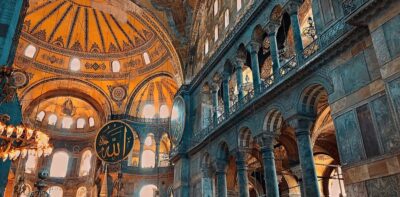
Hagia Sophia Skip-the-Line Ticket and Audio Guide
Read our review →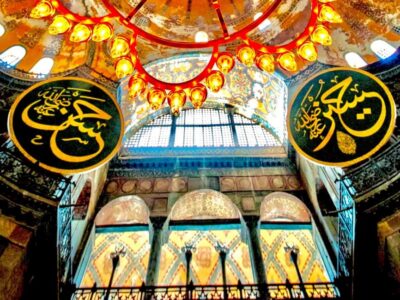
Hagia Sophia Skip-the-Line Ticket with Audio Tour
Read our review →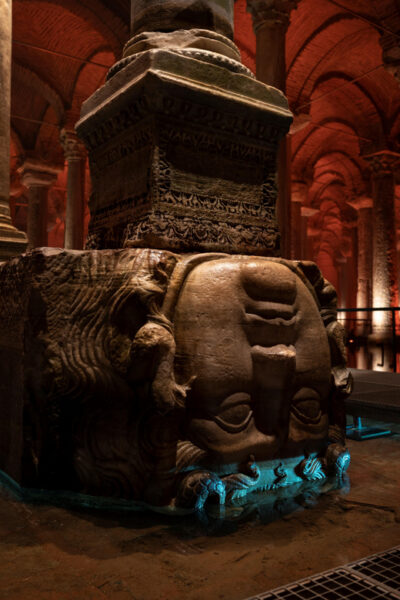
Basilica Cistern Skip-the-Line Entry & Audio Guide
Read our review →
Basilica Cistern Guided Tour & Skip the Line Ticket
Read our review →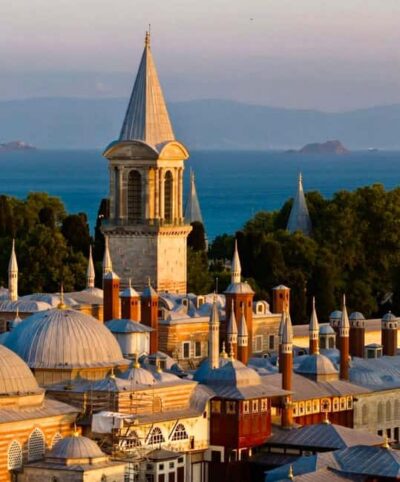
Topkapi Palace & Harem Tour Skip-the-Line Ticket
Read our review →Basilica Cistern Skip-the-Line Entry & Audio Guide
Read our review →Browse the lists this tour appears in