
Reviewed · SKIP THE LINE
Istanbul: Dolmabahce Palace & Harem Skip-the-Line Entry
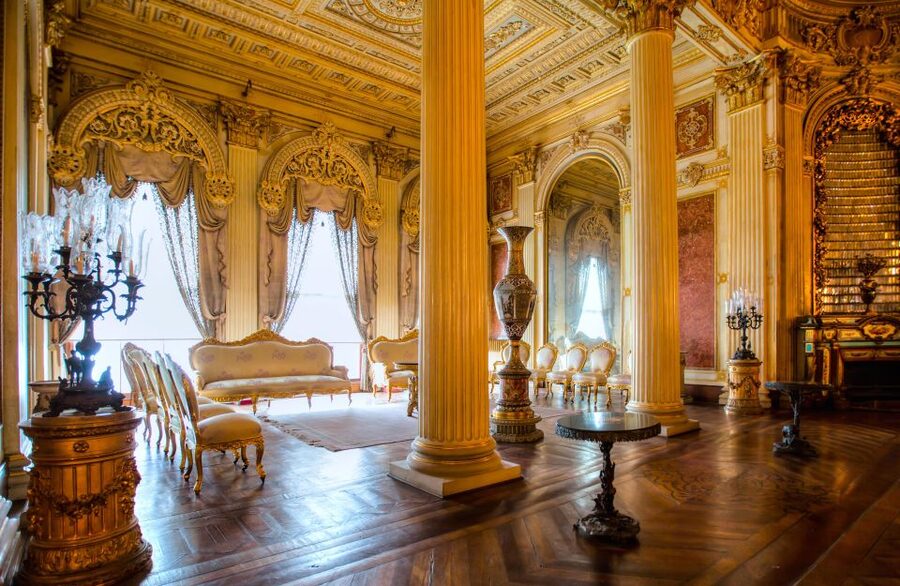
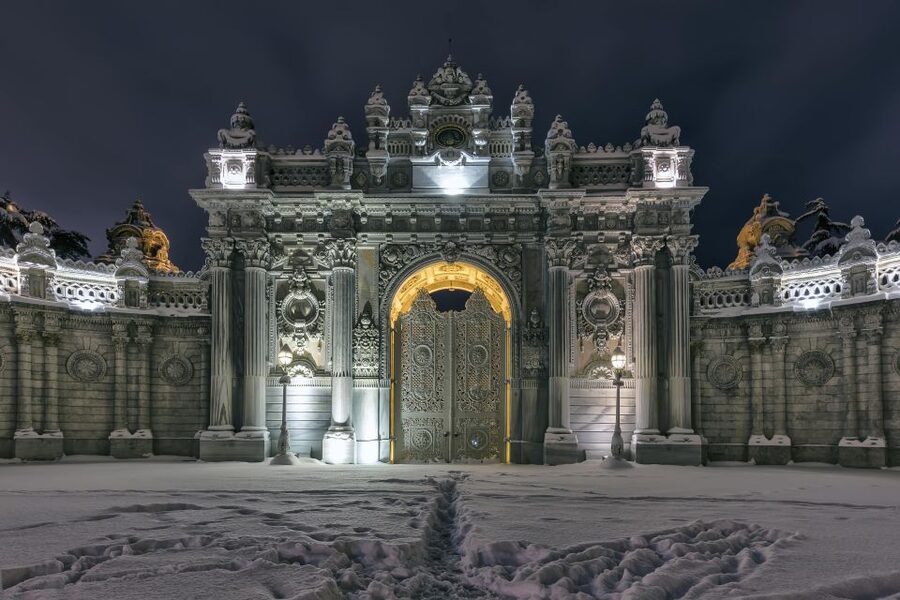
Dolmabahçe Palace is Ottoman Istanbul at its most extravagant. Built for Sultan Abdülmecid I and opened in 1856, it replaced the older Topkapı Palace as the empire’s main royal home. Inside, you’ll see dazzling chandeliers, gold ornament, formal rooms, and reminders of Mustafa Kemal Atatürk, who used the palace during the final years of his life. The Harem section is included, which makes this more useful than a basic palace ticket.
I like the freedom to move at your own pace, and I like the audio guide’s wide choice of 25 languages. The palace garden and cafe also give you a natural pause between the main palace and Harem. The main catch is that the standard experience does not include a live guide, and the palace’s entry process can still involve a security check or a ticket-desk wait.
In This Review
- Key points to know before you go
- Why Dolmabahçe feels different from Topkapı
- Entering the palace with a skip-the-line ticket
- The main palace: gold, glass, and imperial ceremony
- The Harem section and the break between buildings
- Audio guide or private guide?
- Mustafa Kemal Atatürk and the palace’s final chapter
- Is the $55 price good value?
- How long you need and who will enjoy it
- Practical tips for a smoother visit
- Should you book Dolmabahçe Palace and Harem?
- FAQ
- Is the Harem section included in the ticket?
- Is a live guide included?
- How many languages does the audio guide support?
- Where do I get the audio guide?
- Can I take photographs inside the palace?
- When is Dolmabahçe Palace closed?
Key points to know before you go
- The palace replaced Topkapı as the sultans’ main residence: Expect European-style grandeur rather than Topkapı’s older Ottoman court design.
- The Harem section is included: Check that your QR code or issued ticket specifically covers both areas before arriving.
- The chandeliers are a major attraction: Look for Baccarat and Bohemian glass, including the enormous Bohemian chandelier.
- The audio guide comes by email link: Download or open it before reaching the palace, since it cannot be collected inside.
- You cannot take photographs indoors: Bring your eyes rather than your camera for the palace interiors.
- A private guide costs extra: Some bookings include a short introduction outside, but the basic ticket is self-guided inside.
Why Dolmabahçe feels different from Topkapı

If Topkapı Palace feels like an older Ottoman world of courtyards, tiled rooms, and court ritual, Dolmabahçe feels like an empire trying to present a modern European face. That contrast is the key to understanding this visit.
Sultan Abdülmecid I ordered the palace in the 19th century, and it opened in 1856. By then, Ottoman rulers wanted a residence suited to European diplomacy and royal ceremony. The result is a grand waterfront palace filled with formal interiors, ornate ceilings, heavy furniture, and crystal lighting.
I find Dolmabahçe most interesting when you look past the glitter. The palace was not simply built to be beautiful. It was a political statement. The Ottoman Empire was changing, and its rulers wanted a home that could host foreign officials and project wealth, order, and authority.
The palace served as the empire’s last headquarters until 1922. That gives the rooms a final-chapter quality. You are not only looking at decoration. You are walking through the last main royal residence of the Ottoman state.
A few more Istanbul trips to weigh up
- Istanbul: Hagia Sophia Skip-the-Line Ticket & Museum Option
★ 3.7 · 4,958 reviews - Istanbul: Basilica Cistern Skip-the-Line Entry Ticket
★ 4.6 · 2,270 reviews - Istanbul: Hagia Sophia Skip-the-Line Ticket and Audio Guide
★ 4.3 · 2,246 reviews
Entering the palace with a skip-the-line ticket
The skip-the-line ticket is helpful, but you should read the promise carefully. It means you avoid the regular ticket-buying process, not every form of waiting. All visitors must pass through security, and that can slow things down at busy times.
Your QR codes are sent in a separate email by Istanbul Tourist Pass. The audio guide is supplied through a link with the ticket, so check your inbox before you leave your hotel. Do not expect to pick up the audio guide at the palace itself.
There have also been cases where a QR code did not scan correctly or where the ticket had to be exchanged at an information desk. That is not the usual ideal, but it is a useful reason to allow extra time. If the staff directs you to a ticket office, the skip-the-line benefit may feel smaller than expected.
I would arrive with the QR code easy to display and enough battery on your phone. A screenshot may be useful if the supplier’s instructions allow it, but keep the original email available too. The information provided does not promise that every form of digital code will work at every entrance.
The palace is closed on Mondays. From November 1 through March 31, opening hours are approximately 9:00 AM to 4:00 PM. Check the current start time when booking, especially in winter, when a late visit could leave little time for both the palace and Harem.
The main palace: gold, glass, and imperial ceremony

The main palace is the visual centerpiece. You move through grand interiors where the decoration does much of the talking. Gold appears on ornate ceilings, and the furniture and design show how different this residence was from Topkapı.
The most memorable feature for many people will be the chandeliers. Dolmabahçe has a major collection of Baccarat and Bohemian chandeliers, including what is described as the largest Bohemian chandelier in the world. Look up often. The ceilings are as important as the rooms below them.
The scale can be almost comical. This is not restrained royal decoration. It is a palace designed to impress, and it does not whisper. Crystal, gold, and formal furnishings work together to create an atmosphere of ceremony.
That grandeur also affects the pace. You can move through the palace in about an hour, according to one practical estimate, but the full activity is listed at two hours. The difference depends on how closely you listen to the guide, how long you spend in the rooms, and how much time you give the garden and cafe.
Photography is not allowed inside the palace. This disappoints many people, especially in rooms built for visual impact. I suggest treating the rule as a reason to slow down. Since you cannot keep taking pictures, you can pay more attention to the ceilings, chandeliers, furniture, and details that are easy to miss while looking at a screen.
The Harem section and the break between buildings
The Harem section is part of the ticket, and that matters. A palace visit that stops with the public ceremonial rooms can feel incomplete. The Harem helps you understand the private side of the imperial household and gives the visit a second focus after the grand public interiors.
The route can include a pause at the cafe before the Harem entrance. That is useful in summer, when a cold drink can reset your energy before you continue. The garden is another pleasant part of the visit, especially if you need a break from the formal rooms.
Pay close attention to your ticket at the entrance. One booking problem reported involved admission to the main palace but not the Harem because the required paper ticket was missing. The QR code in the booking app was not accepted for that section in that instance.
The practical lesson is simple: confirm at the ticket desk that both Dolmabahçe Palace and Harem are included before you walk away. If the staff issues a separate paper ticket, keep it safe until you have entered the Harem.
Same city, a completely different kind of day:
- Istanbul: Bosphorus Dinner Cruise & Show with Private Table
★ 4.8 · 44,561 reviews - Istanbul: Daytime or Sunset Sightseeing Cruise & Audio Guide
★ 4.8 · 14,430 reviews - Istanbul: Bosphorus Dinner Cruise with Turkish Night Show
★ 4.8 · 10,127 reviews - Best of Istanbul 1, 2 or 3-Day Private Guided Istanbul Tour
★ 5.0 · 8,922 reviews
Audio guide or private guide?
The standard experience is built around an audio guide, not a live guide. It is available in English, German, Russian, Persian, Arabic, French, Italian, Chinese, Dutch, Spanish, Hindi, Romanian, Ukrainian, Korean, Turkish, Bulgarian, Polish, Swedish, Japanese, Indonesian, Greek, Hungarian, Portuguese, Urdu, and Croatian.
That language range is one of the strongest reasons to choose this option. You can listen in the language that helps you understand dates, names, and palace functions without trying to follow a group in English.
The audio guide is supplied by link with your tickets. It cannot be obtained at the palace, so open it before you arrive. If your phone connection is unreliable, prepare it in advance as far as the supplier’s system permits.
A private guide is available for an additional charge. This is worth considering if you care more about interpretation than independence. Guides such as Furkan, Ilke, John, Adam, Zey, Ozzy, and others have been praised for clear explanations, patience, and personal stories about Turkish traditions and modern life.
There is an important limitation. Palace rules may prevent guides from walking through the interiors with groups larger than five, and several experiences involve a guide giving an introduction outside before you continue alone. That means paying for a live guide does not always mean having a person beside you in every room.
For many people, the best arrangement is a short guided introduction followed by the audio guide inside. You get context at the start, then you can stop, listen, or move on at your own pace. If you expect a continuous guided walk through every interior, ask exactly how the guide operates before booking.
Mustafa Kemal Atatürk and the palace’s final chapter
Dolmabahçe is also tied to Mustafa Kemal Atatürk, the founder of modern Turkey. The palace carries his memory, adding a modern national dimension to what might otherwise feel like a display of late Ottoman luxury.
The connection helps place the building in time. Dolmabahçe was not only a sultan’s home. It was used during the closing years of the Ottoman Empire and remained important as Turkey moved into a new political era.
I recommend paying attention to the Atatürk material rather than treating it as a quick historical footnote. The palace makes more sense when you see the link between the final Ottoman court and the founding period of the Turkish Republic.
This is also where a live guide can add value. An audio guide can give you the essential facts, but a good guide can explain why the palace matters to Turkish history today. The supplied feedback includes strong praise for guides who connected the building with present-day traditions, religion, and daily life.
Is the $55 price good value?
At $55 per person, this is not a cheap admission ticket. The value depends on what you need.
For a self-guided visit, you are paying for entry to both the palace and Harem, the convenience of a digital ticket, and an audio guide in your chosen language. If the line is long, the skip-the-line feature can save useful time, especially during summer or around the busiest hours.
The price is easier to justify if you have only a short stay in Istanbul. Losing an hour at a ticket line can disrupt a full day, and Dolmabahçe is often paired with other sights around the Bosphorus and Beşiktaş area.
It is less convincing if you expect a full private tour. A live guide is not included, and the palace’s rules may limit where a guide can accompany you. If you want close explanation of every room, budget for the optional guide and confirm the exact format.
I would choose this ticket for someone who values flexibility, needs a particular language, and wants the Harem included. A visitor who only wants quick entry and is comfortable reading basic information may find the cost high.
How long you need and who will enjoy it
The stated duration is two hours. That is a sensible amount of time for the main palace, Harem, garden, cafe pause, and audio commentary without turning the visit into an exhausting half-day.
You can move faster. One practical account put the palace route at about an hour, with time afterward for a drink. But rushing through Dolmabahçe defeats the point. The ceilings and chandeliers reward looking up, and the audio guide works best when you have time to stop in the rooms that interest you.
This experience suits:
- First-time visitors who want a major Ottoman palace without arranging transport or a long guided day.
- Families and mixed-age groups who need the freedom to move at different speeds.
- People who prefer audio commentary in a language other than English.
- History fans interested in the final Ottoman court and Atatürk.
- Independent visitors who want a live guide only for an introduction, not a fixed walk.
It may not suit you if indoor photography is essential, if you dislike ticket procedures that can vary at the entrance, or if you want a guide beside you throughout the palace.
Practical tips for a smoother visit
First, do not go on Monday. The palace museum is closed that day.
Second, plan around winter hours. From November 1 to March 31, closing time is approximately 4:00 PM. A morning visit gives you more room if security or ticket processing takes longer than expected.
Third, check both your email and booking app. The QR codes arrive by separate email from Istanbul Tourist Pass, and the audio guide link is attached to the ticket information. If you arrive with only one code, you may need help at the information desk.
Fourth, allow time for security. Skip-the-line does not remove this mandatory check.
Fifth, bring a fully charged phone. You need it for the QR code and audio guide, and there is no palace-issued audio device to collect.
Finally, confirm Harem access before entering the main route. If a staff member provides paper tickets, keep them with you. That small check could prevent a frustrating second wait.
Should you book Dolmabahçe Palace and Harem?
Book it if you want to see Istanbul’s most lavish Ottoman palace at your own pace, with the Harem included and commentary in a language you choose. The chandeliers, gold ceilings, garden, and Atatürk connection give the visit plenty of substance beyond pretty rooms.
I would book the audio-guide option for independent sightseeing and the private guide only after confirming that the guide can accompany your group in the way you expect. The biggest warning is not the palace itself. It is the gap between skip-the-line entry and instant entry, plus the possibility of a QR-code or Harem-ticket problem.
At $55, this is best for a time-conscious visitor who wants convenience and a clear historical introduction. If you are willing to manage a ticket desk yourself and do not need the audio guide, you may prefer a simpler admission option. For most first visits, though, Dolmabahçe is worth making room for, and this package covers the two sections that matter most.
FAQ
Is the Harem section included in the ticket?
Yes. The included ticket covers Dolmabahçe Palace and the Harem section. Check at the entrance that your issued ticket or QR code shows access to both areas.
Is a live guide included?
No. The standard package includes an audio guide. A private live guide can be hired for an additional cost, and the exact guiding arrangement may vary by option.
How many languages does the audio guide support?
The audio guide is available in 25 languages, including English, German, French, Italian, Spanish, Chinese, Arabic, Turkish, Japanese, Korean, Portuguese, Urdu, and Croatian.
Where do I get the audio guide?
The audio guide is provided through a link sent with your ticket information by Istanbul Tourist Pass. It cannot be collected at Dolmabahçe Palace.
Can I take photographs inside the palace?
No. Photography is not allowed inside the palace. You can enjoy the interiors directly, including the chandeliers, gold decoration, furniture, and ceilings.
When is Dolmabahçe Palace closed?
The palace museum is closed on Mondays. From November 1 to March 31, opening hours are approximately 9:00 AM to 4:00 PM, so check the available start times before booking.
Just added around Istanbul
- Istanbul Highlights Small-Group Walking Guided Tour★ 4.4 · 179 reviews
- Topkapi Palace&Harem-Guided Tour-Skip lines- All tickets inc★ 4.8 · 66 reviews
- Istanbul: Topkapi Palace Skip-the-Line Ticket & Guided Tour★ 4.2 · 178 reviews
- Istanbul: Private Guided Food Tour with 10 Tastings★ 4.7 · 49 reviews
- Istanbul: Belly Dancing, Show, & Dinner at Sultana’s Ticket★ 3.8 · 71 reviews
- Istanbul: Private Local Food & Markets Experience★ 4.9 · 27 reviews
- Skip-the-Line Hagia Sophia Digital Tickets w/Audio Guide★ 4.3 · 23 reviews
- Istanbul: Guided Shopping Trip with Turkish Coffee Tasting★ 4.7 · 37 reviews
Skip the Line, compared.

Hagia Sophia Skip-the-Line Ticket & Museum Option
Read our review →
Hagia Sophia Skip-the-Line Ticket and Audio Guide
Read our review →
Hagia Sophia Skip-the-Line Ticket with Audio Tour
Read our review →
Basilica Cistern Skip-the-Line Entry & Audio Guide
Read our review →
Basilica Cistern Guided Tour & Skip the Line Ticket
Read our review →
Topkapi Palace & Harem Tour Skip-the-Line Ticket
Read our review →Basilica Cistern Skip-the-Line Entry & Audio Guide
Read our review →Browse the lists this tour appears in