
Reviewed · OLD CITY & HISTORIC PENINSULA TOURS
Istanbul Old City: Basilica Cistern – Blue Mosque – Grand Bazaar
Istanbul’s Old City packs Roman, Byzantine, and Ottoman landmarks into a compact area, and this small-group walking tour gives you a useful first look without sending you across town. The Basilica Cistern is the star: cool, shadowy, and held up by 336 marble columns. The Blue Mosque and Hippodrome then add the grand outdoor setting.
I like the group limit of eight, which makes it easier to hear your guide and ask questions. I also like the flexible approach shown by guides such as Erol, Tolga Kinas, Kim, Huseyin Bagir, Gamze, Mohammed, and Elif, who have adjusted the pace and route to suit the group. The main caution is the extra cistern fee unless you select the all-inclusive option, plus the shopping stop, which some people enjoy and others find distracting.
In This Review
- Key points to know before booking
- Why this three-hour walk works in Istanbul
- Under the ground at the Basilica Cistern
- The Blue Mosque as a living place of worship
- Roman spectacle at the Hippodrome
- Sultanahmet Square and the Hagia Sophia setting
- The Grand Bazaar and the shopping question
- What the guides add to the walk
- Price, pace, and practical value
- Who should book this Old City tour?
- Should you book it?
- FAQ
- How long does the Istanbul Old City tour last?
- What is included in the tour price?
- Is the Basilica Cistern admission always included?
- How large is the tour group?
- What should I wear to the Blue Mosque?
- Is the Grand Bazaar open every day?
- Are hotel pickup and drop-off included?
Key points to know before booking
- The Basilica Cistern is the highlight: See an enormous sixth-century water reservoir with 336 marble columns and the famous Medusa heads.
- Groups are capped at eight: A small party is easier to manage around Sultanahmet’s crowds and narrow streets.
- The guide can shape the experience: Erol, Tolga, Kim, Huseyin, Gamze, Mohammed, and Elif have been praised for clear history, patience, humor, and flexibility.
- The Blue Mosque is still an active mosque: Dress modestly, and expect access rules that can affect the visit.
- The Grand Bazaar includes a shopping element: Turkish delights and a local carpet workshop are part of the plan, so this is not a pure sightseeing walk.
- Check the Sunday schedule: The Grand Bazaar is closed Sunday, and the route may use the Egyptian Bazaar instead.
Why this three-hour walk works in Istanbul
Istanbul can feel confusing on a first visit. The city’s main monuments sit close together, but each belongs to a different chapter: Roman Constantinople, Byzantine Constantinople, and Ottoman Istanbul. A guide helps connect those chapters instead of leaving you with a string of impressive buildings and no clear story.
The walk lasts about three hours and stays in the Sultanahmet area. That matters because you spend your time seeing sights rather than riding between them. You will still do a moderate amount of walking, so comfortable shoes are important. A stroller would make the route difficult and is not recommended.
The small format is one of the strongest reasons to book. With no more than eight people, you have a better chance of hearing explanations inside busy sites. It also gives the guide room to answer questions. Tolga, Erol, and Kim are especially noted for adapting the pace, changing the route when needed, and offering useful advice for the rest of your time in Istanbul.
Do not expect a private tour by default, though. A small group can sometimes become a private or nearly private outing if few people book that departure, but that is not guaranteed. The real promise is a limited group, a professional English-speaking guide, and a route through the Old City’s main sights.
More old city & historic peninsula tours in Istanbul:
- Istanbul: Basilica Cistern Fast-Track Entry and Audio Guide
★ 4.6 · 7,521 reviews - Istanbul: Hagia Sophia Skip-the-Line Ticket & Museum Option
★ 3.7 · 4,958 reviews - Istanbul: Topkapi Palace & Harem Museum Ticket & Audio Guide
★ 4.1 · 3,977 reviews
Under the ground at the Basilica Cistern
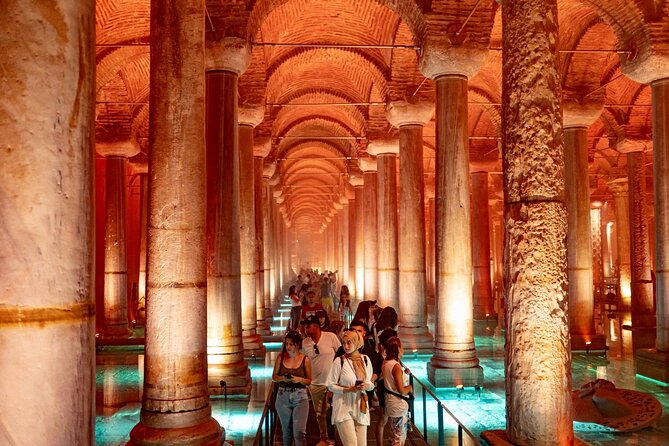
The Basilica Cistern is the most unusual stop. Built under Emperor Justinian between 527 and 565, it served as a huge underground water source for Constantinople. The chamber covers about 9,800 square meters and is supported by 336 marble columns.
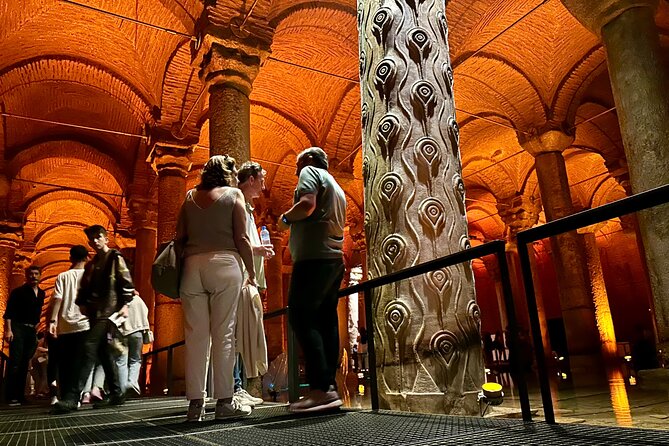
You enter a dark, cool space where the columns rise out of shallow water. The lighting gives the place a quiet, almost theatrical mood, but the real interest is practical: this was an immense piece of infrastructure built to supply water to the imperial city. A guide can explain why the cistern mattered and help you notice details you might otherwise pass by.
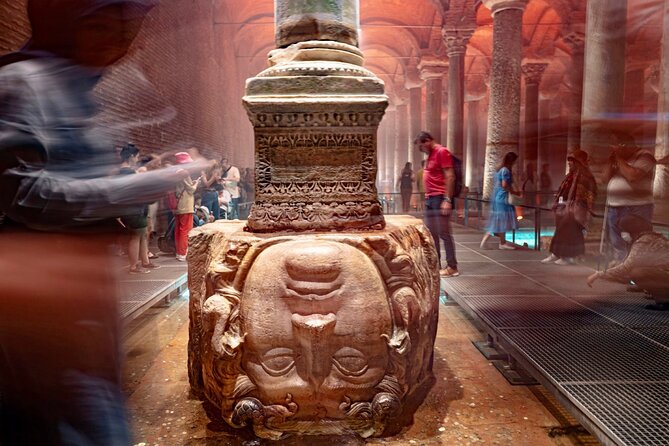
The Medusa heads are a major draw. These carved stone heads are used as column bases, including one placed sideways and another upside down. Their exact original purpose is not fully explained by the tour information, so be wary of anyone presenting a dramatic theory as settled fact. The fun is in seeing them and hearing how they fit into the cistern’s later story.
The advertised visit lasts about 30 minutes. That is enough for a strong introduction, though you may want more time if photography is important to you. The site is popular, and the entrance queue can be long. Several guides, including Tolga and others, have provided skip-the-line access for the group, which can save a meaningful part of a short sightseeing day.
Pay close attention to the ticket option when booking. The price is listed at $60.47 per person, but the cistern admission is included only with the all-inclusive choice. The additional fee is described inconsistently in the supplied information, with one note stating TRY 1,600 and another stating 900 TL. Treat that as a warning to check the current amount and inclusion at checkout. If admission is not included, you pay the guide, preferably in Turkish lira, or in an equivalent amount of US dollars or euros.
That extra charge affects the value. If you select the correct package and receive queue assistance, the tour can be a good deal for a first visit. If you assume the basic price includes every entrance, the final cost may surprise you.
The Blue Mosque as a living place of worship
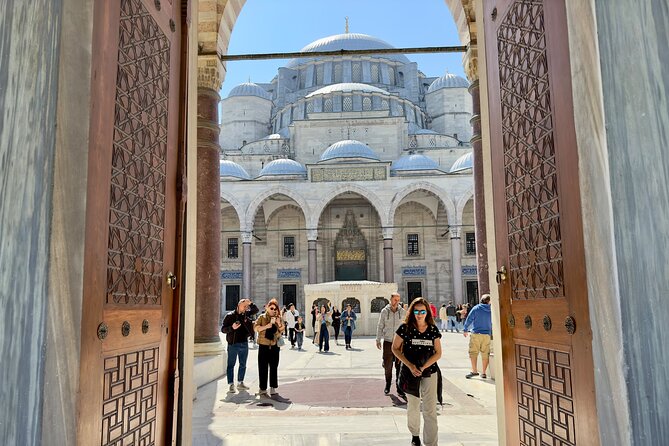
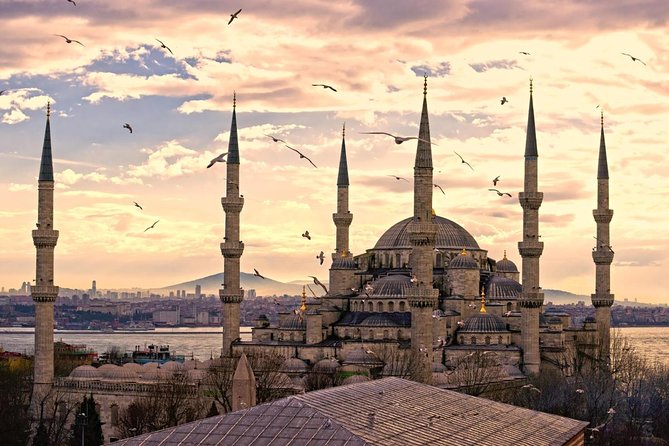
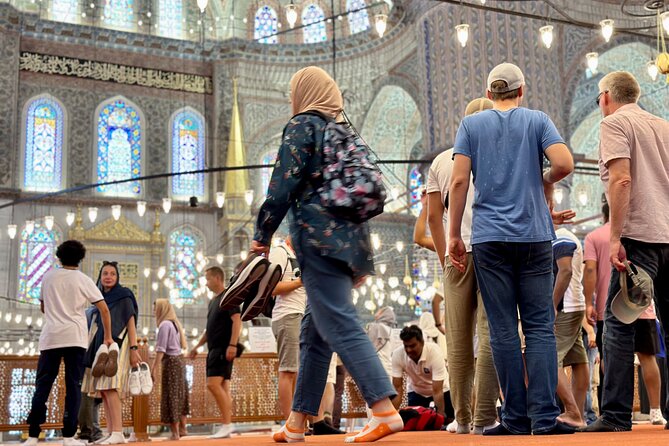
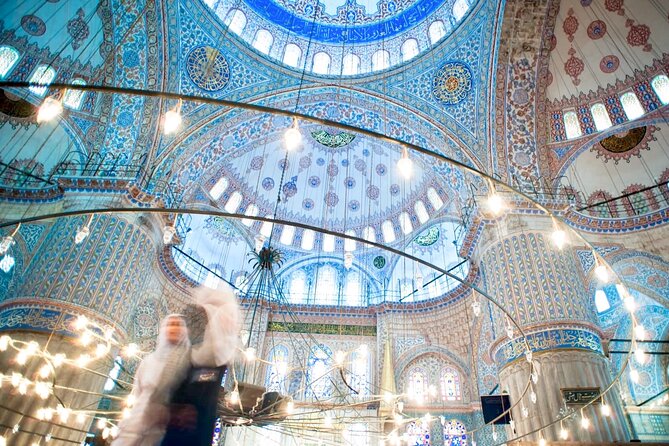
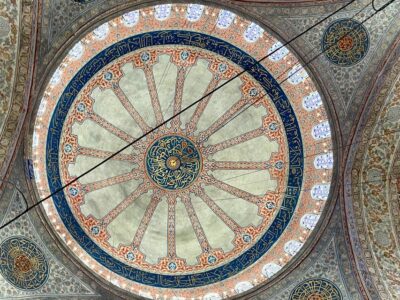
The Sultan Ahmed Mosque, commonly called the Blue Mosque, was built between 1609 and 1616 during the reign of Ahmed I. Its classical Ottoman design includes five main domes, six minarets, and eight smaller domes. Inside, hand-painted blue tiles give the mosque its familiar nickname.
This is not simply a museum stop. The Blue Mosque continues to function as a mosque, so visiting hours and access can change around prayer. Your guide can explain how to enter respectfully and what you are seeing, but the schedule is not entirely under the tour’s control. One departure found the mosque closed for renovation, and the guide explained the building from outside and suggested returning at another time.
Dress modestly. Men and women should wear clothing that reaches below the knee. Women should cover their heads and exposed shoulders with a scarf or shawl. The practical move is to carry a light scarf, even if you are dressed appropriately, since it takes little space and avoids a last-minute scramble.
The planned visit is about 30 minutes. That gives you time to appreciate the scale, tilework, domes, and traditional design, but it is not a long architectural study. The guide’s role matters here. Erol has been praised for making Islamic culture and Istanbul’s religious traditions easier to understand, while other guides have answered questions about local customs and norms with patience.
Keep your expectations realistic about the phrase best scenery. The mosque area provides excellent views toward the major monuments and Sultanahmet Square, but this is not a separate panoramic viewpoint. The pleasure comes from seeing the mosque in its setting, with Hagia Sophia nearby and the old ceremonial center around it.
Roman spectacle at the Hippodrome
The Hippodrome was once the sporting and social center of Constantinople. Chariot races, public events, and political drama all gathered here. Today, it is a broad square with only fragments of the original structure, so you need a guide’s explanation to picture the ancient arena.
The surviving monuments include the Egyptian Obelisk, which is about 3,500 years old, and the Serpentine Column. These objects connect the square to a much older world than Byzantine Constantinople. Their presence also shows how rulers collected and reused monuments to add status to their capital.
The stop lasts about 20 minutes. That is a sensible amount of time because the Hippodrome is primarily an open-air orientation stop. You will hear the story, see the remaining monuments, and understand how the square relates to the Blue Mosque and Hagia Sophia.
This is one place where a guide adds real value. Without context, you might see a few isolated stones in a plaza. With an explanation of the arena’s former role, the square becomes easier to read.
A few more Istanbul trips to weigh up
- Istanbul Grand Bazaar: From Rooftops to the Secret Passages
★ 4.8 · 337 reviews - Istanbul: Hagia Sophia, Blue Mosque and Grand Bazaar Tour
★ 4.5 · 222 reviews - Small-Group Bosphorus Cruise and Istanbul’s Egyptian Bazaar
★ 3.5 · 208 reviews - Istanbul: Hagia Sophia, Blue Mosque, Cistern & Bazaar Tour
★ 4.9 · 189 reviews
Sultanahmet Square and the Hagia Sophia setting
Sultanahmet Square is planned as a short ten-minute stop for photographs and orientation. It is the place to pause between the major monuments and frame the Blue Mosque and Hagia Sophia in the same general scene.
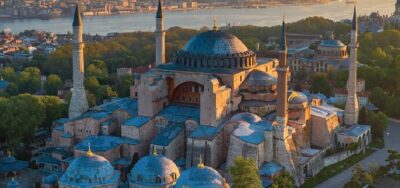
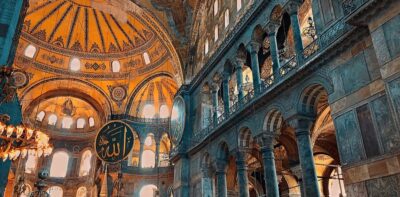
The Church of Divine Wisdom, or Hagia Sophia, is also part of the historical explanation. Built by Emperor Justinian in 532, the fifteen-hundred-year-old monument was intended to be the world’s largest place of worship. The information provided for this tour does not list an admission ticket or dedicated interior visit, so you should not book expecting a full Hagia Sophia tour.
Instead, treat this part as useful context. Istanbul’s Old City makes more sense when you understand how the Byzantine and Ottoman centers grew around these buildings. If Hagia Sophia is a priority, plan a separate visit and confirm current entry rules before you go.
The Grand Bazaar and the shopping question
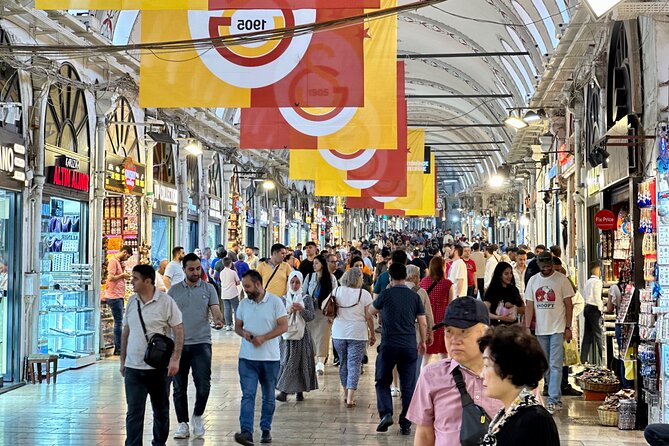
The Grand Bazaar is the final major stop, with about 15 minutes listed for the covered market. The bazaar is one of Istanbul’s best-known commercial landmarks, but fifteen minutes is enough only for a taste. You can get a feel for the lanes, shopfronts, and scale, but not properly browse a large market.
The tour also includes Turkish delights and a visit to a local carpet workshop. That can be useful if you are curious about Turkish crafts and want a quick introduction to how carpets are presented and sold. It can also feel like a sales stop if your main goal is monuments rather than shopping.
This is the tour’s clearest point of tension. Some guides have avoided unwanted sales pitches, while other departures included stops at a ceramic shop or high-end stores that did not suit everyone. Be direct with your guide at the start. Say if you want the shopping portion kept brief, or if you would rather use that time for questions and photographs.
The bazaar itself can be interesting, but it is not universally appealing. Some shoppers enjoy the color and range of goods. Others find the sales approach aggressive or see little that feels different from markets elsewhere. I would regard it as an optional bonus, not the main reason to book.
The Grand Bazaar is closed on Sunday. On that day, the route may substitute the Egyptian Bazaar, as one group experienced. Since the published stop specifically names the Grand Bazaar, confirm the Sunday plan if that market matters to you.
What the guides add to the walk
The monuments are worth seeing on your own, but the guide is what turns this into a tour rather than a checklist. The strongest guide experiences have come from people who can explain Roman, Byzantine, Ottoman, and Islamic history in plain language, then adjust when the group asks for more detail.
Erol has been praised for combining facts with humor and for changing the route when a couple had already seen some of the sights. Tolga Kinas has been singled out for long experience, careful answers, and a well-paced private departure. Kim has been described as caring and flexible, including when guiding a family with children aged seven and nine in heavy rain.
Huseyin Bagir has received particular praise for language ability, patience, local insight, and willingness to extend the outing when the group wanted lunch and a music-instrument shop. Gamze, Mohammed, and Elif have also been noted for energy, warmth, clear explanations, and thoughtful recommendations.
Guide assignments can change, so you cannot guarantee a particular person. Still, the repeated pattern is useful: this operator seems to place real weight on guide-led interpretation, and the limited group gives a good guide room to personalize the walk.
Price, pace, and practical value
At $60.47 per person, the price is reasonable for a three-hour small-group walk if your package includes the Basilica Cistern ticket. The value improves if the guide gets you past a long cistern queue, explains the sites clearly, and helps you use the rest of your time in Istanbul well.
The value is less clear if you choose the option without admission and then add the cistern fee. Because the supplied fee information differs, check the final booking details carefully. A low headline price is not as useful if the key attraction costs extra and you did not budget for it.
The route begins at Foodie-ist Cafe and Brasserie, Alemdar, Muhterem Efendi Sk. No:13, in Fatih. It ends in Tahtakale, also in Fatih, rather than returning you to a hotel. That finish can be handy if you want to continue toward the market area, but plan your next move before the tour begins. Hotel pickup and drop-off are not included.
The tour is offered in English, confirmation arrives at booking, and the starting area is near public transportation. Most people can take part, but expect moderate walking, uneven urban movement, and crowded areas. Bad weather can cancel the experience, in which case you are offered another date or a refund. Free cancellation is available up to 24 hours before the start time.
Who should book this Old City tour?
I would choose this tour for a first visit, a short stay, or a family that wants the main Sultanahmet sights explained without spending a full day on its feet. It is also a good fit if the Basilica Cistern is high on your list and you would rather not work out the queue and history on your own.
The format suits curious people who ask questions. You can learn about religion, imperial power, architecture, and daily life in one compact walk. A small group also works well for couples or families who dislike the rigid pace of a large coach tour.
I would hesitate if you want long, unhurried time inside every monument. The cistern and Blue Mosque each receive about 30 minutes, and the bazaar only 15. Serious shoppers may want a separate market visit, while repeat visitors who have already seen the main monuments may prefer a private guide with a custom route.
Should you book it?
Book this tour if you want a well-organized introduction to Istanbul’s Old City, especially the Basilica Cistern and Blue Mosque, with an English-speaking guide and a group no larger than eight. The strongest value comes from the guide’s explanations and possible queue-saving access, not from the brief market stop.
Before paying, confirm two things: that the Basilica Cistern admission is included in your selected option, and what happens if you book on Sunday. If you dislike shopping presentations, tell the guide early. With those points clear, this is a practical, focused way to get your bearings in Sultanahmet without trying to piece the area together alone.
FAQ
How long does the Istanbul Old City tour last?
The experience lasts approximately three hours, including the walking time between the Basilica Cistern, Blue Mosque, Hippodrome, Sultanahmet Square, and Grand Bazaar.
What is included in the tour price?
A small group and professional English-speaking guide are included. Basilica Cistern entry is included only if you select the all-inclusive option.
Is the Basilica Cistern admission always included?
No. If you do not select the all-inclusive option, the cistern entrance fee is extra. The supplied information lists different current amounts, so check the price and inclusion at booking. Payment to the guide is preferably made in Turkish lira, or an equivalent amount in US dollars or euros.
How large is the tour group?
The experience has a maximum of eight participants.
What should I wear to the Blue Mosque?
Wear modest clothing. Shorts for men and women should fall below the knee. Women should cover their heads and exposed shoulders with a scarf or shawl, and skirts should reach below the knee.
Is the Grand Bazaar open every day?
The Grand Bazaar is closed on Sunday. The route may use the Egyptian Bazaar instead, so confirm the plan if you are visiting that day.
Are hotel pickup and drop-off included?
No. The tour begins at Foodie-ist Cafe and Brasserie in Fatih and ends in Tahtakale, also in Fatih.
More Shopping Tours in Istanbul
- Istanbul: Hagia Sophia, Blue Mosque, and Grand Bazaar Tour
★ 4.5 · 162 reviews - Culinary Backstreets of the Bazaar Quarter
★ 5.0 · 118 reviews - Morning Istanbul: Half-Day Tour with Blue Mosque, Hagia Sophia, Hippodrome and Grand Bazaar
★ 4.5 · 103 reviews - Private Istanbul Shopping in Grand Bazaar with Personal Shopper
★ 5.0 · 68 reviews
Just added around Istanbul
- Whirling Dervish Ceremony★ 4.5 · 35 reviews
- Istanbul:Whirling Dervish Ceremony, Mystical Sufi Experience★ 4.1 · 17 reviews
- Turkish Dance Show at Hodjapasha Cultural Centre in Istanbul★ 4.7 · 56 reviews
- Turkish Tapas – Meze Cooking for Beginners in Istanbul★ 4.5 · 16 reviews
- Istanbul Sultanahmet Turkish Bath Sultan Suleyman Bath★ 3.7 · 38 reviews
- Turkish Marbling Paper Ebru Art Workshop★ 5.0 · 44 reviews
- Turkish and Islamic Arts Museum: Entry Ticket & Audio Guide★ 4.2 · 19 reviews
- Flying Dress Photography on an Iconic Rooftop in Istanbul★ 5.0 · 87 reviews
Old City & Historic Peninsula Tours, compared.
Hagia Sophia Skip-the-Line Ticket & Museum Option
Read our review →
Blue Mosque & Hagia Sophia Guided Tour w/ Tickets
Read our review →
Private Turkish Bath, Massage, and Spa in Old City
Read our review →
Old City, Waterfalls, Olympos Cable Car, Boat
Read our review →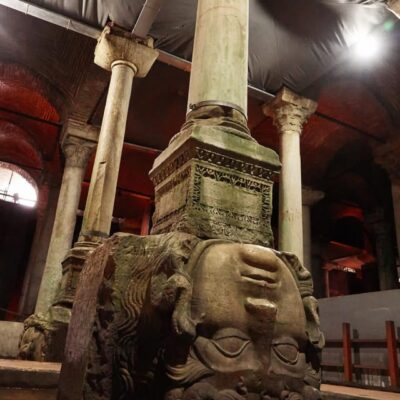
Hagia Sophia Skip-the-Line Ticket and Audio Guide
Read our review →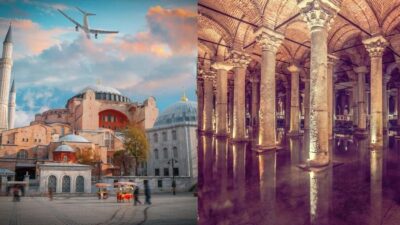
Browse the lists this tour appears in