Reviewed · FULL-DAY
Istanbul Private Full-Day Classics Tour with Options
Istanbul’s famous monuments sit close together, and this private tour makes good use of that compact historic center. In six hours, you move from the Byzantine Hippodrome to the Blue Mosque, Topkapi Palace, Hagia Sophia, and the Grand Bazaar, with a guide tying the sights together.
I like the private format, which gives you room to ask questions and set a comfortable pace. I also like the guide quality reported here, especially Salim’s lively storytelling and ability to keep children engaged. The main catch is cost: at $244 per group up to one person, plus entrance fees and lunch, this is not the cheapest way to see Istanbul.
In This Review
- Key points to know before booking
- Why this six-hour route works
- The Hippodrome and the remains of Byzantine public life
- The Blue Mosque and its unusual proportions
- Topkapi Palace and four centuries of Ottoman power
- Hagia Sophia, a building shaped by two faiths
- The Grand Bazaar and the art of looking
- What the private format adds
- Price, entrance fees, and the real value
- Who should book this Istanbul tour
- Should you book it?
- FAQ
- How long does the tour last?
- Which sights are included?
- Is the tour private?
- Which languages are available?
- Is hotel pickup included?
- Are entrance fees included?
- Is lunch included?
- Is Topkapi Palace open every day?
Key points to know before booking
- Five major sights in one compact route: The Hippodrome, Blue Mosque, Topkapi Palace, Hagia Sophia, and Grand Bazaar all appear in one six-hour visit.
- A private guide keeps the day personal: You can ask about Ottoman rulers, Byzantine life, religion, architecture, and local customs as you go.
- Topkapi Palace needs careful planning: It is closed on Tuesdays, so check your date before booking.
- Entrance fees cost extra: The tour includes pre-reserved tickets, but you must pay the entrance value to your guide.
- No vehicle is included: Hotel pickup is on foot, and transportation is not part of the package.
- Best for first-time visitors: You get a brisk introduction to Istanbul’s historic center, rather than a slow visit to one or two sites.
Why this six-hour route works
Istanbul can feel scattered when you first arrive, split between Europe and Asia and framed by the Bosphorus. This tour stays in the old walled city, where several of the city’s biggest sights sit within walking distance of one another.
That matters because you spend less time getting from place to place and more time looking at the buildings themselves. The route also follows a useful historical arc. You begin with the public life of Byzantine Constantinople, see the Ottoman imperial court at Topkapi Palace, then examine buildings that reflect both Christianity and Islam.
Six hours is enough for a strong first look, but you should not expect a leisurely examination of every room or market lane. Topkapi Palace alone covers a large site with several buildings. If you like to linger over every display, the schedule may feel tight.
The private arrangement helps. A good guide can explain what deserves your attention and keep the day moving without making you feel as if you are being rushed through a crowd. The strongest feedback points to guides who add context rather than simply naming monuments. One guide, Salim, was praised for being fun to talk with and for managing children whose energy changed during the day.
A few more Istanbul trips to weigh up
- Istanbul: Full-Day Highlights Tour with Guide and Lunch
★ 4.6 · 1,662 reviews - From Istanbul: Full-Day Princes Island Tour with Lunch
★ 4.0 · 1,550 reviews - ISTANBUL BEST: Iconic Landmarks Full Day PRIVATE Guided City Tour
★ 5.0 · 1,032 reviews
The Hippodrome and the remains of Byzantine public life
The morning begins at the Hippodrome, once the center of Byzantine social and recreational life. This was not just an open square. It was a major public setting where people gathered for spectacles and civic events.
Today, only parts of the original site remain, so your guide’s explanation is important. The Obelisk of Thutmose III and the Serpent Column help you picture the scale and importance of the old gathering place, even though the full Byzantine arena is no longer intact.
I like this as an opening stop because it gives you a sense of time. You are not beginning with a grand interior, but with fragments and a public space that has changed use over many centuries. The remains ask you to imagine the city before moving on to the better-preserved monuments.
This stop also helps explain the layout of the historic center. The Blue Mosque sits next to the Hippodrome, so you can move between the two without a separate ride. Expect walking and standing from the start, with the guide providing the background that the remaining stones cannot provide on their own.
The Blue Mosque and its unusual proportions
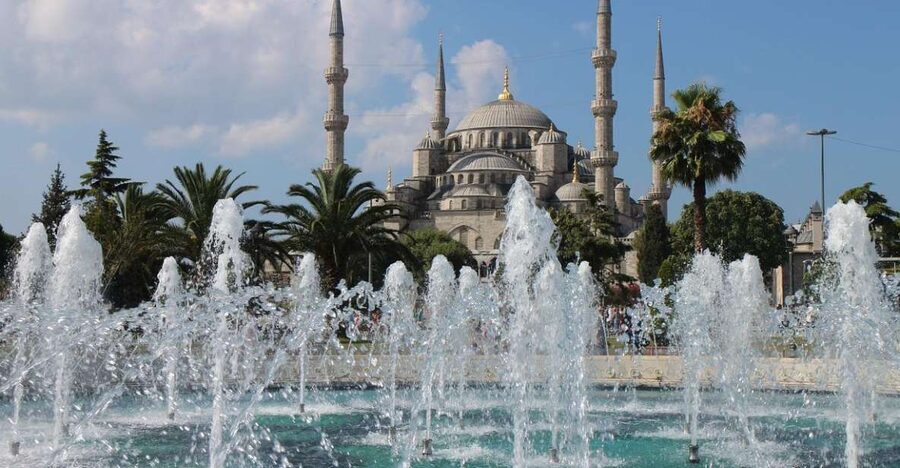
Next comes the Blue Mosque, also called the Sultan Ahmed Mosque. Its design is easy to recognize: one main dome, eight secondary domes, six minarets, and a large number of blue tiles.
The building was created during the reign of Ahmed the First and still functions as a mosque as well as a major sight. That dual role is worth keeping in mind. You are not entering a building that exists only as a monument. It remains part of religious life, which gives the visit a different character from a standard museum stop.
The mosque’s design rewards a guide who can explain how the domes, minarets, and interior decoration fit together. Without that context, you may simply see a large, impressive room. With it, you can better understand how the building was meant to project authority and devotion.
I would give this stop your full attention, even though it may be one of several major sights in a single day. The Blue Mosque is visually powerful, but a busy schedule can make it tempting to take a few pictures and move on. Ask your guide to point out the details that are easiest to miss.
Because this is an active mosque, the visit should be treated as a religious visit as well as sightseeing. The supplied tour information does not set out specific clothing or entry rules, so confirm current requirements before you go.
Topkapi Palace and four centuries of Ottoman power
Topkapi Palace is the tour’s largest historical stop. Dating from 1459, it served as the main residence of Ottoman sultans for nearly four centuries. In 1924, it became a museum.
The palace occupies a broad site and includes several buildings. You can expect displays of Imperial and Ottoman utensils, relics, caftans, and portraits of the sultans. These objects help turn the Ottoman story into something more concrete. Instead of hearing only about rulers and dates, you see the items connected with court life and imperial ceremony.
I like the contrast between Topkapi and the Blue Mosque. The mosque presents public religious grandeur, while the palace gives you a look at power behind the scenes. The two sites belong to the same broad Ottoman story, but they answer different questions about how the city worked.
This is also where the tour’s time limit matters most. The palace is large, and its many structures can easily absorb an entire morning. A guide can help you focus on the main buildings and collections, but you will probably not see every corner in detail during a six-hour route that includes four other major stops.
Topkapi Palace is closed on Tuesdays. This is the most important scheduling warning in the entire tour. Check the day of your visit before paying, since a closed palace would remove one of the central stops.
After the palace, you get a lunch break. The guide recommends restaurants where you can enjoy Turkish food, but lunch is not included in the price. That gives you some choice, though the final cost depends on where you eat and what you order.
Same city, a completely different kind of day:
- Istanbul: Bosphorus Dinner Cruise & Show with Private Table
★ 4.8 · 44,561 reviews - Istanbul: Daytime or Sunset Sightseeing Cruise & Audio Guide
★ 4.8 · 14,430 reviews - Istanbul: Bosphorus Dinner Cruise with Turkish Night Show
★ 4.8 · 10,127 reviews - Best of Istanbul 1, 2 or 3-Day Private Guided Istanbul Tour
★ 5.0 · 8,922 reviews
Hagia Sophia, a building shaped by two faiths
After lunch, the route continues to Hagia Sophia. Its importance comes not only from its size and architecture, but also from the different religious roles it has held.
When it was built in 537, Hagia Sophia was an Eastern Orthodox church. After Constantinople was conquered by the Ottoman Turks in 1453, the building became an imperial mosque. About five centuries later, it was converted into a museum.
That sequence makes Hagia Sophia one of the best places on the route for understanding how Istanbul changed hands and identities over time. The building links Byzantine Christianity with the Ottoman world, and the guide’s explanation can help you read those layers rather than seeing them as unrelated facts.
I find this stop especially valuable for visitors who want more than a checklist of famous buildings. Hagia Sophia brings architecture, religion, politics, and conquest into one place. It also gives the day a useful pause after the palace, since you shift from royal collections to a building shaped by centuries of worship.
The information provided for this experience describes Hagia Sophia as a museum. Since religious and museum arrangements can change, check the current visiting rules and access details before your visit.
The Grand Bazaar and the art of looking
The final stop is the Grand Bazaar, one of the oldest and largest covered markets in the world. It includes 61 covered streets and more than 3,000 shops, offering almost anything you might need.
The bazaar is part of Istanbul’s walled city and was built between 1455 and 1461. Its age matters, but the real pleasure comes from the market’s scale and the chance to see commerce as part of the old city rather than as a separate tourist attraction.
You should not approach this as a simple shopping stop. The useful skill is learning how to look. Notice the covered lanes, the repeated shopfronts, and the way the market creates its own internal city. If you want to buy something, your guide may help you understand the setting, but the tour details do not promise shopping assistance or fixed prices.
The Grand Bazaar can be a lively finish to a day of monuments, though it may also feel crowded or tiring after several hours of walking. If shopping is not your priority, use the time to explore a few lanes and absorb the atmosphere rather than feeling obliged to purchase something.
What the private format adds
A private tour is most useful when you want conversation, not just a set route. You can ask why the Hippodrome mattered, how Topkapi functioned, or how Hagia Sophia changed roles. A private guide can also adjust explanations for adults, teenagers, or younger children.
The feedback supplied for this experience gives a clear picture of the best guide style. Salim was praised for interesting conversation and for handling children’s changing energy. Another guide, described as having a PhD, was valued for serious discussion of the historic, cultural, and theological forces that shaped Istanbul, delivered in an enthusiastic way.
That range is useful. You can expect the guide to be more than a person who leads you from door to door, but the experience may depend on the individual assigned to your booking. One person had a good tour but felt the guide spent too much time on a cellphone. That is a fair reminder that a private tour is only as strong as the attention and communication of the guide on the day.
Guiding is available in English, French, and German. If a specific guide matters to you, ask about availability before booking rather than assuming a name can be guaranteed.
Price, entrance fees, and the real value
The listed price is $244 per group up to one person. The wording is unusual, so I would confirm exactly how the price changes if more than one person joins your private booking.
The price also does not cover several major expenses. Transportation is excluded, lunch is excluded, and admission fees are excluded. Pre-reserved entrance tickets are arranged, but the entrance value must be paid to the guide as an extra charge.
That means you should compare the total cost, not just the headline figure. The value comes from a private guide, a planned route, and reserved entry arrangements, not from an all-inclusive package. If you are traveling alone, the cost per person is high. If the booking terms allow your own larger private party at the stated group price, the value could improve, but confirm that point directly.
Hotel pickup is available on foot. This is convenient if your hotel is in the practical pickup area, but it is not the same as a private vehicle transfer. Since transportation is not included, ask where the walking pickup begins and how you will move between the sites.
The tour offers free cancellation up to 24 hours in advance and a reserve-now, pay-later option. Those terms are useful if your Istanbul plans are still shifting.
Who should book this Istanbul tour
I would choose this tour if you are visiting Istanbul for the first time and want a guided introduction to the historic center in one day. It suits couples, families, and small private groups who prefer asking questions instead of following a large crowd.
It is also a good fit if you want history explained in plain language. The route covers Byzantine public life, Ottoman court culture, Islamic architecture, Christian and Islamic use of Hagia Sophia, and the long commercial life of the Grand Bazaar.
Families may appreciate the private setting, especially since Salim was praised for keeping children involved. Still, six hours of monuments, walking, and standing is a substantial day. If your children tire quickly, discuss pacing with the guide at the start.
I would hesitate if you want transportation included, a slow palace visit, or a package with lunch and admission already covered. I would also avoid booking Tuesday, since Topkapi Palace is closed then.
Should you book it?
Book this tour if you want the main historic sights explained by one private guide and you value a focused route over total flexibility. The strongest reasons are the compact itinerary, the private setting, and the chance to connect the monuments rather than seeing them as isolated photo stops.
Before confirming, check three details: the exact group pricing, the extra entrance costs, and the walking pickup arrangement. If those fit your budget, this is a strong first-day orientation to Istanbul, with enough substance to help you decide which sights deserve a longer return visit.
FAQ
How long does the tour last?
The tour lasts six hours. Starting times depend on availability.
Which sights are included?
The route includes the Hippodrome, the Blue Mosque, Topkapi Palace, Hagia Sophia, and the Grand Bazaar.
Is the tour private?
Yes. It is offered as a private group experience.
Which languages are available?
The live guide is available in English, French, and German.
Is hotel pickup included?
Hotel pickup is available on foot. Transportation is not included.
Are entrance fees included?
No. Pre-reserved entrance tickets are arranged, but the entrance value must be paid to the guide as an extra charge.
Is lunch included?
No. Lunch is not included. After Topkapi Palace, the guide recommends restaurants where you can eat Turkish cuisine.
Is Topkapi Palace open every day?
Topkapi Palace is closed on Tuesdays, so do not schedule this tour on a Tuesday if you want to visit the palace.
Just added around Istanbul
- Istanbul Highlights Small-Group Walking Guided Tour★ 4.4 · 179 reviews
- Topkapi Palace&Harem-Guided Tour-Skip lines- All tickets inc★ 4.8 · 66 reviews
- Istanbul: Topkapi Palace Skip-the-Line Ticket & Guided Tour★ 4.2 · 178 reviews
- Istanbul: Private Guided Food Tour with 10 Tastings★ 4.7 · 49 reviews
- Istanbul: Belly Dancing, Show, & Dinner at Sultana’s Ticket★ 3.8 · 71 reviews
- Istanbul: Private Local Food & Markets Experience★ 4.9 · 27 reviews
- Skip-the-Line Hagia Sophia Digital Tickets w/Audio Guide★ 4.3 · 23 reviews
- Istanbul: Guided Shopping Trip with Turkish Coffee Tasting★ 4.7 · 37 reviews
Full-Day, compared.
Full Day Cappadocia Red and Green Combined Day Tour
Read our review →
Full Day Cappadocia Tour( Red Tour + Underground City )
Read our review →
Full-Day Highlights Tour with Guide and Lunch
Read our review →


Full-Day Private Tour of Cappadocia’s Highlights (Car&Guide )
Read our review →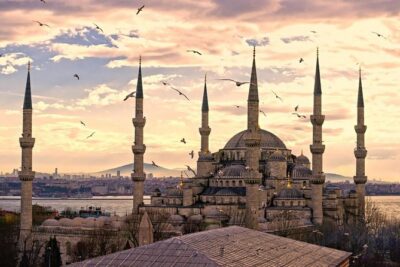
ISTANBUL BEST: Iconic Landmarks Full Day PRIVATE Guided City Tour
Read our review →