
Reviewed · WALKING TOURS
Istanbul Sightseeing Walking Tour
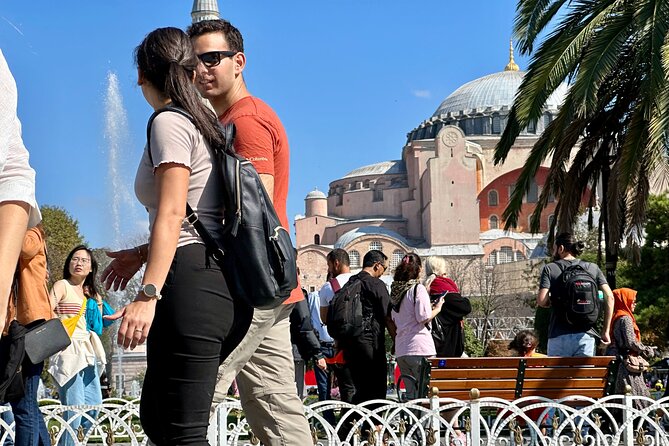
Istanbul’s Old City is a history lesson you can walk through, and this tour connects its biggest sights in a single morning. You move from the underground Basilica Cistern to Hagia Sophia, the Blue Mosque, the Hippodrome, and finally the spice stalls near the Golden Horn.
I like the small group of no more than eight, which makes it easier to ask questions and keep a sensible pace. I also like the route through quieter streets and palace gardens, where you can see Ottoman houses and hear small details such as Istanbul’s long love affair with tulips.
The main drawback is that the tour is an overview rather than a full inside visit to every monument. Most stops last about 10 minutes, and the advertised three hours can sometimes finish closer to two, especially with a very small group.
In This Review
- Key points to know before you book
- Why this route works for a first visit
- Basilica Cistern and the Medusa heads
- Hagia Sophia and the great domes of Sultanahmet
- Ottoman crafts at Caferağa Medresesi
- Soğukçeşme Sokak and the Ottoman houses
- Topkapı Palace and the seat of Ottoman power
- Sultanahmet Square, the Blue Mosque, and the Hippodrome
- The German Fountain and the old city’s public spaces
- Through Tahtakale to the Spice Market
- Ending in Eminönü beside the Golden Horn
- Guide quality and the small-group advantage
- Is $60.07 a fair price?
- Who should book this Istanbul walk?
- Should you book it?
- FAQ
- How long is the Istanbul Sightseeing Walking Tour?
- How much does the tour cost?
- What language is the tour offered in?
- How large is the group?
- Where does the tour start?
- Where does the tour end?
- Is hotel pickup included?
- Does the tour enter every major monument?
- Can I cancel for a full refund?
Key points to know before you book
- A strong first morning in Istanbul: The route links the Old City’s main sights and gives you a useful map of where everything sits.
- Maximum group size of eight: You get more room to ask questions than on a large coach tour.
- Guides can make the difference: Erol, Gamze, and Kismet have received especially warm praise for clear explanations, local advice, and friendly conversation.
- Mostly an outside orientation: You see many monuments from the street or square, while the Blue Mosque, Basilica Cistern, and markets offer the best chance for a closer visit.
- Ends at the Egyptian Bazaar: You are left in Eminönü, close to food, shops, ferries, and the Golden Horn.
- Good value for a newcomer: At $60.07, the price is reasonable if you want historical context and orientation, but less so if you expect lengthy monument entries.
Why this route works for a first visit
The tour begins in Sultanahmet, the historic core of Istanbul. This is the city’s most concentrated zone for major sights, but it can also feel confusing at first. Domes, minarets, tram tracks, hotel signs, and busy pedestrian lanes crowd together.
A guide helps you sort the city into chapters. Roman Constantinople, Byzantine Istanbul, and the Ottoman capital all occupy the same few blocks. You do not simply tick off famous buildings. You learn how the old city was organized, where imperial power sat, and how public life moved from the Hippodrome toward the markets and the Golden Horn.
The route is also practical. By the end, you know how to reach the major monuments again, where the Spice Market sits, and how the old city connects with Eminönü. Several people have found that this made the rest of their stay easier to plan.
The three-hour estimate needs a little caution. The listed stops add up to a brisk series of short explanations, not long visits. If your group is tiny, the guide may move faster. One group finished in about two hours, while others describe a fuller morning. Think of this as a guided orientation with sightseeing, not a museum tour.
A few more Istanbul trips to weigh up
- Istanbul: Fener Balat Half-day Guided Walking Tour
★ 4.9 · 1,711 reviews - Istanbul Highlights Small-Group Walking Guided Tour
★ 4.5 · 1,346 reviews - Istanbul: European and Asian Side Guided Foodie Walking Tour
★ 4.9 · 1,038 reviews
Basilica Cistern and the Medusa heads
The Basilica Cistern is an excellent opening stop because it introduces Istanbul’s Roman and Byzantine layers from below ground. The enormous underground water chamber is remembered for its forest of columns, dim atmosphere, and two upside-down Medusa heads.
Your guide explains the link to Greek mythology and points out the cinematic connection to the James Bond film From Russia with Love. That detail gives the ancient structure a modern hook, especially if you have seen the movie.
The listed visit is only about 10 minutes, and admission is shown as free in the tour details. That does not mean you should expect a long exploration of the cistern itself. The route is built around explanation and orientation. One particularly useful feature is the possibility of moving past a line when conditions allow, as happened for one group. Do not treat that as a guaranteed skip-the-line benefit, but an early start can help.
If the cistern is high on your list, plan to return later for a slower visit if the schedule leaves you wanting more.
Hagia Sophia and the great domes of Sultanahmet
Next comes Hagia Sophia Grand Mosque, one of Istanbul’s defining buildings. Its huge dome tells the story of changing empires and changing worship. It began as a Christian cathedral, later became a mosque, served as a museum for a period, and is now again a mosque.
The guide’s role here is to give you the basic timeline and help you read the building as architecture, not just as a famous photo stop. The tour allows about 10 minutes, so expect a short explanation and a view of the exterior or nearby approach, with entry dependent on current conditions and timing.
That short stop is useful for a first look, but it is not enough for a careful visit. Hagia Sophia deserves time for its scale, mosaics, dome, and layered details. Use the walk to learn what to look for, then return on your own if you want to spend longer inside.
Ottoman crafts at Caferağa Medresesi
Caferağa Medresesi offers a quieter change of pace. This former religious school now serves as a center for Turkish classical arts. Calligraphy, ceramics, jewelry, and other traditional crafts are taught, made, and sold here.
I like this stop because it shows a side of Istanbul that grand imperial monuments cannot provide. You get a glimpse of living craft traditions rather than only hearing about rulers and wars. The visit is brief, so it works best as a quick introduction.
Do not expect a workshop or a long shopping session. The value comes from seeing how an old medrese has found a new role and from learning where Turkish decorative arts fit into the city’s culture.
Same city, a completely different kind of day:
- Istanbul: Bosphorus Dinner Cruise & Show with Private Table
★ 4.8 · 44,561 reviews - Istanbul: Daytime or Sunset Sightseeing Cruise & Audio Guide
★ 4.8 · 14,430 reviews - Istanbul: Bosphorus Dinner Cruise with Turkish Night Show
★ 4.8 · 10,127 reviews - Best of Istanbul 1, 2 or 3-Day Private Guided Istanbul Tour
★ 5.0 · 8,922 reviews
Soğukçeşme Sokak and the Ottoman houses
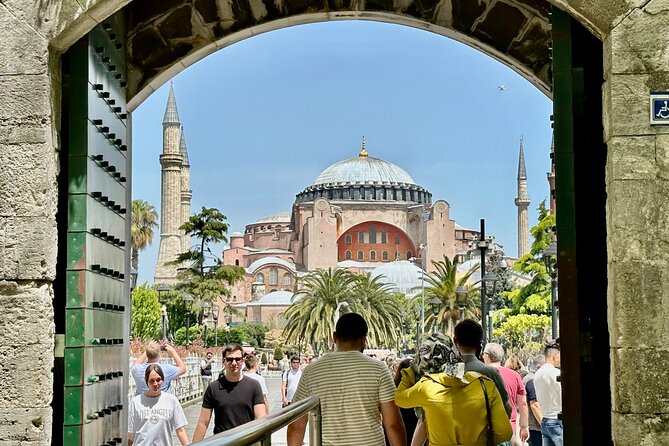
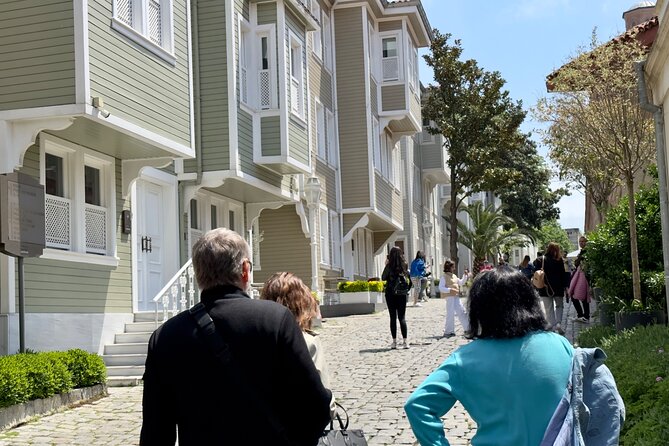
Soğukçeşme Sokak is a small lane lined with historic Ottoman-era houses. It sits close to the major monuments, yet feels more intimate than the broad squares nearby.
This is the kind of place that rewards a walking tour. On your own, you might pass through without knowing what you are seeing. With a guide, the façades become part of the story of domestic Istanbul, not just background for photographs.
The stop is listed at about 10 minutes. That is enough for a look and a few photographs, but not for a detailed architectural study. If traditional city streets interest you, pay attention here and consider returning when you can wander without a timetable.
Topkapı Palace and the seat of Ottoman power
Topkapı Palace was the residence and administrative headquarters of the Ottoman sultans. From here, the empire was governed for centuries, and the palace remains one of Istanbul’s essential historical sites.
On this walk, the palace is mainly a viewpoint and a history lesson rather than a full palace visit. The guide explains its role and helps you understand why this hill mattered. The listed time is about 10 minutes, so you will not tour the courtyards, treasury, or harem as part of this experience.
That distinction matters when you compare tours. If you want an efficient introduction to Ottoman rule, this stop does the job. If you want the palace rooms and collections, plan a separate visit and set aside much more time.
Sultanahmet Square, the Blue Mosque, and the Hippodrome
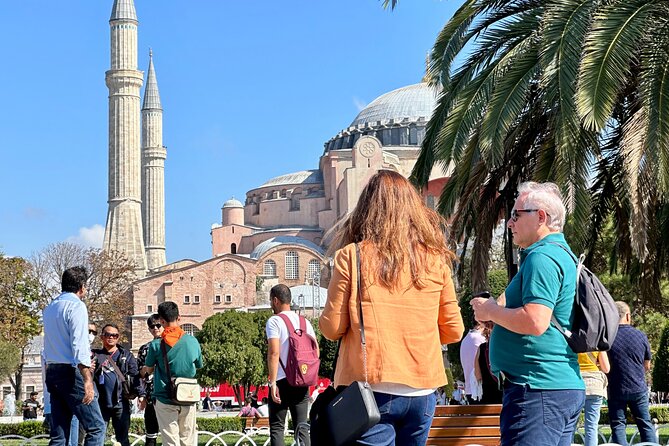
Sultanahmet Square is the natural pause point between Istanbul’s major monuments. From here, you can frame Hagia Sophia and the Blue Mosque in the same view, making it one of the best places on the route for photographs.
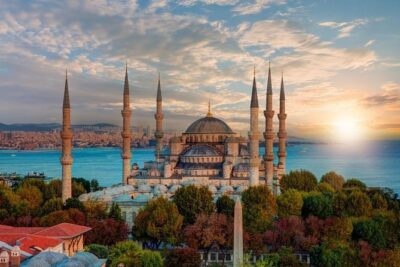
The Blue Mosque, formally the Sultan Ahmed Mosque, is known for its six minarets, five main domes, and eight smaller domes. Its blue-and-white tile work gave it the name used by many visitors, while its design marks the last great phase of classical Ottoman mosque architecture.
The tour allows about 10 minutes here. If the mosque is open for visits at the time of your walk, you may get inside. One group entered without a long wait and had time to see the stained glass and tiles while the guide explained their meaning. Mosque prayer schedules and visitor rules can change, so the exact experience is not fixed.
Dress respectfully and be prepared for possible pauses or changes around worship times. The Blue Mosque is one of the places where a guide adds real value, since a quick explanation can help you notice details that would otherwise blur together.
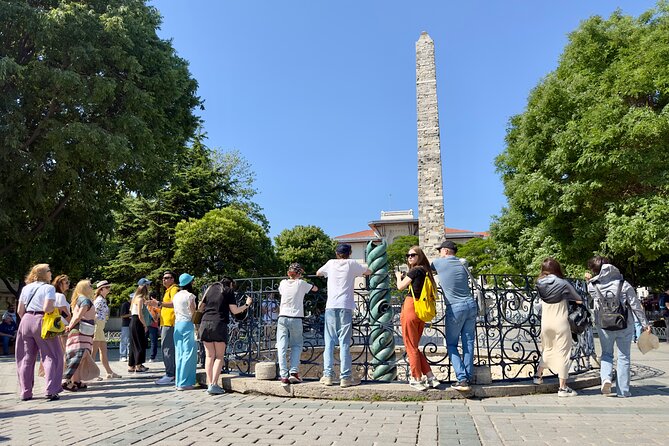
The nearby Hippodrome takes you back to Byzantine Constantinople. This was the city’s chariot-racing arena and a major public gathering place. Much of the original structure is gone, but the remaining monuments help you picture the old track and the crowds that once filled it.
The Serpent Column is an ancient bronze monument brought from Delphi. The Walled Obelisk, at the southern end of the former racing track, is a Roman monument with a much more weathered appearance than the polished Egyptian obelisk nearby.
These short stops are ideal for storytelling. A good guide can connect the monuments to the races, ceremonies, rival factions, and imperial displays that once shaped life here. Erol has been especially effective at making the ancient city easy to picture, while Gamze has been praised for adding cultural context and welcoming questions.
The German Fountain and the old city’s public spaces
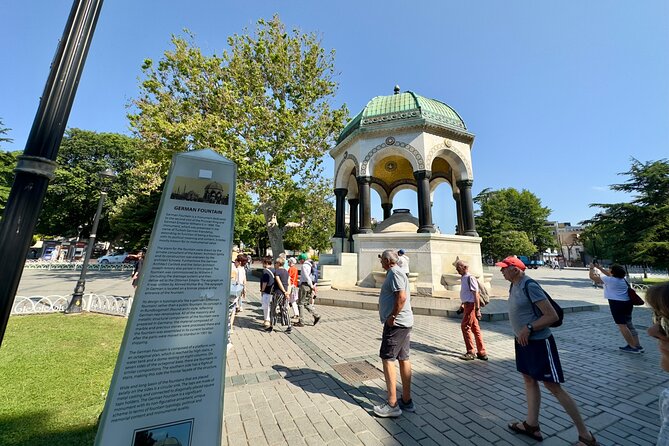
The itinerary also includes the German Fountain, built as a gift from German Emperor Wilhelm II in 1898. Its ornate form makes it a small but attractive landmark near the Hippodrome.
This is a quick stop, not a destination that needs a long visit. Still, it adds a later chapter to a route otherwise dominated by Roman, Byzantine, and Ottoman monuments. Istanbul’s public spaces were continually reshaped, and the fountain shows that the city’s story did not end with the Ottoman period.
Through Tahtakale to the Spice Market
The route shifts from monuments to daily commerce in Tahtakale, a district of Eminönü. Here, the advice is simple: look around before you buy. The area is known for a wide range of goods at reasonable prices, and it feels more like a working shopping quarter than a polished souvenir hall.
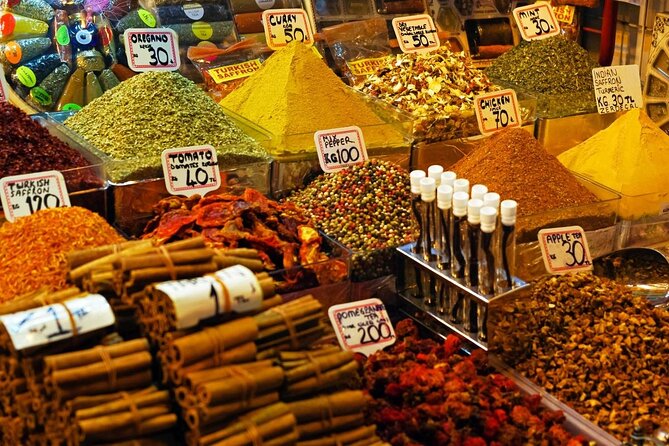
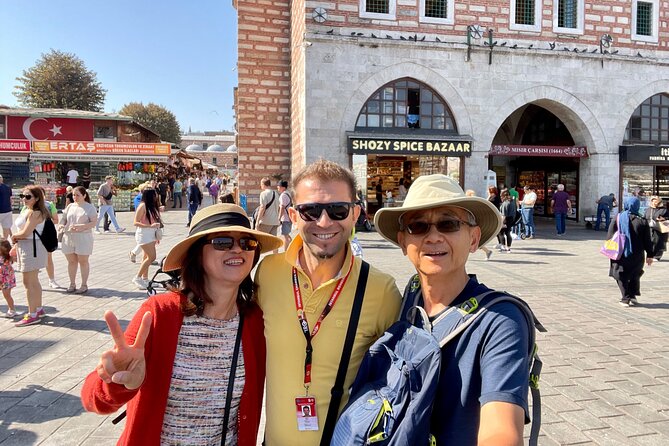
This section gives the walk a welcome change of rhythm. You move through streets where people shop for ordinary items, then approach the Spice Market, also called the Egyptian Bazaar. The market is the tour’s longest listed stop, at about 20 minutes.
Inside, expect stalls filled with spices, herbs, nuts, dried goods, and Turkish Delight. The colors and aromas make this one of the route’s most sensory moments, but it is also a place where you need to keep your head. Compare prices, ask what you are buying, and do not feel obliged to purchase simply because a shopkeeper offers a sample.
A guide can help you understand the difference between a useful food purchase and a tourist impulse buy. You also get practical suggestions for local produce and places to eat. Several guides, including Erol, have been appreciated for restaurant and bakery tips, which can be more useful than another list of monuments.
One pleasant variation on the route has been a walk through the palace gardens on the way to the market. The gardens were being planted with tulip bulbs, leading to a short lesson about the flower’s long connection with Istanbul and its place in the city’s logo. That kind of small detail is exactly what can make an orientation walk memorable.
Ending in Eminönü beside the Golden Horn
The tour ends at the Egyptian Bazaar in Eminönü, not back at your hotel. This is a useful finish because you are left in one of the old city’s most active transport and food areas.
Eminönü Square has restaurants, cafés, and shops. The nearby bridge across the Golden Horn connects the old city with Beyoğlu, the modern district, so you can continue exploring instead of retracing your steps to the starting point.
Hotel pickup and drop-off are not included. The walk starts at Foodie-ist Cafe and Brasserie, at Alemdar, Muhterem Efendi Sk. No:13, ground floor, in Fatih. The meeting point deserves care: one person found it hard to locate, and traffic made a taxi arrival late enough to miss the group. Use the exact address, allow time, and do not assume a taxi driver will recognize the café from a vague map search.
The tour is near public transportation, and most people can take part. You should still expect a steady walk over several hours, with much of the experience outdoors.
Guide quality and the small-group advantage
The guide is the heart of this experience. Erol has been praised for tying together Roman, Byzantine, and Ottoman history, answering questions, and suggesting restaurants and bakeries. Gamze has earned strong praise for her warmth, humor, and ability to discuss both past and present Turkish culture.
Kismet, also spelled Kismet or Yikmet in different accounts, has been valued for patience, thorough explanations, and tailoring the walk to the group. One particularly successful outing included a Basilica Cistern visit timed before the area became crowded.
A group capped at eight gives these guides room to adjust. You can ask why a monument matters, pause for a photograph, or say that you want more detail about architecture rather than imperial politics. That flexibility is harder to get on a large group walk.
Still, guide quality can vary. One poor experience involved repeated explanations, an interruption for a personal errand, and pressure to buy a hammam visit and another tour. That is not the standard suggested by the stronger experiences, but it is a fair reason to keep expectations measured. The activity is best booked for the route and format, not with the assumption that every guide will be equally strong.
Is $60.07 a fair price?
At $60.07 per person, this is not the cheapest way to see Sultanahmet. You are paying for an English-speaking professional guide, a small group, and the convenience of having the major sights explained in order.
The value is strongest if you are new to Istanbul, have limited time, or want help getting oriented before exploring on your own. A good three-hour walk can save you from wasting half a day on confusing streets and can point you toward places worth revisiting.
The value is weaker if you want full admission to the Basilica Cistern, Hagia Sophia, Topkapı Palace, and the Blue Mosque in one outing. The short stop times make that impossible. Since the listed admission is free and many stops are viewed from outside, you should think of the fee as payment for guiding, context, and navigation.
Group discounts may improve the price for parties traveling together. The tour is offered in English and is confirmed at booking. Free cancellation is available up to 24 hours before the local start time, but changes or cancellations inside that window are not refunded.
Who should book this Istanbul walk?
I would recommend it most strongly for a first visit. You get the essential Old City landmarks, a basic understanding of the city’s three imperial chapters, and a practical finish at the Spice Market.
It also suits you if you prefer questions and conversation to a rehearsed audio guide. The smaller format can feel almost private when only two or three people book, though that may also shorten the tour.
You should choose another format if your main goal is long interior visits, museum collections, or a slow architectural study. In that case, use this walk as a primer and reserve separate time for the Basilica Cistern, Hagia Sophia, Topkapı Palace, and Blue Mosque.
Should you book it?
Book this tour if you want a well-paced introduction to Istanbul’s Old City, especially on your first morning. The route is logical, the group is small, and the best guides add useful local advice alongside history.
Go in expecting an orientation, not an all-access monument tour. Check the meeting point carefully, allow extra time for traffic, and plan to revisit the sights that catch your eye. At its best, this walk gives you a clear map of Istanbul and enough context to explore the rest on your own.
FAQ
How long is the Istanbul Sightseeing Walking Tour?
The stated duration is approximately three hours. Because the itinerary uses short stops, and because group size can affect the pace, some outings may finish sooner.
How much does the tour cost?
The listed price is $60.07 per person. Group discounts may be available.
What language is the tour offered in?
The tour is offered in English with an English-speaking professional guide.
How large is the group?
The maximum group size is eight people.
Where does the tour start?
It starts at Foodie-ist Cafe and Brasserie, Alemdar, Muhterem Efendi Sk. No:13, ground floor, 34122 Fatih, Istanbul.
Where does the tour end?
The tour ends at the Egyptian Bazaar, also known as the Spice Market, in Rüstem Paşa, Eminönü. You are free to continue sightseeing afterward.
Is hotel pickup included?
No. Hotel pickup and drop-off are not included.
Does the tour enter every major monument?
No. The walk gives short explanations at many sights, and the stop times are brief. Entry can occur at places such as the Blue Mosque or Basilica Cistern when conditions allow, but you should not expect a full interior visit to every monument.
Can I cancel for a full refund?
Yes. You can cancel at least 24 hours before the experience begins for a full refund. Cancellations or changes made less than 24 hours before the local start time are not accepted for a refund.
Just added around Istanbul
- Whirling Dervish Ceremony★ 4.5 · 35 reviews
- Istanbul:Whirling Dervish Ceremony, Mystical Sufi Experience★ 4.1 · 17 reviews
- Turkish Dance Show at Hodjapasha Cultural Centre in Istanbul★ 4.7 · 56 reviews
- Turkish Tapas – Meze Cooking for Beginners in Istanbul★ 4.5 · 16 reviews
- Istanbul Sultanahmet Turkish Bath Sultan Suleyman Bath★ 3.7 · 38 reviews
- Turkish Marbling Paper Ebru Art Workshop★ 5.0 · 44 reviews
- Turkish and Islamic Arts Museum: Entry Ticket & Audio Guide★ 4.2 · 19 reviews
- Flying Dress Photography on an Iconic Rooftop in Istanbul★ 5.0 · 87 reviews
Walking Tours, compared.
Istanbul Highlights Small-Group Walking Guided Tour
Read our review →
European and Asian Side Guided Foodie Walking Tour
Read our review →
Colorful Fener & Balat Walking Tour w/Expert Guide
Read our review →
Old Town Of Istanbul Orientation – Tip Based Walking Tour
Read our review →Istanbul Highlights Small-Group Walking Guided Tour
Read our review →Browse the lists this tour appears in