
Reviewed · SHOPPING TOURS
Private Turkish Carpet Shopping at Historic Caravanserai
The most interesting part of this Istanbul experience is the setting: you enter an old caravanserai, once used by Silk Road merchants, then see silk being spun and carpets being woven before looking at rugs for sale. Guide Israfil, who has a PhD in art philosophy, explains how color, material, symbols, and place connect in Turkish carpet design. I like that the shopping follows the craft lesson, rather than beginning with a sales pitch.
I also like the private format, which gives your group up to six people room to ask questions and set its own pace. The walk from the German Fountain to the carpet shop is short, and the experience includes a useful stop at the Column of Constantine. The main consideration is simple: two hours can pass quickly if you want to study many rugs, and the $179 price offers its best value when shared by a group.
In This Review
- Key points to know before you book
- A carpet lesson inside an old caravanserai
- Starting at the German Fountain
- Watching silk become a working material
- Reading the symbols in Turkish carpets
- The private presentation and the buying decision
- Why Israfil is central to the experience
- Is $179 good value for two hours?
- Timing, meeting point, and practical details
- Who will enjoy this carpet experience most?
- Should you book it?
- FAQ
- Where does the experience begin?
- Where does the experience end?
- How long does the carpet experience last?
- How many people can join?
- Is the tour offered in English?
- Will I see carpet weaving and silk making?
- Do I have to buy a carpet?
- Can I cancel for a full refund?
Key points to know before you book
- Silk and weaving demonstrations: See how silk is spun and how handmade carpets are woven.
- Historic caravanserai setting: Learn about a former resting place for merchants traveling along the old Silk Road.
- Israfil’s art background: Expect discussion of symbolism, philosophy, regional styles, and Turkish culture.
- Private shopping for up to six: Your group receives a more personal presentation than in a large tour.
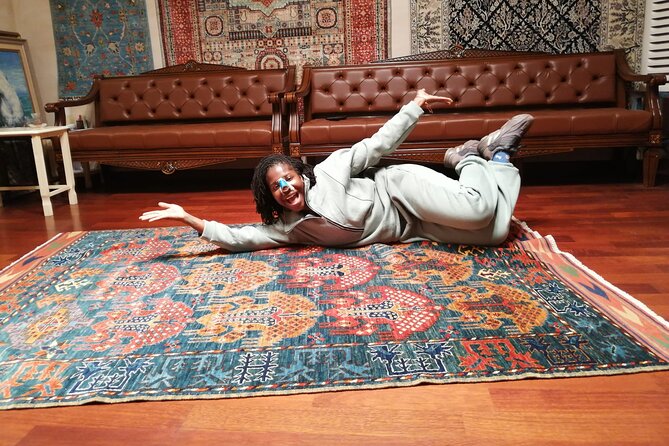
- Wide range of carpet styles: You may see traditional, tribal, vintage, and modern designs.
- Short central Istanbul route: Begin at the German Fountain and finish in Çemberlitaş, near public transportation.
A carpet lesson inside an old caravanserai
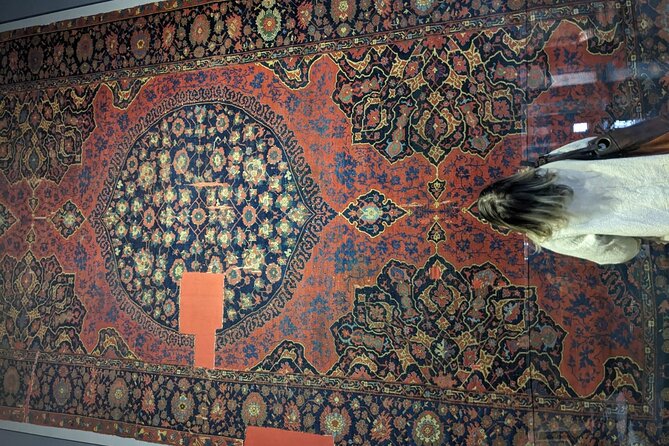
Turkish carpet shopping makes more sense once you understand how the rugs are made. This experience gets that order right. Instead of sending you straight into a room stacked with carpets, Israfil first places the craft in its historical and artistic setting.
The caravanserai is the heart of the visit. These buildings once gave merchants a place to rest, store goods, and conduct business during long journeys across the Silk Road. Here, you walk through courtyards and arches while learning how trade helped carry weaving traditions, materials, and designs across regions.
The building itself adds weight to the lesson. A carpet can look attractive in any shop, but seeing it in a place linked to old trade routes gives the object a clearer context. You are not simply comparing colors on a floor. You are learning why carpets mattered as useful goods, family possessions, trade items, and works of art.
The setting is also a practical advantage for anyone who wants more than a quick souvenir purchase. If you know little about rugs, the history gives you a framework for the details that follow. If you already collect textiles, the caravanserai offers a fitting backdrop for discussing technique and origin.
A few more Istanbul trips to weigh up
- Istanbul Grand Bazaar: From Rooftops to the Secret Passages
★ 4.8 · 337 reviews - Istanbul: Hagia Sophia, Blue Mosque and Grand Bazaar Tour
★ 4.5 · 222 reviews - Small-Group Bosphorus Cruise and Istanbul’s Egyptian Bazaar
★ 3.5 · 208 reviews
Starting at the German Fountain
The tour begins at the German Fountain beside Sultanahmet Square. This is a convenient meeting point near major sights, including the Blue Mosque and Hagia Sophia area, though the activity itself does not include admission to those monuments.
You spend about 15 minutes here looking at the fountain and considering the artistic traditions of Turkey. The stop is brief, so think of it as an introduction rather than a full sightseeing visit. Colors, patterns, and decorative forms begin the conversation that later continues inside the carpet workshop.
I appreciate this kind of short opening stop. It gives you a clear place to meet and lets Israfil connect the public art around you with the motifs found in Turkish textiles. Do not book this experience expecting a long guided tour of Sultanahmet. The fountain is a starting point, not the main event.
From there, the route continues toward the Column of Constantine and the caravanserai. The end point is in Çemberlitaş, on the other side of the central historic district. Since the start and finish are different, this works well when you are already sightseeing in Sultanahmet and plan to continue nearby afterward.
Watching silk become a working material
The workshop visit gives the experience its strongest hands-on element. You can see silk being spun and watch artisans at work in another area where the thread becomes part of a woven carpet.
Silk matters because its smooth feel and natural sheen affect both the appearance and price of a rug. The demonstration helps you understand that a carpet is not just a printed design. The fiber, knotting method, dye, density, and finishing all shape the final object.
You also learn about natural dyes and the techniques passed down through generations. The lesson is not presented as a technical course, but it gives you useful questions to ask when you look at a carpet later. What material is used? How was the color produced? Which part of Turkey or which weaving tradition does the pattern suggest?
The craft demonstration may be especially useful if you are considering a purchase. Sales language can make every rug sound rare and special. Seeing how materials are handled gives you a more solid basis for judging quality. You can listen for clear explanations instead of relying only on dramatic claims.
The experience also helps children and first-time textile buyers understand the work involved. One family specifically found the visit welcoming for an eight-year-old, with a small local ice cream moment added along the way. That extra treat is not a guaranteed part of every tour, but the activity can work well for families when children have some interest in making and design.
Reading the symbols in Turkish carpets
The next lesson concerns motifs and color. Turkish carpets often use repeated forms that carry cultural, spiritual, or regional meaning. Israfil explains how patterns can express ideas about protection, family, nature, belief, and daily life.
This does not mean every symbol has one fixed translation. Carpet design develops through local practice, family tradition, and artistic choice. A good guide should help you see patterns as part of a visual language without pretending that one label explains everything.
Color can also change how a carpet feels in a room. Natural dyes may produce subtle variations, and the same pattern can look formal, warm, subdued, or lively depending on its palette. You learn to look beyond the first bright color that catches your eye.
I find this part valuable because it changes the buying question from Do I like this rug? to What exactly am I responding to? You can consider the design, the materials, the region, the age, and the way the piece might function in your home.
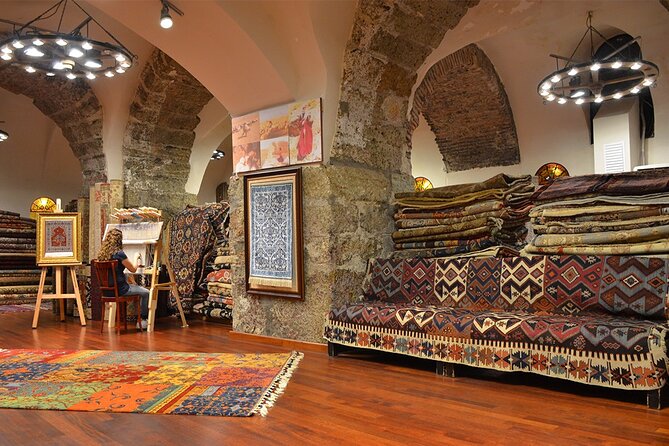
The discussion also gives you a better way to compare very different carpets. A tribal rug, a vintage piece, a traditional village design, and a modern carpet may all use related ideas but produce very different effects. The workshop offers all four types, so you are not locked into one style.
Same city, a completely different kind of day:
- Istanbul: Bosphorus Dinner Cruise & Show with Private Table
★ 4.8 · 44,561 reviews - Istanbul: Daytime or Sunset Sightseeing Cruise & Audio Guide
★ 4.8 · 14,430 reviews - Istanbul: Bosphorus Dinner Cruise with Turkish Night Show
★ 4.8 · 10,127 reviews - Best of Istanbul 1, 2 or 3-Day Private Guided Istanbul Tour
★ 5.0 · 8,922 reviews
The private presentation and the buying decision
After the craft and design lessons, you move into a private presentation of carpets. This is where the activity becomes a shopping tour, so you should arrive knowing that a purchase is possible, though not required.
The range can be wider than you expect. You might see traditional, vintage, tribal, and modern designs, with choices in wool, silk, or blended materials depending on what is shown to your group. The exact selection changes, so nobody can promise a particular pattern or size in advance.
The sales staff are described as courteous and willing to work with smaller budgets. That matters. Carpet shopping in Istanbul can feel intimidating when you do not know the market or the vocabulary. Having Israfil explain the pieces and help narrow the choices gives you a useful buffer.
The strongest praise for the experience concerns the lack of pressure. The shopping is described as relaxed, with time to view several selections and leave without feeling pushed to stay or buy. Still, use normal care. A carpet is a significant purchase, and no guide can replace your own judgment about price, condition, size, or shipping arrangements.
Ask for the details in plain language. Find out what the carpet is made of, where it comes from, how old it is if described as vintage, and how it was produced. If you like a piece, ask to see it in different positions and lighting. A rug may look different when spread out than when folded or displayed with other colors around it.
One useful approach is to decide on your preferred size and budget before the presentation begins. You can then enjoy the designs without letting the sheer number of options take over. The private format helps, but two hours is still a limited window for a major purchase.
Why Israfil is central to the experience
The quality of this activity depends heavily on Israfil. He brings formal training in art philosophy and explains more than the basic facts about knots and materials. He also shares short historical points as you walk between the meeting point and the workshop.
That background is useful because carpets sit between art, trade, religion, household life, and design. A guide who can connect those subjects gives you a fuller picture than a simple demonstration alone.
Israfil’s approach also extends beyond the carpet room. One family was taken to a local lunch place without the usual tourist focus, and he helped make the day pleasant for an eight-year-old. Lunch is not included in the stated two-hour plan, so consider that an example of his personal hospitality rather than a promised part of every booking.
The private setting means you can ask direct questions. You might want to know why one rug costs more than another, how silk differs from wool, or what a certain motif suggests. A large group tour would make those questions harder to fit in.
Is $179 good value for two hours?
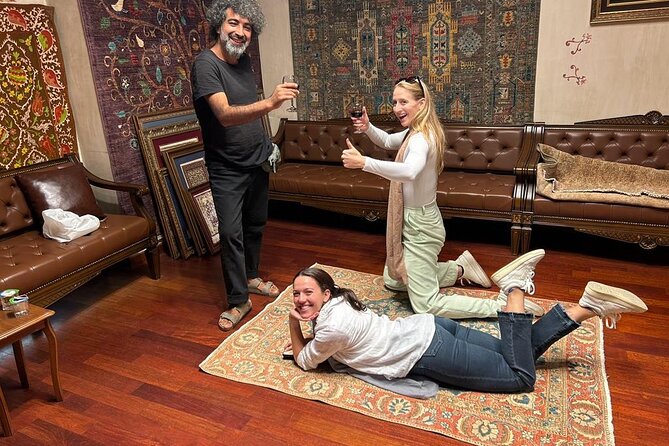
The cost is $179 per group of up to six people. At the maximum size, that works out to roughly $30 per person, which is fair for a private guide, workshop visit, historical introduction, and personalized carpet presentation.
For two people, the per-person cost is much higher. For one person, it becomes a premium activity. I would book it with friends or family if possible, especially if more than one person is curious about Turkish textiles.
The value is strongest when you want help making sense of a potential purchase. You are paying for access to a workshop, interpretation, and a private setting, not only for transportation or sightseeing. If you have no interest in buying or learning about carpets, the cost may feel high for a two-hour activity.
The price does not include a carpet. If you buy one, treat that as a separate financial decision. The experience can help you understand what you are seeing, but you should still compare styles and prices and choose only if the piece suits your home and budget.
Timing, meeting point, and practical details
The total duration is about two hours. The German Fountain meeting point is easy to locate in the Sultanahmet area, and the route ends in Çemberlitaş, close to public transportation.
You receive confirmation when you book, and the ticket is mobile. The tour is offered in English. Service animals are allowed, and most people can take part.
The meeting and ending points are not identical, so plan your day around that short walk across the historic center. This is not a hotel pickup service, and the supplied details do not promise private transportation. If you are carrying large luggage, ask before booking rather than assuming the workshop can store it.
The activity requires good weather. If poor weather causes cancellation, you are offered another date or a full refund. You can also cancel for a full refund up to 24 hours before the start time. Changes or cancellations inside that window are not accepted, so keep the local cut-off time in mind.
The tour is generally booked about 18 days ahead. That is useful planning information if your Istanbul dates are fixed, particularly if you want a private appointment rather than a last-minute shopping visit.
Who will enjoy this carpet experience most?
I would recommend it to anyone who wants to buy a Turkish carpet but feels unsure how to begin. You receive background on materials, weaving, motifs, and regional styles before seeing the selection, which makes the purchase process less mysterious.
It also suits art and design enthusiasts who may not buy anything. You can spend the time learning how silk is spun, how weaving works, and how carpets carry cultural meaning.
Families can benefit from the private format, especially if children enjoy demonstrations. A private guide can adjust the conversation more easily than a large group can, though the activity still centers on carpets and shopping rather than general entertainment.
It is less suitable if you want a broad walking tour of Istanbul’s major monuments. The German Fountain and Column of Constantine add local context, but most of the visit concerns carpet craft and the buying presentation.
Should you book it?
Book this experience if you want a personal, informed introduction to Turkish carpets and may consider buying one. The historic caravanserai, silk demonstration, wide mix of styles, and private format give the two hours real substance.
I would be more cautious if you are shopping only for the lowest price or have no interest in textiles. The $179 fee makes sense when shared by a group and when you value guidance before making a purchase. Set your budget, ask direct questions, and remember that you never need to buy simply because a carpet is beautifully presented.
FAQ
Where does the experience begin?
It begins at the German Fountain in Binbirdirek, beside At Meydanı in Istanbul’s Fatih district.
Where does the experience end?
It ends in Çemberlitaş, in the Mollafenari area of Fatih.
How long does the carpet experience last?
The activity lasts approximately two hours. The German Fountain stop takes about 15 minutes, while the main caravanserai and carpet visit takes about one hour and 45 minutes.
How many people can join?
This is a private activity for your group, with up to six people included in the $179 group price.
Is the tour offered in English?
Yes. The experience is offered in English.
Will I see carpet weaving and silk making?
Yes. The visit includes a demonstration of traditional carpet weaving and the silk-making process, including silk spinning.
Do I have to buy a carpet?
No purchase requirement is stated. The experience includes a private carpet presentation, but you can attend to learn about the craft and styles without buying.
Can I cancel for a full refund?
Yes, if you cancel at least 24 hours before the experience begins. Cancellations made less than 24 hours before the start time are not refunded. If poor weather causes the activity to be canceled, you are offered another date or a full refund.
Just added around Istanbul
- Whirling Dervish Ceremony★ 4.5 · 35 reviews
- Istanbul:Whirling Dervish Ceremony, Mystical Sufi Experience★ 4.1 · 17 reviews
- Turkish Dance Show at Hodjapasha Cultural Centre in Istanbul★ 4.7 · 56 reviews
- Turkish Tapas – Meze Cooking for Beginners in Istanbul★ 4.5 · 16 reviews
- Istanbul Sultanahmet Turkish Bath Sultan Suleyman Bath★ 3.7 · 38 reviews
- Turkish Marbling Paper Ebru Art Workshop★ 5.0 · 44 reviews
- Turkish and Islamic Arts Museum: Entry Ticket & Audio Guide★ 4.2 · 19 reviews
- Flying Dress Photography on an Iconic Rooftop in Istanbul★ 5.0 · 87 reviews
Shopping Tours, compared.

Istanbul Grand Bazaar: From Rooftops to the Secret Passages
Read our review →
Manavgat Boat, Bazaar, & Waterfall Day Trip with Lunch
Read our review →
Manavgat River Boat Trip & Grand Market w/ Lunch
Read our review →
Hagia Sophia, Blue Mosque and Grand Bazaar Tour
Read our review →
Small-Group Bosphorus Cruise and Istanbul’s Egyptian Bazaar
Read our review →
Hagia Sophia, Blue Mosque, Cistern & Bazaar Tour
Read our review →
Alanya/Side: Manavgat River & Waterfall, Boat Tour, & Bazaar
Read our review →Browse the lists this tour appears in