Reviewed · ISTANBUL TOURS
Fener and Balat – Old Greek & Jewish Quarter
Istanbul’s Fener and Balat districts offer something the central sights cannot: a look at old residential Istanbul, where colorful Ottoman-era houses, churches, neighborhood cafés, and daily life share the same streets. This three-hour walk also reaches the Golden Horn and Pierre Loti café, giving you both street-level character and broad city views.
I like the small group size, capped at 10, and the way the guides turn public transport into part of the lesson. I also like the human scale of the route: Salih, Omar, Burak, and Önder are repeatedly praised for clear English, historical context, humor, and practical help.
The main consideration is the walking. Expect steep and narrow streets, cobblestones, hills, and possibly around 11,000 steps. This is not a slow photography stroll, and the value at $60.34 depends heavily on how much history and local context you want from a guide.
In This Review
- Key points to know before booking
- Why Fener and Balat feel different from old-town Istanbul
- Starting near Rüstem Paşa and meeting the guide
- Fener Rum Patriarchate and the Greek story
- Balat’s colorful houses and steep lanes
- The Golden Horn as a history lesson
- The Bulgarian Orthodox Church and the Iron Church
- Pierre Loti café and the view over the Golden Horn
- What the guides add to the walk
- Is $60.34 a fair price?
- Who should book this Istanbul afternoon?
- Should you book Fener and Balat?
- FAQ
- How long is the Fener and Balat tour?
- What time does the tour start?
- Where does the tour begin?
- Where does the tour end?
- How large is the group?
- Is public transportation part of the experience?
- Can I cancel for a full refund?
Key points to know before booking
- Fener and Balat show Istanbul beyond the main sights: See former Greek and Jewish districts, Ottoman houses, churches, and ordinary residential streets.
- Pierre Loti adds a welcome change of pace: Reach the café area for tea and views over the Golden Horn.
- The guide is central to the experience: Salih, Omar, Burak, and Önder are praised for strong English, humor, historical detail, and help with directions.
- You may use several forms of transport: Public transport can include tram, bus, ferry, cable car, or other connections, depending on the day’s route.
- The route is active: Narrow lanes, colorful steps, hills, and cobblestones require comfortable shoes and a steady pace.
- Solo booking can turn into a private walk: The group has a maximum of 10, but some departures have only one person booked.
Why Fener and Balat feel different from old-town Istanbul
Most first visits to Istanbul focus on Sultanahmet, the Grand Bazaar, Galata, and the Bosphorus. Those places deserve your time, but they can make the city feel like a procession of famous monuments. Fener and Balat offer a different rhythm.
Here, you walk through districts shaped by Greek, Jewish, Christian, and Muslim communities. The appeal is not one grand building. It is the way old houses, religious sites, small streets, cats, cafés, laundry, and local residents fit together.
The neighborhoods sit near the Golden Horn, the inlet that has long shaped Istanbul’s trade, defense, and settlement. Your guide explains how Constantinople changed under Byzantine and Ottoman rule, including the fall of the city and the role of the Golden Horn in its story.
I find that context especially useful here because the streets do not always explain themselves. A faded building may carry more meaning than its appearance suggests. A church may point to a community that once had a much larger presence. A row of colorful houses may reflect changing architectural styles across the 19th and 20th centuries.
Other Istanbul days worth putting on the list:
- Istanbul: Bosphorus Dinner Cruise & Show with Private Table
★ 4.8 · 44,561 reviews - Istanbul: Daytime or Sunset Sightseeing Cruise & Audio Guide
★ 4.8 · 14,430 reviews - Istanbul: Bosphorus Dinner Cruise with Turkish Night Show
★ 4.8 · 10,127 reviews
Starting near Rüstem Paşa and meeting the guide
The tour begins at İtimat Fabrika Satış Yeri in Rüstem Paşa, on the European side of Istanbul, at 2:00 pm. The activity ends back at the meeting point according to the stated tour details, although some individual routes described by participants finished elsewhere after using public transport. Confirm the day’s exact return plan with the operator.
The meeting area is near public transportation, which matters in Istanbul. Reaching the start by tram or another connection is part of the practical side of the tour. Guides have also helped with tickets, tram connections, and directions back to a ship or hotel.
That assistance can be especially useful if this is your first afternoon in the city. You are not simply following someone through a neighborhood. You are also learning how the transport network connects the old city, the Golden Horn, and other parts of Istanbul.
The group limit is 10 people. That is small enough for questions and conversation without the guide having to shout across a crowd. If demand is low, you might receive a private walk at the same price, but that depends on bookings and is not guaranteed.
Fener Rum Patriarchate and the Greek story
One of the first listed stops is Fener Rum Patrikhanesi, also known as the Ecumenical Patriarchate of Constantinople. The visit gives the tour a clear starting point for understanding Fener’s Greek Orthodox past.
The value here comes from explanation. Without a guide, you can look at a religious complex and move on. With context, you begin to understand the place as part of a long-running religious and community story within Istanbul.
The tour presents Fener as a district where different communities lived alongside one another over centuries. That does not mean the past was simple or free of tension. It does mean the neighborhood helps you see Istanbul as a city shaped by several traditions, languages, and faiths.
The guide’s English matters at this stop. Much of the tour covers Ottoman history, minority communities, architecture, and changes across centuries. One poor review pointed to a language gap, so you should book this experience only if you are comfortable following a detailed English-language explanation.
Balat’s colorful houses and steep lanes
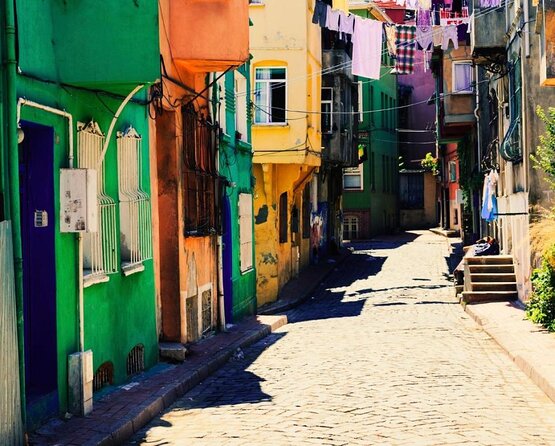
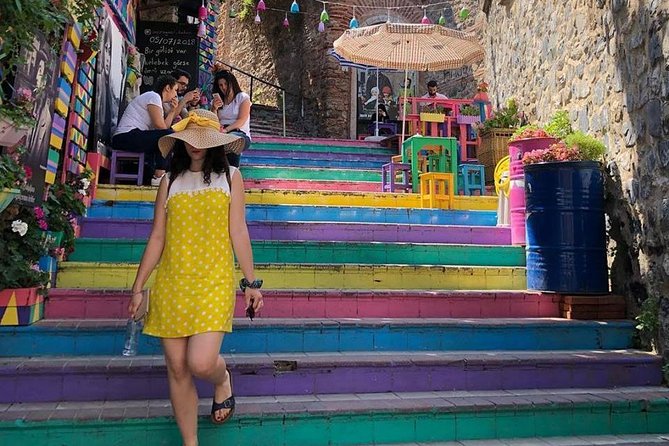
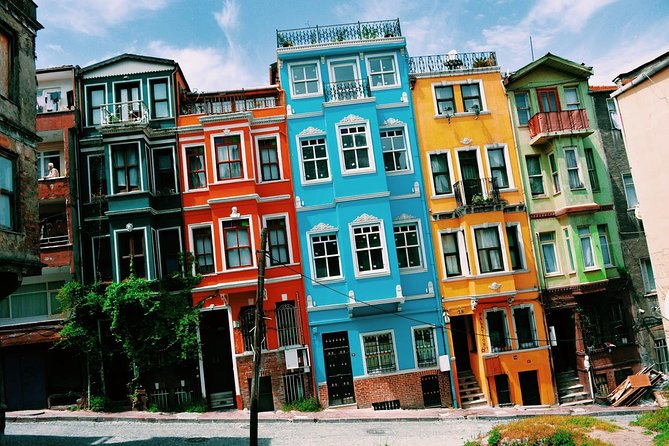
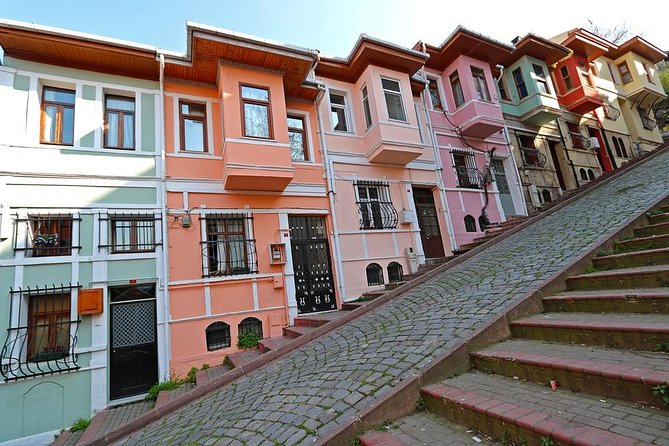
Balat is the visual center of the walk. Its colorful houses and painted steps make it popular with photographers, but the neighborhood is more than a backdrop for pictures.
You will walk through residential streets and see how old buildings sit beside ordinary modern life. Some houses show Ottoman-era forms, while others reflect later changes from the 19th and 20th centuries. The color and architectural mix make the district easy to enjoy, even when you are not studying every historical detail.
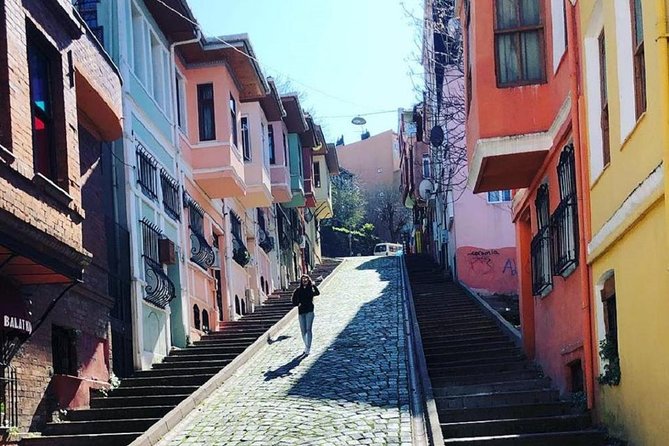
The streets can be narrow, steep, and uneven. Several people found the route manageable at a steady pace, but also noted hills, cobblestones, and a substantial step count. Wear shoes with a firm sole. Sandals with little support will make the colorful steps much less charming.
Photography requires a small compromise. You will have chances to take pictures, but the tour keeps moving. If you want to compose every doorway and stairway shot, a private visit at your own pace may suit you better. If you want to see a lot while learning what you are looking at, the guided walk works well.
The neighborhood also has small cafés and places to stop for a drink or snack. Tea, Turkish treats, homemade lemonade, salep, and local food are all mentioned as part of different outings. These refreshments are not a fixed menu, so treat them as possible extras rather than guaranteed inclusions.
Same city, a completely different kind of day:
- Best of Istanbul 1, 2 or 3-Day Private Guided Istanbul Tour
★ 5.0 · 8,922 reviews - Istanbul: Basilica Cistern Fast-Track Entry and Audio Guide
★ 4.6 · 7,521 reviews - Istanbul: Hagia Sophia Skip-the-Line Ticket & Museum Option
★ 3.7 · 4,958 reviews - Istanbul: Hodjapasha Whirling Dervishes Show & Exhibition
★ 4.4 · 4,790 reviews
The Golden Horn as a history lesson
The walk by the Golden Horn connects the neighborhoods to Istanbul’s wider story. From the waterfront, the guide discusses the fall of Constantinople and explains why this inlet mattered to Byzantine and Ottoman Istanbul.
This is where the tour moves beyond pretty streets. The Golden Horn was not just a scenic waterway. Its position near the old city helped shape defense, shipping, trade, and access to the historic center.
The route gives you a chance to look back at Istanbul through geography. Water, hills, walls, and neighborhoods all affected how the city grew. That kind of explanation helps you make sense of later sightseeing, especially if you plan to visit the old city walls or other sites connected with the conquest.
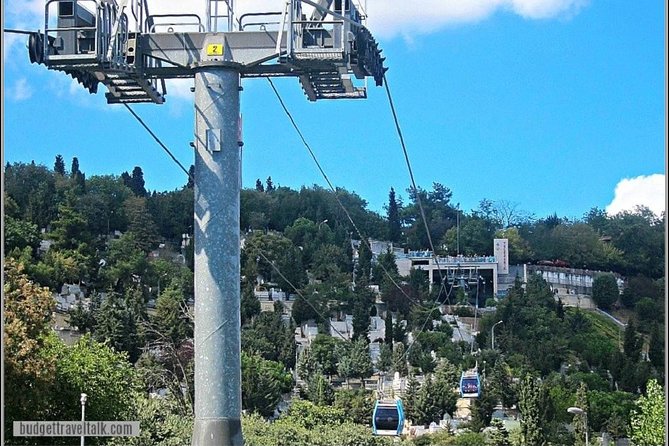
The exact transport used can vary. Descriptions and experiences refer to tram, bus, ferry, cable car, and walking. The public transport element is useful because the guide can show you how to move around Istanbul after the tour, rather than leaving you with only a collection of historical facts.
The Bulgarian Orthodox Church and the Iron Church
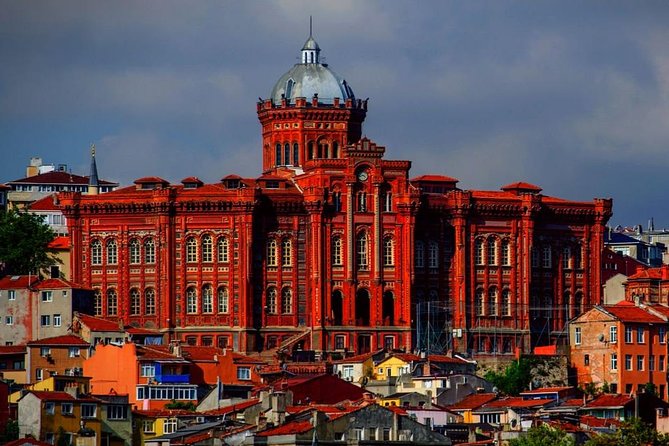
The Bulgarian Orthodox Church is another listed stop and one of the most distinctive religious sites connected with the walk. It gives you a chance to see a Christian landmark outside the standard Sultanahmet circuit.
Some outings also included the Iron Church, officially the Bulgarian St. Stephen Church. The structure is a memorable part of the neighborhood and was a highlight for several people. However, the supplied tour details do not clearly promise every extra stop on every departure, so ask the guide at the beginning if seeing it is important to you.
The church visit adds balance to the route. You are not only looking at houses and street scenes. You are also seeing how minority communities built and maintained places of worship in Istanbul.
This is another stop where a guide makes a major difference. The buildings are attractive, but the larger point is how they fit into the city’s religious and social history. A good explanation turns a quick church visit into a clearer picture of Fener and Balat.
Pierre Loti café and the view over the Golden Horn
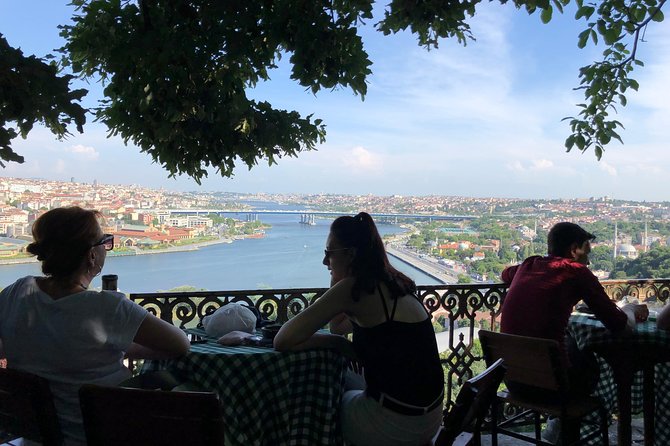
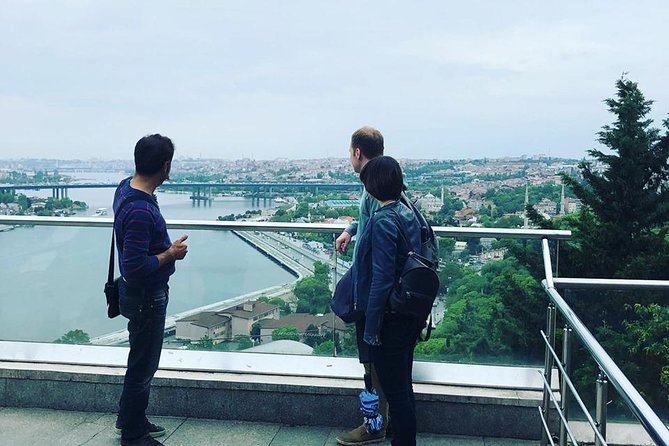
Pierre Loti café is one of the tour’s most appealing breaks. The café area sits on a hill, so reaching it adds another climb, but the reward is a broad view across the Golden Horn.
A cup of tea with that outlook provides a natural pause after the uphill walking. Depending on the weather and the day’s plan, you might also try Turkish treats, homemade lemonade, or salep. These small food and drink moments help keep the afternoon connected to local routine rather than making it feel like a nonstop lecture.
The views are also useful for orientation. From above, the waterway and surrounding districts make more sense. You can see how the neighborhoods relate to the rest of Istanbul, which is harder to grasp from a narrow street.
One note: a review referred to a view of the Bosphorus, but Pierre Loti is chiefly associated here with the Golden Horn. Expect the tour’s main viewpoint to focus on the Golden Horn, and check the exact route if a Bosphorus panorama is your priority.
What the guides add to the walk
The guide is the most important variable in this experience. Salih is praised for a relaxed manner, excellent English, historical detail, photographs, and practical help with transport. Omar is described as friendly, fun, and good at bringing history to life.
Burak is noted for his command of ethnic and religious history, while Önder is praised for deeper historical explanations and useful advice for seeing the rest of Istanbul. Names and assignments can change, but these are the guides associated with the strongest feedback supplied for this experience.
The best part of the guiding style seems to be the mix of past and present. You learn about Byzantine and Ottoman events, then turn a corner and see how people live in the district today.
A guide can also adjust the afternoon. One person interested in the Iron Church had the route changed to include it. Another received help finding the tram after getting lost. That flexibility is valuable, but it depends on time, group needs, and the guide.
If you want silence and complete control of your route, this may feel too structured. If you want to ask questions and understand what you are seeing, the guide-led format is the reason to pay for the tour.
Is $60.34 a fair price?
At $60.34 per person, this is not the cheapest way to walk through Fener and Balat. You can explore the districts independently for the cost of transport and any drinks. The price makes more sense if you want a guide to explain the communities, architecture, churches, Golden Horn, and fall of Constantinople as you go.
The small group limit improves the value. You get more chance to ask questions, and a quiet departure might become a private tour without an added private-tour price. That possibility is attractive, though you should not book expecting to be alone.
The practical transport help also has real value. Istanbul’s network can seem confusing at first, and learning how to use trams, ferries, buses, or the cable car can save time later in your trip.
I would consider it good value for a first visit, especially if local history and neighborhoods matter more to you than ticking off major monuments. It is less compelling if you already know Fener and Balat well or mainly want an unhurried photo walk.
The tour is recommended by 95 percent of participants and has a 4.8 rating from 74 reviews. Those numbers suggest a consistently strong experience, while the one lower rating is a useful reminder that English comprehension and guide style can affect the outcome.
Who should book this Istanbul afternoon?
I would choose this tour for you if you want:
- A break from Sultanahmet and the most visited sights
- Local neighborhood scenery and colorful architecture
- Clear explanations of Greek, Jewish, Christian, Byzantine, and Ottoman connections
- Help using Istanbul’s public transportation
- A small group, with the chance of a private departure
- A route that mixes walking, churches, waterfront views, and a café stop
I would think twice if steep hills, cobblestones, or a long walk are difficult for you. Most people can participate, but the route is not flat and may reach about 11,000 steps.
It is also not ideal for a rushed photographer. You can take pictures, but the pace is designed to cover the neighborhoods and provide commentary, not to stop at every colorful doorway.
Free cancellation is available up to 24 hours before the 2:00 pm start for a full refund. The experience depends on good weather and a minimum number of participants, so poor weather or low enrollment can lead to a new date, another experience, or a refund.
Should you book Fener and Balat?
Book it if you want Istanbul to feel like a living city rather than a checklist of monuments. The combination of residential streets, Greek and Jewish heritage, Orthodox churches, Golden Horn views, and transport advice gives you a fuller sense of how the city fits together.
The strongest reason to go is the guide. Salih, Omar, Burak, and Önder are praised for English, historical insight, warmth, and practical help. The main caution is physical: bring good shoes, expect hills, and keep your camera ready without expecting long stops.
For a first visit, I would place this after one or two major sights, once you have seen the grand imperial center. Then Fener and Balat can show you the less polished, more personal side of Istanbul.
FAQ
How long is the Fener and Balat tour?
The experience lasts approximately three hours.
What time does the tour start?
The stated start time is 2:00 pm.
Where does the tour begin?
The meeting point is İtimat Fabrika Satış Yeri, Rüstem Paşa, Fatih, Istanbul, on the European side.
Where does the tour end?
The stated end point is back at the meeting point. Individual route details may vary, so confirm the return plan with the guide.
How large is the group?
The activity has a maximum of 10 participants. If only one person books, the departure may operate as a private tour.
Is public transportation part of the experience?
Public transportation guidance is included, and different departures may use connections such as tram, bus, ferry, or cable car. The exact combination can vary.
Can I cancel for a full refund?
Yes. Cancel at least 24 hours before the local start time for a full refund. Cancellations or changes made less than 24 hours before the start are not refunded.
Just added around Istanbul
- Whirling Dervish Ceremony★ 4.5 · 35 reviews
- Istanbul:Whirling Dervish Ceremony, Mystical Sufi Experience★ 4.1 · 17 reviews
- Turkish Dance Show at Hodjapasha Cultural Centre in Istanbul★ 4.7 · 56 reviews
- Turkish Tapas – Meze Cooking for Beginners in Istanbul★ 4.5 · 16 reviews
- Istanbul Sultanahmet Turkish Bath Sultan Suleyman Bath★ 3.7 · 38 reviews
- Turkish Marbling Paper Ebru Art Workshop★ 5.0 · 44 reviews
- Turkish and Islamic Arts Museum: Entry Ticket & Audio Guide★ 4.2 · 19 reviews
- Flying Dress Photography on an Iconic Rooftop in Istanbul★ 5.0 · 87 reviews
Istanbul Tours, compared.

Bosphorus Dinner Cruise & Show with Private Table
Read our review →
Daytime or Sunset Sightseeing Cruise & Audio Guide
Read our review →
Bosphorus Dinner Cruise with Turkish Night Show
Read our review →
Best of Istanbul 1, 2 or 3-Day Private Guided Istanbul Tour
Read our review →
Hagia Sophia Skip-the-Line Ticket & Museum Option
Read our review →
Hodjapasha Whirling Dervishes Show & Exhibition
Read our review →
Sunset or Day Small-Group Yacht Cruise with Snacks
Read our review →