
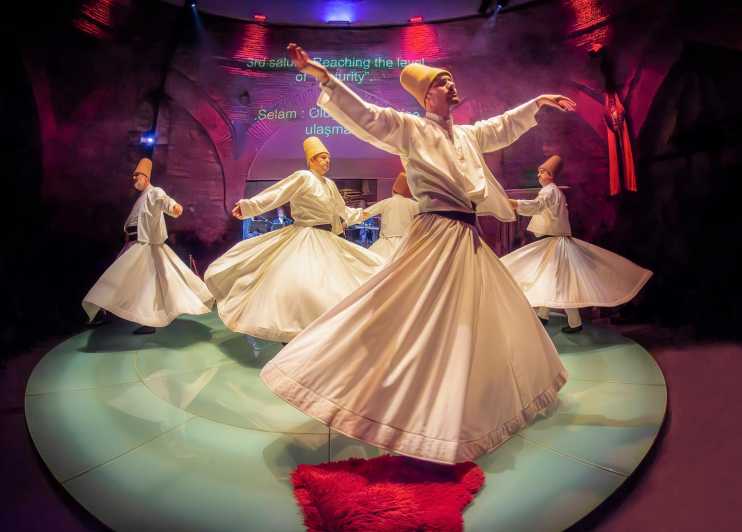
Reviewed · WHIRLING DERVISH SHOWS
Istanbul: Hodjapasha Whirling Dervishes Show & Exhibition
The most important thing to understand about the Hodjapasha Whirling Dervishes ceremony is that this is not a stage spectacle in the usual sense. It is a shortened presentation of a Mevlevi Sema ritual, with music, prayer, chanting, and the famous whirling performed in silence. The mood is solemn and focused, not flashy.
I like two things right away: the setting inside a restored 550-year-old Ottoman bath, and the live Turkish music that frames the ceremony. The small exhibition also gives you useful background before you take your seat. The main consideration is that the whirling can feel repetitive if you are expecting a fast-moving dance show, and the chairs are reported to be close together and not especially comfortable.
In This Review
- Key points to know before booking
- Entering the 550-year-old Ottoman bath
- The music sets the tone before the whirling begins
- Understanding the Mevlevi Sema ceremony
- Watching the dervishes turn in silence
- Seating, timing, and comfort inside the hall
- What the $32 price really covers
- Who will appreciate this experience most
- Simple ways to get more from the hour
- Should you book the Hodjapasha ceremony?
- FAQ
- Where does the Hodjapasha Whirling Dervishes ceremony take place?
- How long does the experience last?
- What happens during the program?
- Is this a dance show or a religious ceremony?
- Is photography allowed inside?
- Can I talk or applaud during the ceremony?
- Are drinks included?
- Are children allowed?
- Can wheelchair users attend?
- How are seats allocated?
- Can I cancel my booking?
Key points to know before booking
- A religious ceremony, not a conventional dance show: Expect quiet concentration, prayer, and ritual rather than applause or theatrical effects.
- Historic Hocapaşa setting: The ceremony takes place inside a restored Ottoman Turkish bath near Sirkeci, with domed stone architecture and strong echoes.
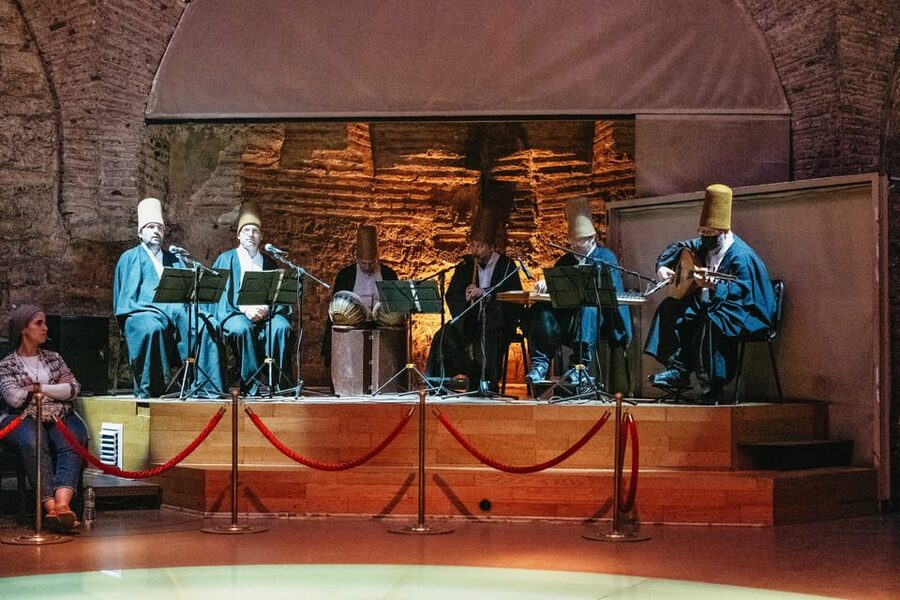
- Music comes first: The program opens with classical Turkish music featuring traditional instruments, vocals, and percussion.
- Read the exhibition early: The foyer display and booklet explain the history and meaning of the Mevlevi Sema.
- Silence is part of the experience: Photography, talking, applause, and any disruption during the ceremony are prohibited.
- Book early for seating: Seats are allocated on a first-booked, first-served basis, so early booking is the safest way to improve your position.
Entering the 550-year-old Ottoman bath
The Hocapaşa Culture Center is about 100 meters from the Sirkeci Tram Stop, which makes this one of Istanbul’s easier evening cultural activities to reach. You do not need a long transfer across the city. Get off at Sirkeci, walk a short distance, and look for the culture center.
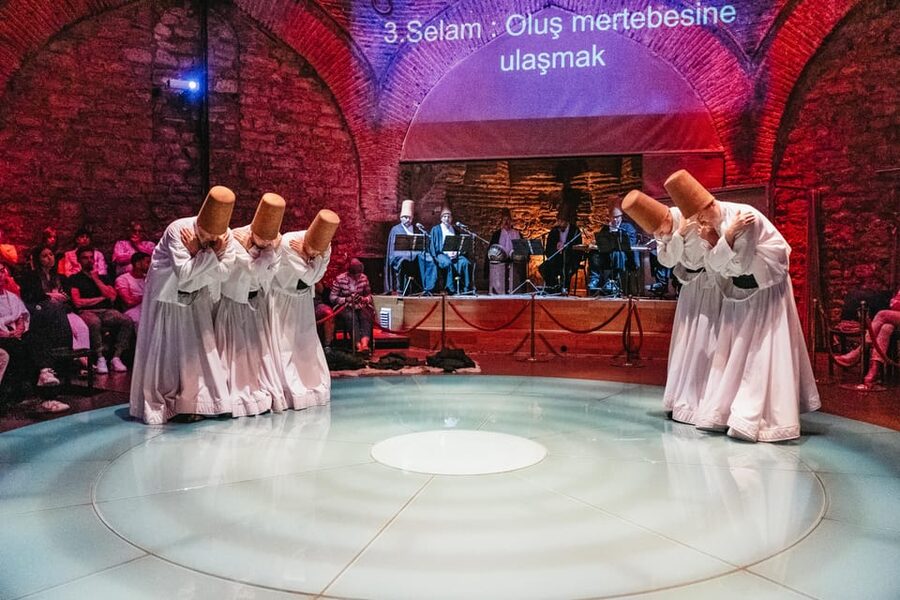
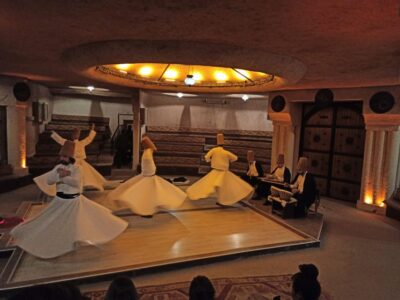
The venue itself is a major part of the appeal. You enter a restored Ottoman Turkish bath, then move toward the central performance space beneath the dome. The old stone surfaces create an intimate room with noticeable echoes. That acoustics matters here because the program depends as much on the sound of the ney, voices, and percussion as it does on the movement of the dervishes.
I would arrive early rather than walk in at the last minute. The foyer includes an exhibition with panels and artifacts about the dervishes, Sufism, and the ceremony. A program booklet is also provided. Neither replaces a full guide, but both help you understand what you are seeing instead of treating the whirling as a curious visual trick.
The exhibition is especially useful if you know little about the Mevlevi tradition. It gives you a basic framework for the ceremony and explains why the movements, clothing, music, and order of events matter. You might still have questions afterward, since there is no guide or personal explanation listed as part of the experience, but reading before the ritual makes a real difference.
There are steps up to the venue, according to practical visitor information, and the activity is not suitable for wheelchair users. That is worth considering before you book. Children under seven are not permitted.
More Whirling Dervish Shows in Istanbul
- Istanbul: Whirling Dervishes Ceremony and Mevlevi Sema
★ 4.3 · 1,694 reviews - Istanbul: Whirling Dervish Ceremony next to Hagia Sophia
★ 4.5 · 906 reviews - Istanbul Hodjapasha Whirling Dervishes Show & Exhibition
★ 4.0 · 503 reviews
The music sets the tone before the whirling begins
The program starts with a classical Turkish music concert. This is not filler while you wait for the dervishes. It establishes the sound and mood of the Sema, and for many people the music is one of the strongest parts of the hour.
The musicians use a traditional mix that can include vocals, ney, oud, kanun, and Ottoman-era percussion. The ney, a reed flute, has a plaintive and airy sound that suits the quiet atmosphere of the old bath. The kanun adds bright, precise notes, while the percussion gives the ceremony its measured pulse.
You should expect a formal musical performance rather than a casual concert. The repertoire includes classical compositions, instrumental passages, improvisation, recitation, and singing. Some sections may feel unfamiliar if you mainly listen to Western music, but the program gives you time to settle into its rhythm.
The stone room helps the music linger. Every note carries, which can be beautiful when the audience is quiet. It also means a cough, conversation, or ringing phone is surprisingly noticeable. Turn off your phone before the ceremony begins, and consider bringing water or a cough drop if you need one. Bottled water is included, and complimentary drinks are also advertised during the show, but the central point is to avoid interrupting the music.
Understanding the Mevlevi Sema ceremony
The Mevlevi Sema developed from the teachings associated with Mevlana Jalaluddin Rumi and the Mevlevi Sufi tradition. The ritual represents a spiritual journey, often described as humanity’s movement from ordinary thought toward love, knowledge, and closeness to God.
You do not need a detailed understanding of Sufi Islam to appreciate the ceremony. Still, the basic ideas help you watch with the right expectations. The whirling is not simply a display of balance. It forms part of a structured act of devotion.
The dervishes enter with the sheikh, or spiritual leader. The ceremony includes praise for the Prophet Mohammed, musical sections, chanting, and a series of formal movements. The seven-part Sema represents the birth of humanity and a spiritual ascent through thought and love.
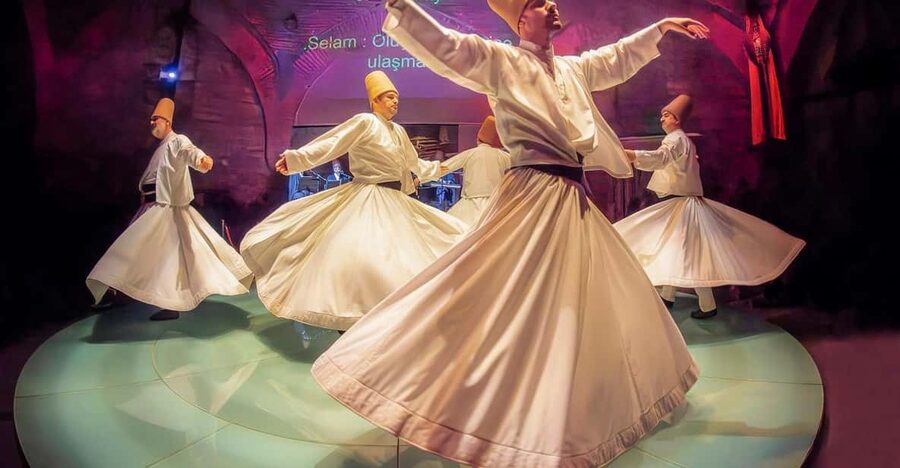
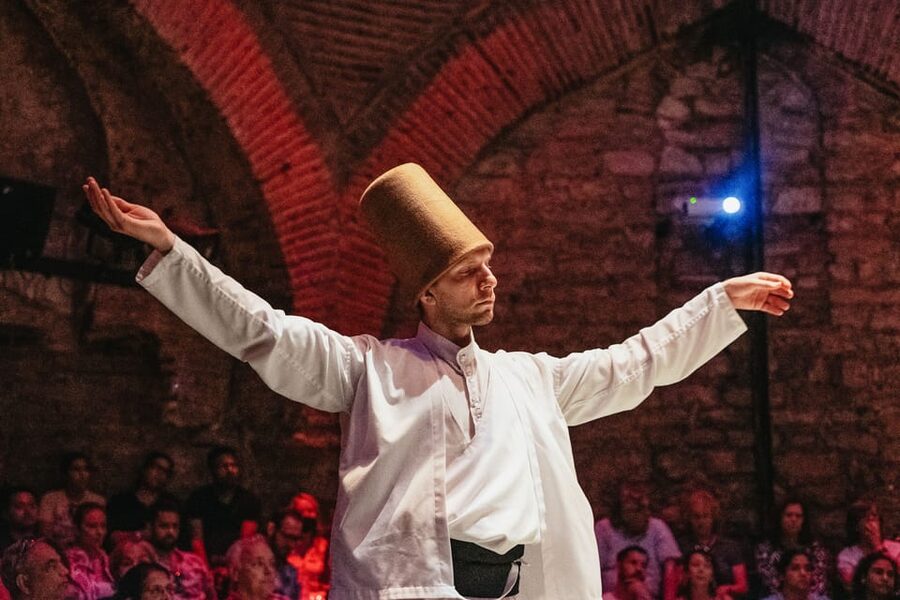
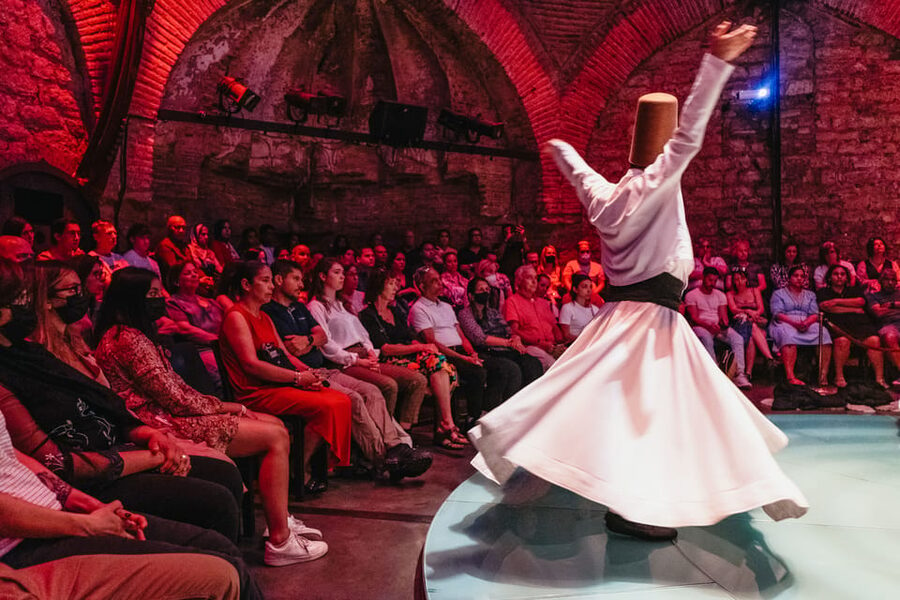
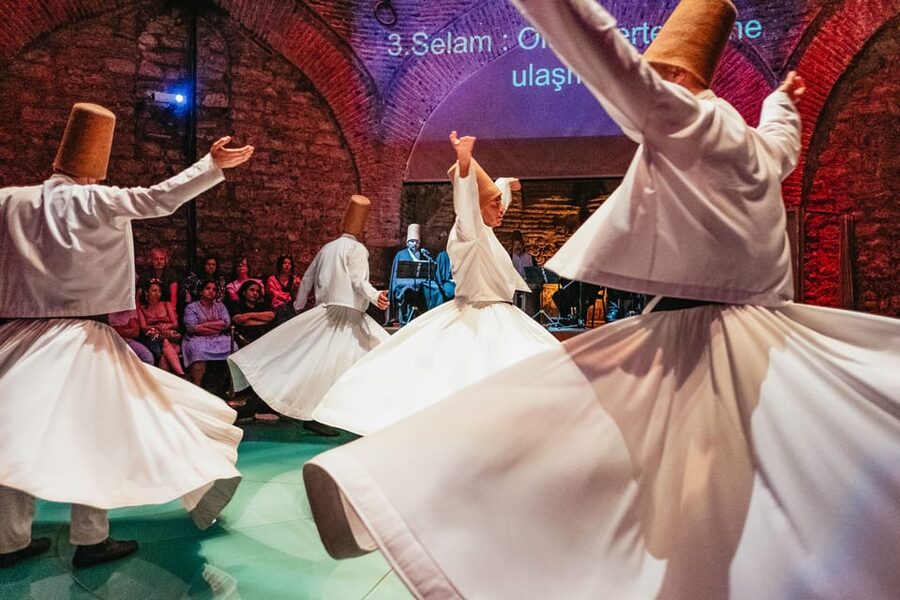
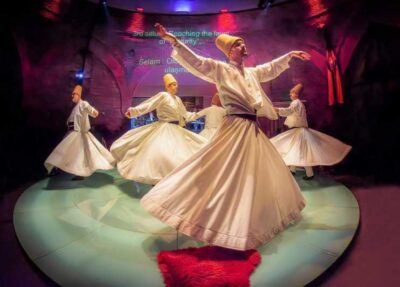
The performers wear distinctive clothing, including dark cloaks and wide white skirts. The removal of the cloak has symbolic meaning within the ritual, while the turning motion represents spiritual movement. The right hand is traditionally raised and the left hand lowered, a gesture associated with receiving and passing on divine grace. The important point for you is not to reduce the ritual to costume and spinning. Watch the order, restraint, and concentration.
The ceremony ends with a Fâtiha for the souls of prophets, martyrs, and believers, followed by a prayer for the salvation of the country. This ending reinforces the fact that you are witnessing a religious ceremony presented for an audience, not a regular theatrical finale.
Watching the dervishes turn in silence
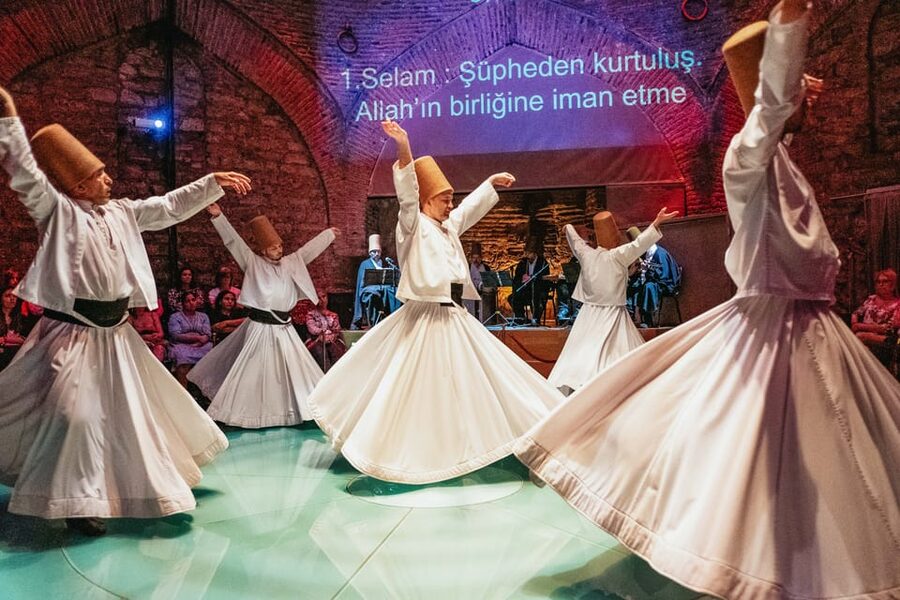
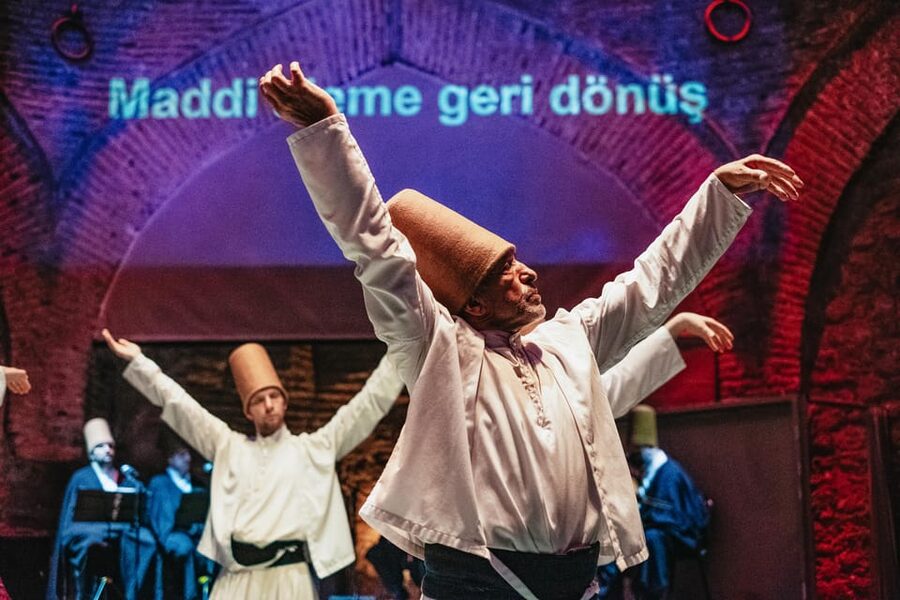
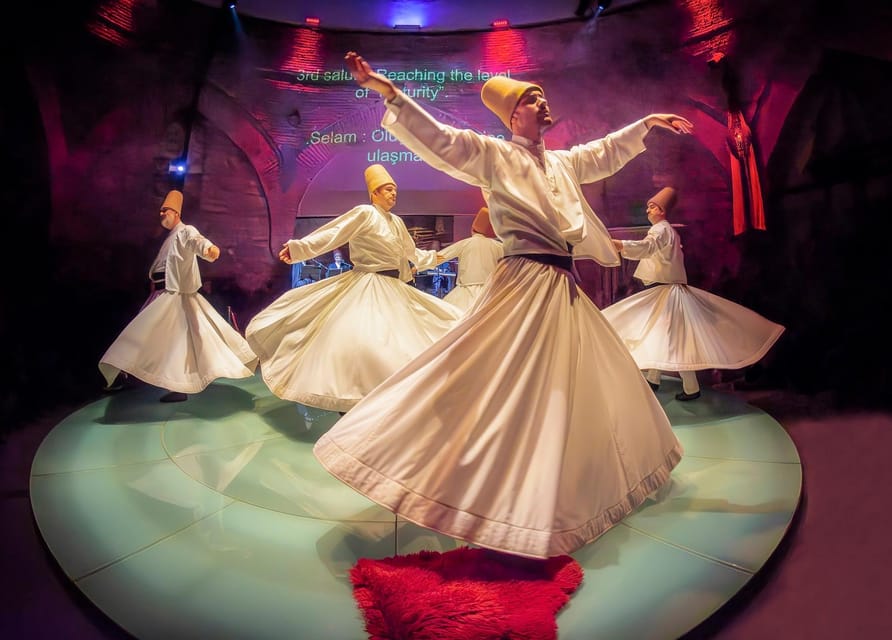
The whirling is the part most people come to see, and it is striking precisely because it is so controlled. The dervishes turn for extended periods while maintaining their spacing and posture. One detailed account described five dervishes turning for more than 35 minutes across the different stages of the ceremony, though the exact performance can vary.
The skill is easy to underestimate. The turning looks simple at first, but the performers stop at specific points with remarkable control. There are no dramatic flourishes or crowd-pleasing gestures. The movement is steady, repetitive, and deliberate.
You may notice the air moving as the skirts pass, especially if you sit near the performance area. In the domed bath, the turning bodies, white skirts, music, and echoing stone create a calm, unusual atmosphere. Some people find it meditative. Others may find the central section too slow. Both reactions are reasonable.
The best approach is to let go of the expectation that something new must happen every few seconds. This is ritual repetition, not a dance number built around changing scenes. If you need constant action, the hour may test your patience. If you can watch quietly and follow the ceremony’s rhythm, the simplicity becomes the point.
No photography or video is allowed inside. Talking and applause are also prohibited during the ceremony. I consider that a benefit rather than a nuisance. Phones stay out of the way, and the room can remain quiet enough for you to hear the music and the turning skirts. Arriving late is particularly disruptive, so allow time to find the entrance, pass through the exhibition, and settle into your seat.
Same city, a completely different kind of day:
- Istanbul: Bosphorus Dinner Cruise & Show with Private Table
★ 4.8 · 44,561 reviews - Istanbul: Daytime or Sunset Sightseeing Cruise & Audio Guide
★ 4.8 · 14,430 reviews - Istanbul: Bosphorus Dinner Cruise with Turkish Night Show
★ 4.8 · 10,127 reviews - Best of Istanbul 1, 2 or 3-Day Private Guided Istanbul Tour
★ 5.0 · 8,922 reviews
Seating, timing, and comfort inside the hall
The activity lasts one hour, which is a useful length for a first introduction to the Mevlevi Sema. You receive a complete, shortened ceremony rather than a long religious program that takes up an entire evening. The compact format also makes it easier to fit into a day of sightseeing around Sultanahmet and Sirkeci.
Seats are allocated on the basis of first booked, first served. If your position in the room matters, book early. Early booking does not mean you should arrive late and expect a particular chair. Seat allocation is handled by the center, and practical accounts are not completely consistent about where early bookings end up, so think of advance booking as your best chance, not an absolute guarantee of a front-row place.
The room is intimate, and every seat should give you a reasonable view of the central space. That intimacy helps the ceremony feel close and concentrated. It also creates the main comfort complaint: chairs can be placed very close together, with little room between neighbors.
If you are tall, have mobility concerns, or dislike tight seating, this is useful to know before booking. The venue also involves stairs and is not suitable for wheelchair users. These are not minor details for a one-hour program, since you will remain seated and quiet for most of the performance.
What the $32 price really covers
At about $32 per person, this is not the cheapest cultural activity in Istanbul, but it is fairly easy to judge the value. You are paying for admission to a one-hour ceremony, entry to a historic venue, live music, a booklet, bottled water, and access to the small exhibition.
The value is strongest if you would otherwise pay separately for a cultural performance and a museum visit. The building, exhibition, and music make the experience more than a short spinning demonstration. The convenient location also saves time and transport planning.
The value is weaker if you only want to see the dervishes whirl for a few minutes. A large part of the hour includes music, chanting, prayer, and formal preparation. The ceremony’s spiritual and cultural context is central. If that sounds like extra material to you, the price may feel high for a one-hour event.
I would call the price reasonable for a respectful introduction to an important Turkish tradition, especially for a first visit to Istanbul. It is not a bargain attraction, but the historic setting and live musical program give it more substance than a simple tourist performance.
Free cancellation up to 24 hours before the activity and a reserve-now, pay-later option make it easier to fit into a changing Istanbul schedule. Check the available starting times when booking, since the exact schedule is not fixed in the information provided.
Who will appreciate this experience most
I would recommend this to you if you enjoy music, religious traditions, historic buildings, or quiet cultural experiences. It is also a good choice if you want to understand a spiritual side of Islam that is not usually visible during a standard sightseeing route.
It suits solo visitors, couples, and older children who can remain silent and attentive. Children under seven cannot attend, and the formal mood may not suit younger children even if they meet the age requirement.
This is less suitable if you want an interactive performance, a spoken tour, or plenty of photographs. You will not be able to ask questions during the ceremony, and there is no photography inside. The exhibition and booklet offer some explanation, but you should not expect a personal lecture from a guide.
The experience can also feel slow if you are not drawn to repetition or sacred music. I would not book it simply because the phrase whirling dervishes sounds exotic. Book it because you are willing to watch a solemn ritual with respect.
Simple ways to get more from the hour
Arrive early enough to read the foyer panels before taking your seat. The exhibition gives you the basic meaning of the Sema, and the booklet helps you follow the sequence.
Dress and behave as you would for a religious setting. The rules are clear: no photographs, no talking, no applause, and no disruption. Silence is not just a house rule here. It allows the ceremony to retain its character.
Keep your phone switched off, not merely on silent. The hall’s acoustics carry small noises, and a late arrival or notification can distract everyone. If you need water, use the bottled water provided, but avoid opening noisy packaging during a quiet musical passage.
Do not judge the experience only by the spinning. Listen to the classical Turkish music, watch the entrance of the sheikh, notice the pauses between sections, and pay attention to how the ceremony closes. The whirling is the most famous image, but it is one part of a larger sequence.
Should you book the Hodjapasha ceremony?
Book this experience if you want a quiet, culturally focused hour in a memorable historic room. The strongest reasons are the Ottoman bath setting, the live traditional music, the useful exhibition, and the chance to see a Mevlevi Sema ceremony presented with real solemnity.
Skip it if you need a lively dance show, comfortable spacious seating, easy wheelchair access, or the freedom to take pictures. The performance may feel repetitive, and the one-hour price is not the lowest cultural ticket in Istanbul.
For most visitors who approach it with the right expectations, I think it is worth booking. Read the exhibition first, arrive early, take your seat, and let the music and ritual unfold without trying to turn it into a photo opportunity.
FAQ
Where does the Hodjapasha Whirling Dervishes ceremony take place?
It takes place at the Hocapaşa Culture Center in central Istanbul, about 100 meters from the Sirkeci Tram Stop.
How long does the experience last?
The ceremony lasts one hour.
What happens during the program?
The program begins with classical Turkish music, followed by the entrance of the dervishes and sheikh, praise for the Prophet Mohammed, and the seven-part Mevlevi Sema ceremony. It ends with a Fâtiha and a prayer for the country.
Is this a dance show or a religious ceremony?
It is a presentation of the Mevlevi Sema, a spiritual and religious ceremony. The whirling is part of the ritual, so you should not expect a conventional theatrical dance performance.
Is photography allowed inside?
No. Photography inside is not permitted.
Can I talk or applaud during the ceremony?
No. Talking, applause, and any disruption are prohibited during the performance.
Are drinks included?
Bottled drinking water is included, and complimentary drinks are advertised during the show.
Are children allowed?
Children under seven are not permitted.
Can wheelchair users attend?
The activity is not suitable for wheelchair users. There are also steps leading to the venue.
How are seats allocated?
Seats are allocated according to a first-booked, first-served policy. Booking early is advisable if you want the best chance of a favorable seat.
Can I cancel my booking?
You can cancel up to 24 hours in advance for a full refund. A reserve-now, pay-later option is also available.
More Show in Istanbul
- Istanbul: Bosphorus Cruise with Dinner Show
★ 4.4 · 2,181 reviews - Bosphorus Dinner Cruise with Show and Private Table
★ 4.5 · 2,021 reviews - Istanbul: Hodjapasha Rhythm of The Dance Show
★ 4.7 · 1,451 reviews - Istanbul: Bosphorus Dinner Cruise with Turkish Night Show
★ 4.6 · 781 reviews
More Museums in Istanbul
- Istanbul: Hagia Sophia Skip-the-Line Ticket & Museum Option
★ 3.7 · 4,958 reviews - Istanbul: Topkapi Palace & Harem Museum Ticket & Audio Guide
★ 4.1 · 3,977 reviews - Istanbul: Topkapi Palace and Harem Museum Tour with Ticket
★ 4.7 · 247 reviews - Istanbul: Hagia Sophia Mosque and Museum Skip-The-Line Combo
★ 4.5 · 136 reviews
Just added around Istanbul
- Istanbul Highlights Small-Group Walking Guided Tour★ 4.4 · 179 reviews
- Topkapi Palace&Harem-Guided Tour-Skip lines- All tickets inc★ 4.8 · 66 reviews
- Istanbul: Topkapi Palace Skip-the-Line Ticket & Guided Tour★ 4.2 · 178 reviews
- Istanbul: Private Guided Food Tour with 10 Tastings★ 4.7 · 49 reviews
- Istanbul: Belly Dancing, Show, & Dinner at Sultana’s Ticket★ 3.8 · 71 reviews
- Istanbul: Private Local Food & Markets Experience★ 4.9 · 27 reviews
- Skip-the-Line Hagia Sophia Digital Tickets w/Audio Guide★ 4.3 · 23 reviews
- Istanbul: Guided Shopping Trip with Turkish Coffee Tasting★ 4.7 · 37 reviews
Whirling Dervish Shows, compared.
Istanbul Hodjapasha Whirling Dervishes Show & Exhibition
Read our review →
Istanbul Traditional Turkish Dinner and Dervish Experience
Read our review →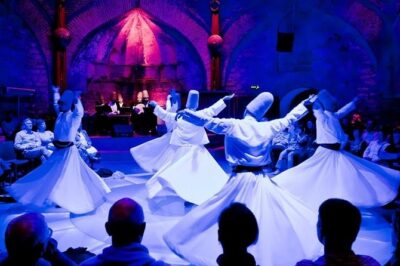
Traditional Turkish Dinner and Dervish Experience
Read our review →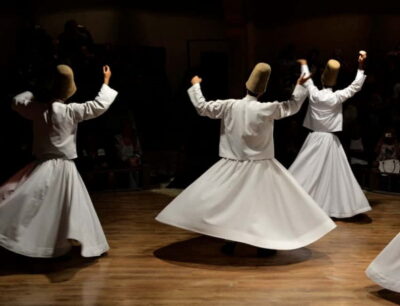
Whirling Dervishes Ceremony & Optional Transfer
Read our review →Browse the lists this tour appears in