
Reviewed · WHIRLING DERVISH SHOWS
Istanbul Hodjapasha Whirling Dervishes Show & Exhibition
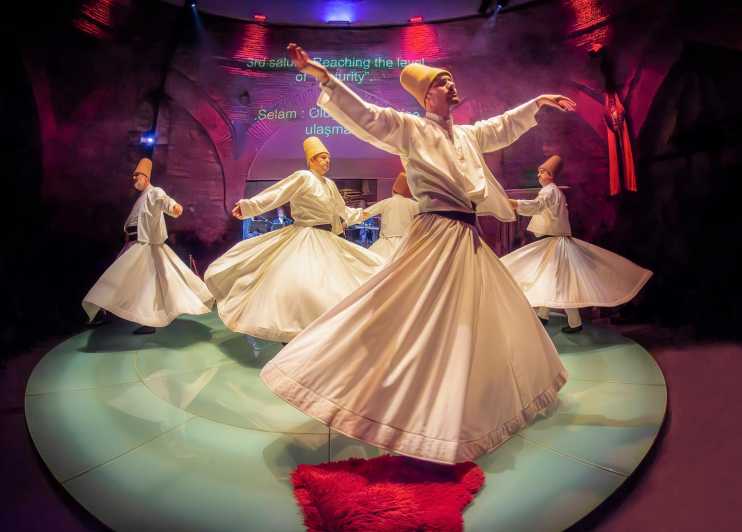
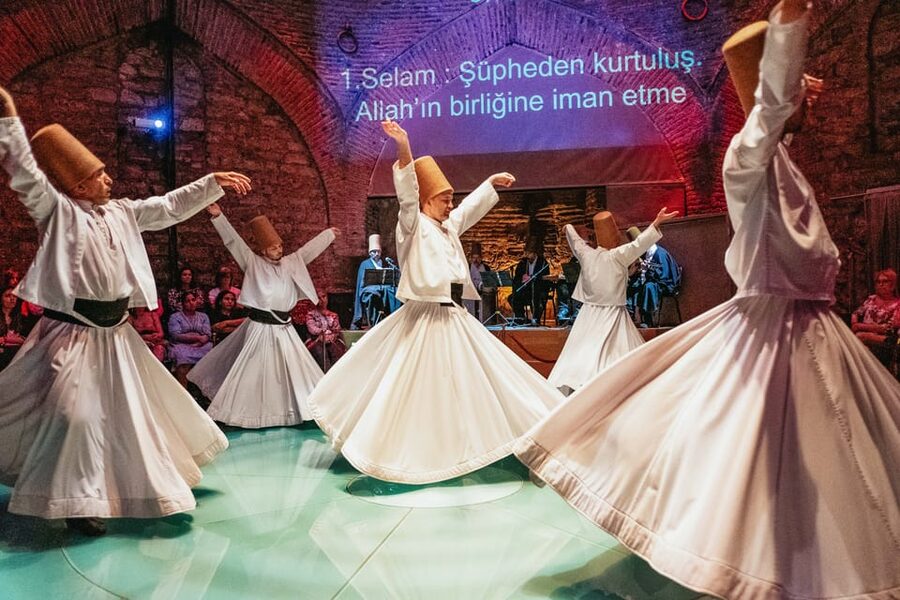
The whirling begins quietly, after music, prayers, and formal bows set the mood. Then the dervishes turn in slow, steady circles, arms raised, as musicians and singers perform traditional pieces. This is a religious ceremony presented for a public audience, not a theatrical dance show built around variety or spectacle.
I like the small, intimate setting and the useful exhibition in the foyer, where you can read about Sufism, Rumi, and the meaning behind each stage. I also like the central location near the Spice Market, restaurants, cafés, and public transport. The main drawback is simple: if you need constant action, the repetitive movement and soft lighting may feel slow, especially for children.
In This Review
- Key points to know before booking
- A ceremony, not a conventional stage show
- Start in the foyer with Sufi history and Rumi poetry
- Inside the compact Hodjapasha venue
- What happens during the one-hour ceremony
- Why the repetitive movement can be powerful
- Is $32 good value in Istanbul?
- Arriving in the old city without getting lost
- Who should book this experience?
- Booking details worth knowing
- Should you book Hodjapasha?
- FAQ
- How long does the Hodjapasha Whirling Dervishes experience last?
- Where does the experience begin and end?
- What is included in the ticket?
- Is hotel pickup and drop-off included?
- Is food included?
- Is photography allowed during the ceremony?
- What is the minimum age?
- Is the venue close to public transportation?
- How many people can attend?
- Can I cancel for a full refund?
Key points to know before booking
- The whirling is only part of the hour: Music, prayer, bows, and explanations come before the main turning begins.
- The foyer exhibition matters: Arrive early to read about Sufi beliefs, Rumi poetry, and the ceremony’s origins.
- Expect a solemn setting: Photography, video, and applause are not allowed during the ritual.
- Seats are assigned: The venue is compact, so you sit close to the performance area and can see the dervishes clearly.
- It costs $32 per person: That is fair if you value culture, music, and context, but less so if you expect a lively stage show.
- Use the main street for arrival: Taxis stop on Ankara Caddesi, not in the small lane leading to the venue.
A ceremony, not a conventional stage show
The first thing to understand is what you are buying. Hodjapasha presents a cultural and mystical ceremony connected with the Mevlevi Sufi tradition. The word show appears in many descriptions, but the experience itself is quiet, formal, and devotional.
You will not see a changing program of dances, jokes, narration, or theatrical scenes. The structure is repeated movement, traditional music, singing, prayers, and bows. The dervishes’ turning is the central visual feature, but it does not begin at the start of the hour. One visitor found that the whirling did not begin until roughly halfway through, which is useful to know if you arrive expecting immediate action.
I think this format works best when you treat the hour as a cultural ceremony you are observing, not entertainment you are consuming. The stillness is part of the point. The low light, gentle strings, and vocals create a reflective mood, and some people may find themselves sleepy. Others will find the same calm and repetition mesmerizing.
The presentation is intended for a public audience, so it is not the same as attending a private religious gathering. One candid assessment called it staged rather than fully authentic, while other people found it a serious and believable representation of the tradition. The sensible view is that Hodjapasha gives you an organized way to learn about and witness the ritual in Istanbul, without claiming that you are entering the private spiritual life of a dervish community.
More Whirling Dervish Shows in Istanbul
- Istanbul: Hodjapasha Whirling Dervishes Show & Exhibition
★ 4.4 · 4,790 reviews - Istanbul: Whirling Dervishes Ceremony and Mevlevi Sema
★ 4.3 · 1,694 reviews - Istanbul: Whirling Dervish Ceremony next to Hagia Sophia
★ 4.5 · 906 reviews
Start in the foyer with Sufi history and Rumi poetry
Do not rush straight to your seat. The exhibition before the ceremony is one of the strongest parts of the experience, and I would allow at least 20 minutes if the schedule permits.
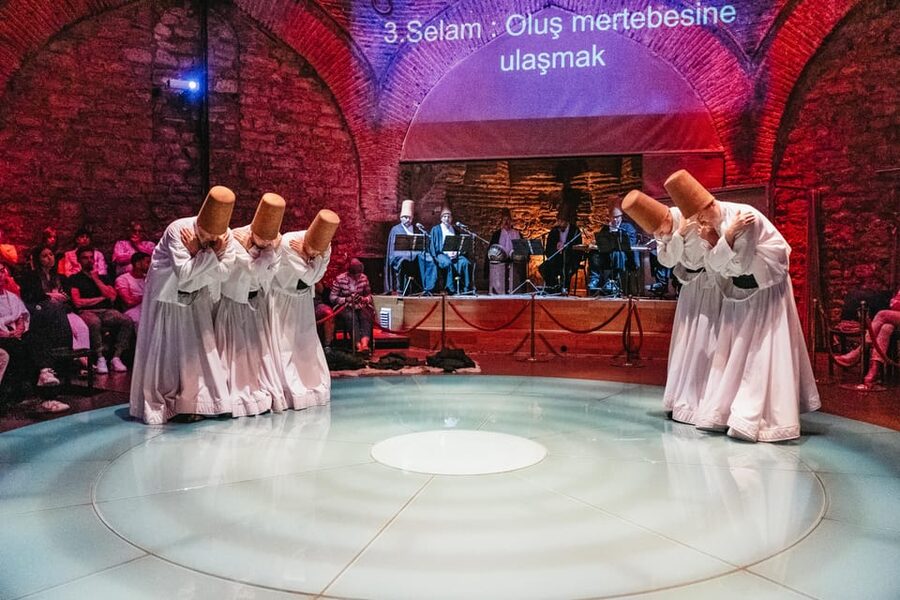
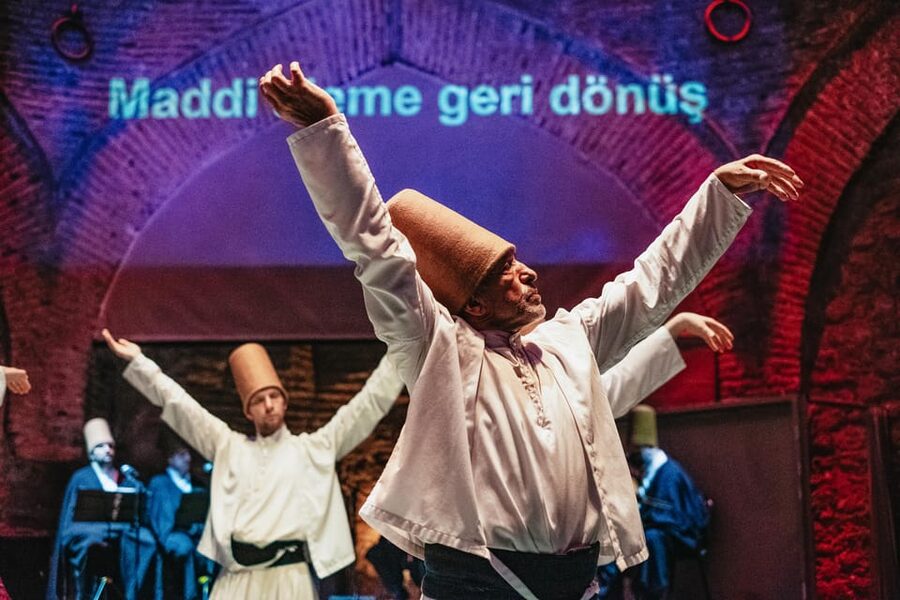
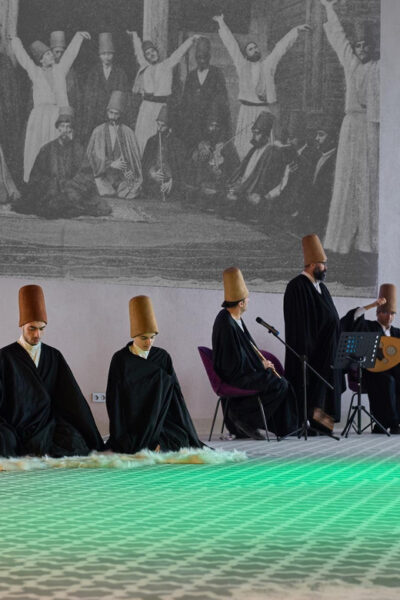
The displays explain Sufi traditions, the origins of the whirling dervishes, and the ideas connected with Mevlana Rumi. You can also read poems and background information in the gallery. During the ceremony, explanations of the different stages are shown on a wall, so the exhibition gives you a useful head start.
That context changes what you see. Without it, the turning can look like a display of physical skill, impressive but hard to interpret. With some background, the bows, costumes, music, and hand positions carry more meaning. You begin to understand why the ceremony moves through a formal sequence instead of simply building toward a dance performance.
A multilingual booklet is included, and the activity is offered in English. The available information does not identify a personal guide, so you should not expect a named lecturer or a guided walking tour through the exhibit. This is largely self-directed, which suits people who prefer to read at their own pace.
The exhibition is also helpful if you know little about Sufi Islam. You do not need to share the faith to appreciate the ceremony. The experience can work as a cross-cultural look at prayer, discipline, music, and meditation, provided you approach it respectfully.
Inside the compact Hodjapasha venue
Hodjapasha Cultural Centre is in Fatih, at Hoca Paşa Mahallesi Ankara Caddesi, Hoca Paşa, Hocapaşa Hamamı Sk. No:3 D:B. The area is central and close to public transportation, with restaurants and cafés nearby for before or after the ceremony.
The venue itself is small and intimate. One account estimated around 75 people at a particular performance, although the activity information allows for a maximum group size of 170. The important point for you is that this is not a huge auditorium. Seating is close to the performance area, and assigned seats help keep entry organized.
Close seating is a real advantage here. You can see the dervishes’ faces, hands, posture, and concentration rather than watching tiny figures across a wide stage. That makes the physical control more impressive. Turning for an extended period while keeping the arms raised requires extraordinary discipline, even if the movement itself remains repetitive.
The compact room also makes the ceremony feel more focused. At the same time, people who prefer personal space or a grand theatrical setting may find it plain. The venue’s strength is intimacy, not elaborate production.
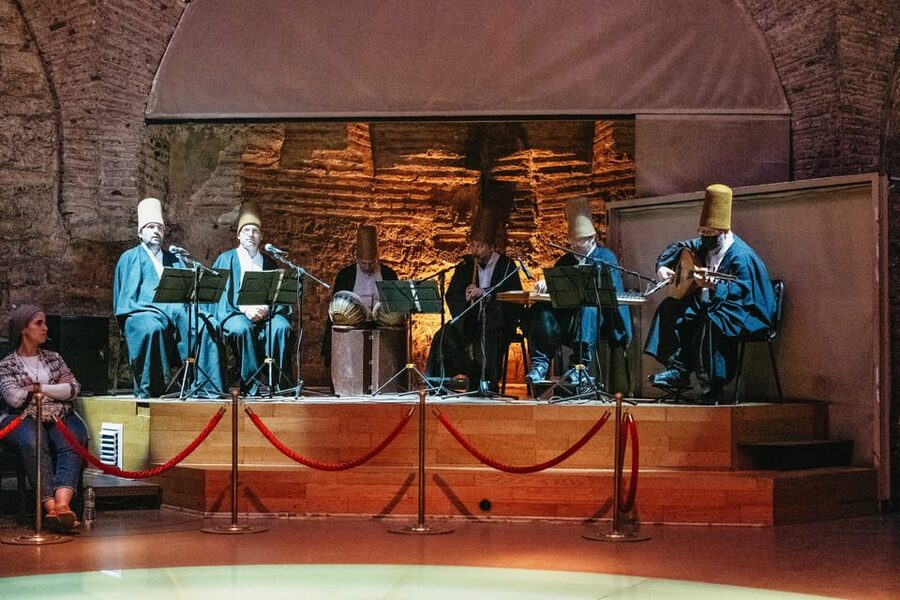
The sound and lighting are reported to be solid. Traditional musicians and singers provide much of the atmosphere, and several parts of the ceremony are accompanied by music rather than silence. If music matters to you, this may be one of the more rewarding aspects of the hour.
What happens during the one-hour ceremony
The ceremony begins with music and formal elements rather than immediate whirling. Expect traditional instrumental sounds, singing, prayer, and bows before the main turning starts. The sequence is deliberate, and the explanations projected or lit on a wall help you follow the stages.
The dervishes then whirl in a controlled pattern, usually with one arm raised and the other lowered. The movement is repetitive by design. There is no rapid change of scene, and the ceremony does not suddenly turn into a crowd-pleasing finale.
You are asked not to take photographs or videos and not to applaud. At first, that may feel unusual for a public performance. In practice, it protects the quiet atmosphere and keeps phones from breaking the concentration in the room. I appreciate this rule, but you should know about it before you book. If documenting every part of your Istanbul visit is important to you, this is not the place to do it.
The lack of applause can also feel awkward if you are expecting clear moments to respond. Try to view the silence as part of the experience. You are watching a devotional form that has been adapted for public presentation, and quiet observation is more respectful than treating the turning like a concert number.
Some explanations are provided visually rather than through a live speaker. That keeps the ritual moving, but it means the experience may feel less personal than a guided cultural talk. The included booklet and foyer exhibition fill in some of that gap.
Same city, a completely different kind of day:
- Istanbul: Bosphorus Dinner Cruise & Show with Private Table
★ 4.8 · 44,561 reviews - Istanbul: Daytime or Sunset Sightseeing Cruise & Audio Guide
★ 4.8 · 14,430 reviews - Istanbul: Bosphorus Dinner Cruise with Turkish Night Show
★ 4.8 · 10,127 reviews - Best of Istanbul 1, 2 or 3-Day Private Guided Istanbul Tour
★ 5.0 · 8,922 reviews
Why the repetitive movement can be powerful
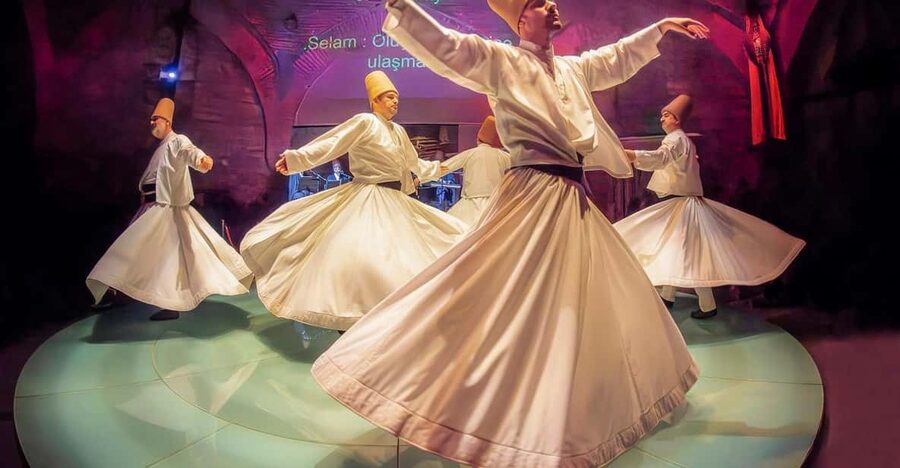
The turning is easy to underestimate from a short description. For some people, it becomes the most moving cultural experience of their Istanbul visit. The steady rotation, soft music, and serious expressions create a trance-like effect.
For others, the same elements feel monotonous. The movement changes little over the course of the performance, and several people have found the hour boring or only moderately interesting. This is not a flaw that can be fixed by better staging. Repetition is central to the ritual.
I would ask yourself one question before booking: can you sit quietly and watch a single form develop over time? If yes, the ceremony may be calming and thought-provoking. If you need a faster pace, choose a different evening activity.
The physical discipline is worth noticing even if you are not religious. Keeping balance while turning for so long is impressive, and the performers’ concentration gives the ceremony weight. You may also find the combination of music and movement accessible across religious backgrounds. One person described enjoying it as a devout Catholic while attending with a nonreligious friend.
The experience is especially good for people interested in Turkish culture, world music, religious traditions, or Rumi. It is less suited to anyone booking only because the phrase whirling dervish sounds like a lively dance show.
Is $32 good value in Istanbul?
At $32 per person, the price is reasonable for a central, one-hour cultural activity that includes admission, the exhibition, a multilingual booklet, and bottled water. You are paying not just for the turning, but also for the preserved venue, live traditional music, seating, and the chance to see a ceremony explained in context.
The value depends heavily on your expectations. If you compare it with a theater production, the program is short and intentionally simple. If you compare it with an evening cultural visit that combines an exhibit and live ritual music, the price is more persuasive.
The exhibition adds value because it gives you something to do before the ceremony and helps you understand what you are seeing. Without that background, you might spend the hour wondering why the ceremony includes so many bows and why the whirling takes up only part of the program.
Food is not included, and neither is hotel pickup or drop-off. That is not a serious drawback in this location. The surrounding area has plenty of places to eat, and the Spice Market is close enough to combine with the performance. Plan your own meal before or after rather than expecting a full evening package.
Arriving in the old city without getting lost
The location is central, but the final approach can be confusing. The venue is on Hocapaşa Hamamı Sk., a smaller lane off Ankara Caddesi. One useful practical point is that taxis stop on the main street, not in the little alley by the entrance.
If you take a taxi, ask to be dropped on Ankara Caddesi and walk the last section. The area is near public transportation, and the activity ends where it begins, so you do not need to arrange a second meeting point.
Give yourself extra time. The venue’s small lanes and nearby streets can be confusing, especially after dark or if you are using a phone map while walking. Arriving early also lets you see the exhibition instead of squeezing it in at the last minute.
The neighborhood is a bonus. Afterward, you can walk toward the Spice Market or settle into a nearby restaurant or café. Since the ceremony is only about an hour, it fits neatly into an evening that also includes dinner or a short old-city walk.
Who should book this experience?
I would recommend Hodjapasha to you if you:
- Want a cultural activity rather than a party or stage spectacle
- Have an interest in Sufism, Rumi, prayer, or Turkish music
- Can appreciate slow, repeated movement
- Prefer a small venue with close seating
- Want useful background material before seeing the ceremony
- Are looking for a central activity that fits into a larger Istanbul evening
Families should think carefully. The minimum age is seven, and most people can participate, but the quiet pace may test younger children. The performance can feel long if a child expects a dance show with changing scenes.
It also suits first-time visitors who want to check off one of Istanbul’s well-known cultural experiences, as long as they understand what it is. You do not need prior religious study, but reading a little about Rumi and the Mevlevi tradition beforehand will make the hour more rewarding.
Booking details worth knowing
Your confirmation is issued at the time of booking, and a mobile ticket is provided. Prebooking is useful because it guarantees entry for your selected performance, and the activity is often booked about 17 days ahead.
The activity is offered in English, though much of the visit is self-guided through the booklet, exhibit, and visual explanations. There is no hotel pickup or drop-off, so you are responsible for reaching Hodjapasha and returning to your accommodation.
Free cancellation is available if you cancel at least 24 hours before the local start time. Cancellations or changes made inside that 24-hour window are not refunded or accepted.
Should you book Hodjapasha?
Book it if you want to sit quietly with Turkish Sufi music, learn the basic meaning of the Mevlevi ceremony, and watch an extraordinary display of focus in a close historic venue. Arrive early for the exhibition, use the main street if taking a taxi, and leave your camera in your bag.
Skip it if you want an energetic dance show, frequent changes, or a performance designed mainly to entertain children. At Hodjapasha, the reward comes from patience, context, and respect. For the right audience, that makes this one of Istanbul’s most memorable cultural evenings.
FAQ
How long does the Hodjapasha Whirling Dervishes experience last?
The ceremony lasts approximately one hour.
Where does the experience begin and end?
It begins and ends at Hodjapasha Cultural Centre, at Hoca Paşa Mahallesi Ankara Caddesi, Hoca Paşa, Hocapaşa Hamamı Sk. No:3 D:B, 34110 Fatih, Istanbul.
What is included in the ticket?
Admission to the ceremony is included, along with a multilingual booklet and bottled water.
Is hotel pickup and drop-off included?
No. You must make your own way to Hodjapasha Cultural Centre and return to your accommodation afterward.
Is food included?
No. Food is not included in the activity.
Is photography allowed during the ceremony?
No. Photography and video are not allowed during the ceremony, and applause is also not permitted.
What is the minimum age?
The minimum age is seven.
Is the venue close to public transportation?
Yes. The venue is near public transportation, and the activity information states that most people can participate.
How many people can attend?
The activity can accommodate a maximum of 170 people, although the performance space is described as small and intimate.
Can I cancel for a full refund?
Yes, if you cancel at least 24 hours before the experience start time. Cancellations made less than 24 hours before the start time are not refunded, and changes inside that window are not accepted.
More Show in Istanbul
- Istanbul: Bosphorus Cruise with Dinner Show
★ 4.4 · 2,181 reviews - Bosphorus Dinner Cruise with Show and Private Table
★ 4.5 · 2,021 reviews - Istanbul: Hodjapasha Rhythm of The Dance Show
★ 4.7 · 1,451 reviews - Istanbul: Bosphorus Dinner Cruise with Turkish Night Show
★ 4.6 · 781 reviews
More Museums in Istanbul
- Istanbul: Hagia Sophia Skip-the-Line Ticket & Museum Option
★ 3.7 · 4,958 reviews - Istanbul: Topkapi Palace & Harem Museum Ticket & Audio Guide
★ 4.1 · 3,977 reviews - Istanbul: Topkapi Palace and Harem Museum Tour with Ticket
★ 4.7 · 247 reviews - Istanbul: Hagia Sophia Mosque and Museum Skip-The-Line Combo
★ 4.5 · 136 reviews
Just added around Istanbul
- Istanbul Highlights Small-Group Walking Guided Tour★ 4.4 · 179 reviews
- Topkapi Palace&Harem-Guided Tour-Skip lines- All tickets inc★ 4.8 · 66 reviews
- Istanbul: Topkapi Palace Skip-the-Line Ticket & Guided Tour★ 4.2 · 178 reviews
- Istanbul: Private Guided Food Tour with 10 Tastings★ 4.7 · 49 reviews
- Istanbul: Belly Dancing, Show, & Dinner at Sultana’s Ticket★ 3.8 · 71 reviews
- Istanbul: Private Local Food & Markets Experience★ 4.9 · 27 reviews
- Skip-the-Line Hagia Sophia Digital Tickets w/Audio Guide★ 4.3 · 23 reviews
- Istanbul: Guided Shopping Trip with Turkish Coffee Tasting★ 4.7 · 37 reviews
Whirling Dervish Shows, compared.
Hodjapasha Whirling Dervishes Show & Exhibition
Read our review →

Istanbul Traditional Turkish Dinner and Dervish Experience
Read our review →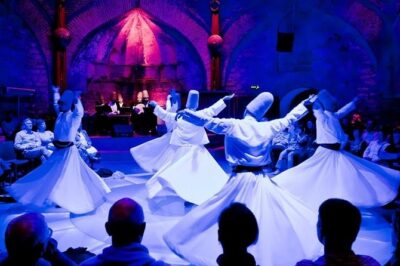
Traditional Turkish Dinner and Dervish Experience
Read our review →
Whirling Dervishes Ceremony & Optional Transfer
Read our review →Browse the lists this tour appears in