

Reviewed · MUSEUMS
Istanbul Archaeological Museums Entry Ticket & Audio Guide
The Alexander Sarcophagus is the star here, but it is only one part of a museum complex packed with Greek, Egyptian, Mesopotamian, Anatolian, and Ottoman-era objects. You can walk through at your own pace, then use the audio guide to put names, rituals, and carved stone faces into context.
I like the easy location near Gülhane tram station, and I like having the ticket on your phone instead of waiting at the sales counter. The 25-language audio guide is useful for independent sightseeing, especially if you do not read the museum labels easily.
The main catch is that this is an entry ticket, not a guided tour. You still pass through mandatory security, need an internet connection to show the QR code, and the audio guide may feel uneven: one Japanese-language user found some exhibit numbers skipped and wished for more room-by-room explanations.
In This Review
- Key points at a glance
- What you are really buying for $25
- Getting to the museums from Gülhane station
- Security comes before the museum
- The Archaeological Museum and its ancient treasures
- The Alexander Sarcophagus deserves extra time
- Crying Women Tomb, Lykia Tomb, Hermes, and Aphrodite
- Old Eastern Works Museum: Anatolia, Mesopotamia, Egypt, and Arabia
- Enameled Kiosk Museum and early Ottoman art
- How well does the audio guide work?
- How long should you allow?
- Who gets the most from this ticket?
- Should you book the Istanbul Archaeological Museums ticket?
- FAQ
- Where is the Istanbul Archaeological Museums entrance?
- Does the ticket include transportation?
- Can I skip the security line?
- Do I need to bring a passport?
- Is this a guided tour?
- What languages are available for the audio guide?
- Do I need internet access?
Key points at a glance

- See the Alexander Sarcophagus: One of the museum’s most important works, with finely carved scenes linked to Alexander the Great.
- Visit three museum sections: The Archaeological Museum, Old Eastern Works Museum, and Enameled Kiosk Museum offer different views of the ancient and Ottoman worlds.
- Use your phone as your guide: Audio commentary is offered in 25 languages, including English, Turkish, Arabic, Japanese, Chinese, and Urdu.
- Skip the ticket counter: The digital QR ticket helps you enter without buying a ticket on site, though security lines remain.
- Allow time for the major exhibits: The complex can be explored in a few hours, but the amount of material rewards a slower visit.
- Plan for practical snags: Bring your passport, charge your phone, and open the ticket only when you are close to the entrance.
What you are really buying for $25

At $25 per person, this experience buys two things: entry to the Istanbul Archaeological Museums and a self-guided audio service. That price can make sense if you value convenience, need commentary in a language beyond the standard museum labels, or want to avoid dealing with an on-site ticket purchase.
It is less compelling if you only want a quick look at one famous object. The museums are large enough to reward time, yet one recent user found the complex did not take very long to see. That depends on your pace and how closely you study the displays, but you should not assume the ticket includes a full-day guided program.
The value improves when you treat this as a flexible half-day cultural stop. You are not paying for a guide to lead a group from case to case. You are paying for direct entry and the option to control your own route, pause the commentary, and spend extra time where your interest is strongest.
A few more Istanbul trips to weigh up
- Istanbul: Hagia Sophia Skip-the-Line Ticket & Museum Option
★ 3.7 · 4,958 reviews - Istanbul: Hodjapasha Whirling Dervishes Show & Exhibition
★ 4.4 · 4,790 reviews - Istanbul: Topkapi Palace & Harem Museum Ticket & Audio Guide
★ 4.1 · 3,977 reviews
Getting to the museums from Gülhane station
The simplest approach is the T1 Bağcılar to Kabataş tram. Get off at Gülhane station, then walk about five to ten minutes to the museum complex.
This is a good arrival point because you can combine the museum with other sights in Istanbul’s historic center. The activity itself does not include transport, so your tram fare is separate. You also need to arrange your own return journey.
Before leaving your hotel, check that your phone has mobile data or another internet connection. The QR tickets are supplied by Istanbul Tourist Pass through separate emails, and the codes are designed to appear when you are near the museum entrance. Save the emails in advance, but do not count on a screenshot being enough if the system requires the live QR display.
You will receive separate links for the entry tickets and the audio guide. That is worth checking before you arrive. If one email is missing, contact the supplier before reaching the entrance rather than trying to sort it out in the queue.
Security comes before the museum

The phrase skip the line needs a small correction. The QR ticket can help you avoid the regular ticket-buying queue, but you cannot skip security. Every person must pass through the required checks, and there may still be a line at the entrance.
Bring a valid passport for every member of your party, including children. The museum uses passports to verify ages, so a child’s age cannot simply be stated at the gate.
One booking had trouble with the QR code scanning and required help from the ticket supplier. This does not mean every entry will be difficult, but it is a good reason to keep the supplier’s contact details available and arrive with a charged phone.
Renovation can also affect the visit. Exterior work has closed access to part of one building at times, so some areas may not be available during your visit. The ticket remains useful for the main collection, but you should keep your expectations flexible if construction is underway.
The Archaeological Museum and its ancient treasures
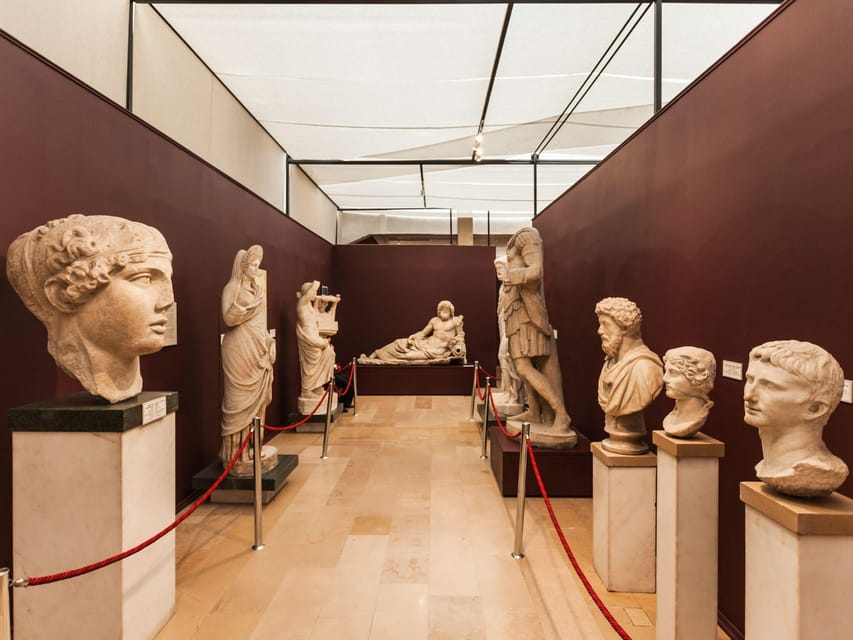
The main Archaeological Museum is where you will find the grandest collection of carved stone, sculpture, tomb art, and objects from the ancient Mediterranean and Near East. The displays connect civilizations that are often studied separately in textbooks, yet were linked by trade, conquest, religion, and artistic influence.
You might find towering figures of gods beside smaller objects tied to daily life. That contrast is important. Ancient history is not only about rulers and battles. Carved tools, ritual objects, inscriptions, and household pieces can show how ordinary people understood death, worship, family, and power.
The audio guide is meant to help explain those connections. It is available in 25 languages, including English, French, German, Greek, Italian, Spanish, Portuguese, Russian, Japanese, Korean, Hindi, Persian, Arabic, Chinese, Turkish, and several others. If you normally struggle with long museum labels, the spoken format can make the visit easier to follow.
Do not expect a live guide to point out each object. You choose what to hear and when to move on. That independence suits people who dislike fixed group schedules, but it also means you must manage your own route through a large collection.
Same city, a completely different kind of day:
- Istanbul: Bosphorus Dinner Cruise & Show with Private Table
★ 4.8 · 44,561 reviews - Istanbul: Daytime or Sunset Sightseeing Cruise & Audio Guide
★ 4.8 · 14,430 reviews - Istanbul: Bosphorus Dinner Cruise with Turkish Night Show
★ 4.8 · 10,127 reviews - Best of Istanbul 1, 2 or 3-Day Private Guided Istanbul Tour
★ 5.0 · 8,922 reviews
The Alexander Sarcophagus deserves extra time
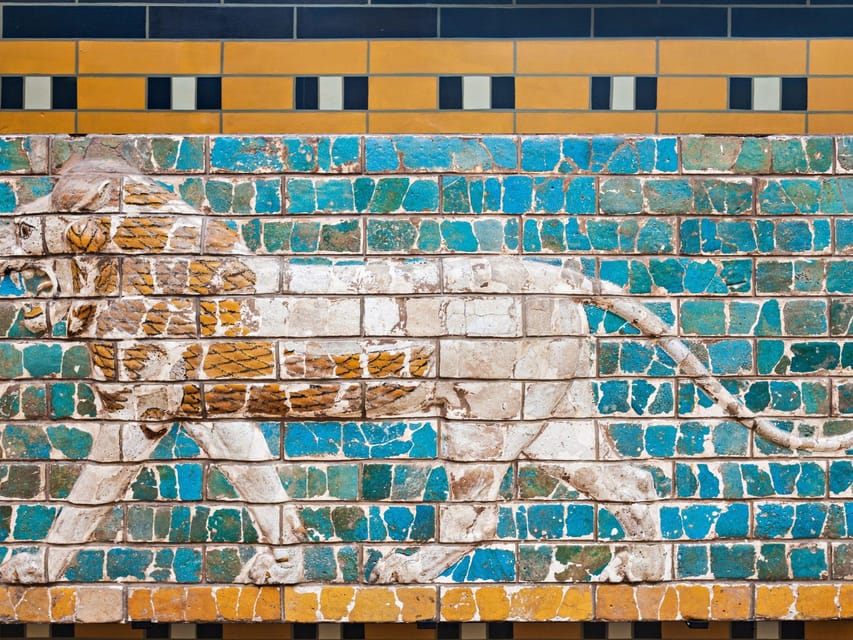
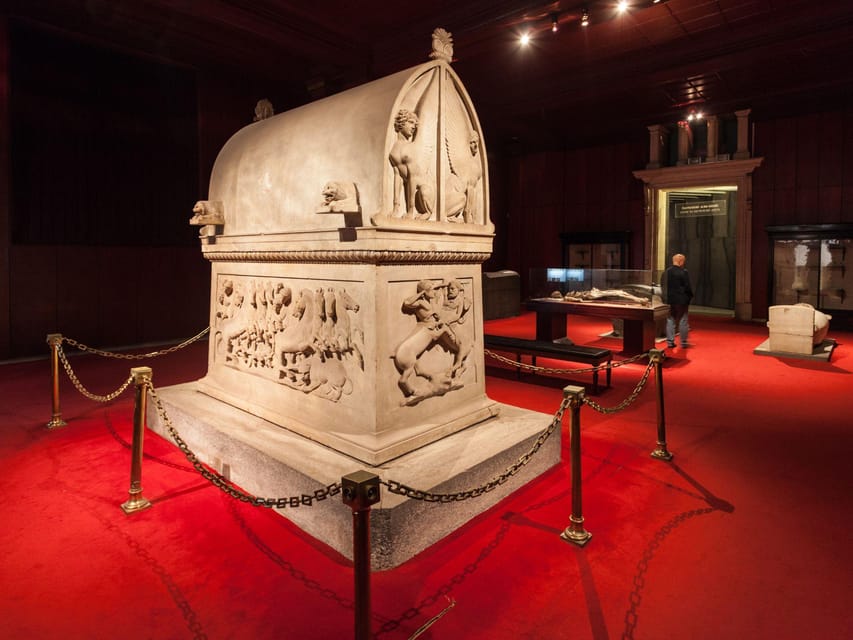
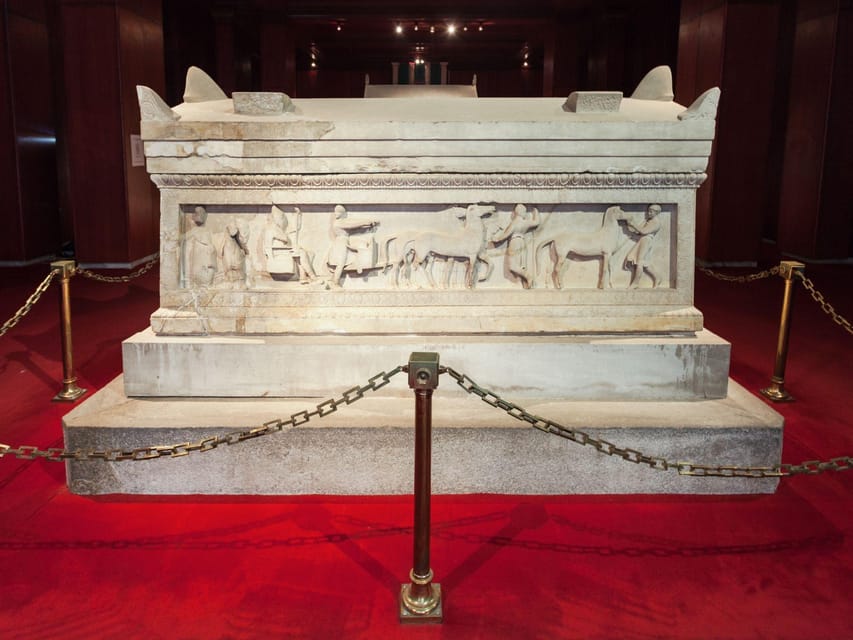
Make the Alexander Sarcophagus a priority. Despite its name, the sarcophagus is not presented simply as a confirmed tomb for Alexander the Great. Its importance comes from the highly detailed reliefs, including battle and hunting scenes associated with Alexander and the ancient world around him.
This is the kind of object that can look impressive at first glance, then reveal more when you circle it slowly. Look at the horses, clothing, weapons, and movement in the carved figures. The stone surface is doing more than decorating a coffin. It communicates status, bravery, identity, and the ideals of elite life.
The audio commentary is most valuable here because it can give you a starting point for reading the scenes. If the guide’s numbering is not perfectly clear, use the written information in the room and match it with the closest audio entry. One Japanese-language user found the spoken Japanese easy to understand, but noted that some numbers seemed to be missing and that room overviews would have helped.
That is a useful warning for everyone, not just Japanese speakers. The audio guide may explain selected objects rather than offer a complete spoken tour of every gallery. Keep your expectations closer to highlighted exhibits than to a recorded lecture covering every case.
Crying Women Tomb, Lykia Tomb, Hermes, and Aphrodite
Several other works deserve space in your plan. The Crying Women Tomb is notable for its funerary subject and the emotional figures connected with mourning. The Lykia Tomb brings another regional style into the collection, helping you see how ancient artistic traditions varied across the lands now linked with Turkey.
The Statue of Hermes and the Aphrodite are among the recognizable classical works you may encounter. These pieces appeal to visitors who come looking for familiar Greek subjects, but their real value lies in seeing them alongside less famous objects from other cultures.
I suggest resisting the urge to photograph only the famous names. Once you have seen the headline pieces, spend time with nearby carvings and smaller artifacts. They can show details of dress, writing, ceremony, and craft that a grand statue cannot.
Because the museum presents material from Greece, Egypt, Mesopotamia, and other ancient cultures, the visit works best when you compare rather than rush. Notice how different societies represented gods, the dead, animals, rulers, and the human body. You will get more from the collection by asking how the objects were used, not just how old they are.
Old Eastern Works Museum: Anatolia, Mesopotamia, Egypt, and Arabia
The Old Eastern Works Museum broadens the visit beyond the classical Greek and Roman world. Its collection includes objects from Anatolia, Mesopotamia, Egypt, and Arabia.
This section matters because Istanbul’s museums are not limited to the civilizations most familiar to many international visitors. The objects here can help you trace early writing, religious practice, state power, and artistic exchange across a wider area.
For you, the practical benefit is variety. If statues and sarcophagi begin to feel repetitive, this building offers a different rhythm and a wider regional frame. If you have a strong interest in early civilizations, you may want to slow down here rather than treating it as an optional add-on.
The audio guide can help with unfamiliar names and cultures, but you may also need to rely on the written labels. Use a translation app if necessary, since Wi-Fi is not included at the museum. Download or prepare anything you need before entering, while remembering that the ticket QR code itself requires an internet connection near the entrance.
Enameled Kiosk Museum and early Ottoman art
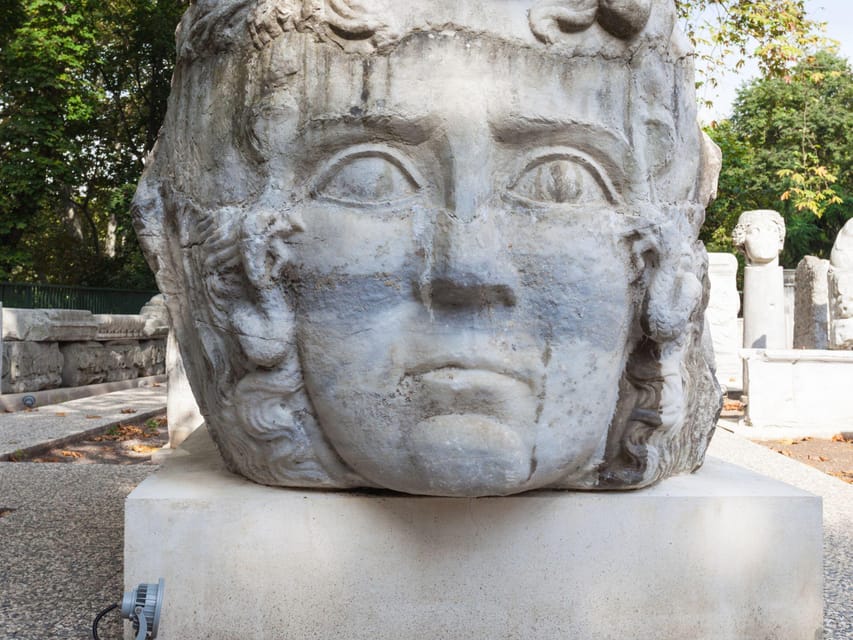
The Enameled Kiosk Museum adds a later chapter. Built in 1472 by Fatih Sultan Mehmet, it offers a look at early Ottoman art within a museum visit otherwise dominated by antiquity.
That change of period is one of the most interesting features of the complex. You move from ancient sculpture and tombs into the artistic world of the Ottoman court. The building itself is part of the story, not just a container for objects.
If you are short on time, prioritize the Alexander Sarcophagus and the major ancient sculptures first, then make your way to the Enameled Kiosk. If you have several hours, include it to understand how Istanbul’s cultural story continued long after the ancient civilizations represented in the other buildings.
Exterior renovation has affected access to one building at times. Ask at the entrance which sections are open on the day of your visit rather than assuming every part of the complex is available.
How well does the audio guide work?
The audio guide is included and comes through a link sent by the supplier. It is not an in-person commentary, and you will listen on your own smartphone.
The language range is a major advantage. English, Turkish, Arabic, Bulgarian, Chinese, Croatian, Dutch, French, German, Greek, Hindi, Hungarian, Indonesian, Italian, Japanese, Korean, Persian, Polish, Portuguese, Romanian, Russian, Spanish, Swedish, Ukrainian, and Urdu are listed as available options.
For Japanese speakers, the pronunciation was reported as clear and easy to understand. That is encouraging if you need a non-English option. Still, the guide has limits. Some exhibit numbers may skip, and not every room may have a broad introduction.
I would use it selectively. Listen to the entries for the Alexander Sarcophagus, the tombs, Hermes, Aphrodite, and objects that you cannot place from the labels. Then stop the audio when you want to look quietly. A museum is not improved by wearing out your attention on commentary for every object.
How long should you allow?
The ticket is valid for one day, with available starting times shown during booking. You can enter within the stated validity and explore independently rather than follow a fixed itinerary.
Some people will see the main highlights quickly. I would allow several hours if you want to visit the three sections, listen to audio commentary, read labels, and pause at the major works. The exact time depends on your interest and the buildings open that day.
There are toilets at the site, though signage may not be obvious. Locate them early instead of waiting until you need one urgently. This is a small point, but it can matter when you are moving through a large museum complex with children or older family members.
Who gets the most from this ticket?
This experience suits you if you want to set your own pace, prefer an audio guide to a live group, or need commentary in one of the 25 available languages. It also works well if you are building your own day around Istanbul’s historic center and want a simple museum entry option.
Families may appreciate the freedom to move on when attention fades, but passports are required for all adults and children. You will also need to manage the phone, QR code, and audio link yourself.
History students and museum regulars may find the $25 price reasonable for the collection and convenience. A visitor focused only on a brief look at the most famous sculpture may find it expensive, particularly if a building is partly closed or the audio guide does not cover every room in detail.
There is no stated group size because this is not a group tour. You enter independently and explore without a tour leader.
Cancellation is flexible: you can cancel up to 24 hours before the activity for a full refund, and the reserve-now, pay-later option lets you keep your plans open.
Should you book the Istanbul Archaeological Museums ticket?
Book it if the Alexander Sarcophagus, ancient Greek and Near Eastern collections, and Ottoman art all appeal to you. The QR entry and broad audio-language choice make this a practical way to visit without buying a ticket on site.
Skip it if you want a personal guide, a tightly organized route, or guaranteed access to every building during renovation. You should also be comfortable using your phone for both the ticket and audio guide.
For most independent museum visitors, I see this as a useful convenience purchase rather than a must-have tour. Arrive prepared with your passport, internet access, a charged phone, and a little patience at security. Then give yourself enough time to look beyond the famous statues, because the best experience comes from comparing the many cultures gathered under one museum ticket.
FAQ
Where is the Istanbul Archaeological Museums entrance?
The museums are about a five to ten minute walk from Gülhane tram station. You can reach the station using the T1 Bağcılar to Kabataş tram.
Does the ticket include transportation?
No. Transportation fees are not included, so you must pay separately for the tram or any other transport you use.
Can I skip the security line?
No. The QR ticket can help you skip the ticket-buying line, but mandatory security checks apply to everyone. A line may still form at the entrance.
Do I need to bring a passport?
Yes. All adults and children must show a valid passport at the entrance so the museum can verify age.
Is this a guided tour?
No. This is an entry ticket with a self-guided audio guide. There is no live guide leading you through the museums.
What languages are available for the audio guide?
The audio guide is available in 25 languages, including English, Turkish, Arabic, French, German, Spanish, Italian, Japanese, Chinese, Korean, Russian, Persian, Portuguese, Hindi, and Urdu.
Do I need internet access?
Yes. You need an internet connection on your smartphone to display the QR tickets near the museum entrance. Wi-Fi access at the museum is not included.
More Audio Tours in Istanbul
- Istanbul: Basilica Cistern Fast-Track Entry and Audio Guide
★ 4.6 · 7,521 reviews - Istanbul: Bosphorus Sightseeing Cruise Tour with Audio Guide
★ 4.6 · 2,694 reviews - Istanbul: Hagia Sophia Skip-the-Line Ticket and Audio Guide
★ 4.3 · 2,246 reviews - Istanbul: Hagia Sophia Skip-the-Line Ticket with Audio Tour
★ 4.4 · 1,767 reviews
Just added around Istanbul
- Istanbul Highlights Small-Group Walking Guided Tour★ 4.4 · 179 reviews
- Topkapi Palace&Harem-Guided Tour-Skip lines- All tickets inc★ 4.8 · 66 reviews
- Istanbul: Topkapi Palace Skip-the-Line Ticket & Guided Tour★ 4.2 · 178 reviews
- Istanbul: Private Guided Food Tour with 10 Tastings★ 4.7 · 49 reviews
- Istanbul: Belly Dancing, Show, & Dinner at Sultana’s Ticket★ 3.8 · 71 reviews
- Istanbul: Private Local Food & Markets Experience★ 4.9 · 27 reviews
- Skip-the-Line Hagia Sophia Digital Tickets w/Audio Guide★ 4.3 · 23 reviews
- Istanbul: Guided Shopping Trip with Turkish Coffee Tasting★ 4.7 · 37 reviews
Museums, compared.

Hagia Sophia Skip-the-Line Ticket & Museum Option
Read our review →
Hodjapasha Whirling Dervishes Show & Exhibition
Read our review →
Small-Group Red Tour, Open Air Museum with Lunch
Read our review →Istanbul Hodjapasha Whirling Dervishes Show & Exhibition
Read our review →
Topkapi Palace and Harem Museum Tour with Ticket
Read our review →

Official Museum Pass for 12 Most Popular Museums
Read our review →
Hagia Sophia Mosque and Museum Skip-The-Line Combo
Read our review →Browse the lists this tour appears in