Reviewed · SHOW
Istanbul Hodjapasha Rhythm of The Dance Show
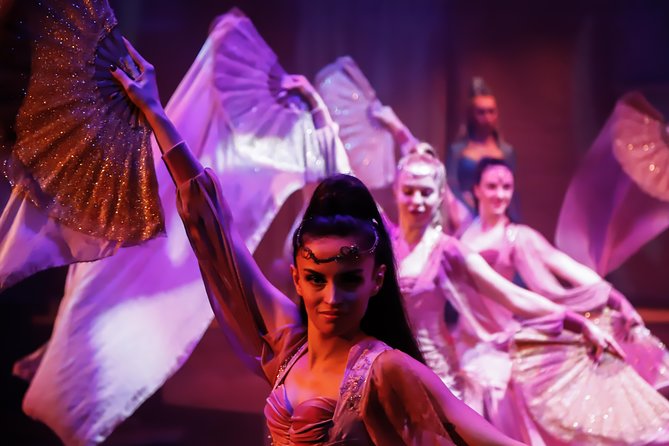
The most striking thing about the Hodjapasha Rhythm of the Dance Show is the setting: a 15th-century hamman turned into a small performance hall. Inside, folk dances from Anatolia, the Balkans, and the Caucasus share the stage with belly dancing, percussion, modern choreography, and swirling visual effects.
I like the strong variety, which keeps the 65-minute program moving, and I like the small theater, where the circular stage and close seating give you a good view. The main consideration is expectation: this is a modern stage show inspired by Turkish and regional dance, not a formal whirling dervish ceremony or a traditional dinner show.
In This Review
- Key points to know
- Entering the old hamman at 8:30 pm
- A fast-moving tour through Anatolia, the Balkans, and the Caucasus
- Belly dancing, percussion, and the strongest solo numbers
- Whirling movement with a modern stage twist
- Costumes, live music, and 360-degree projections
- Why the small circular stage matters
- Is $41 a fair price?
- The evening fits well after Istanbul sightseeing
- Who should book this show?
- Booking, cancellation, and small practical details
- Should you book the Hodjapasha Rhythm of the Dance Show?
- FAQ
- How long does the Hodjapasha Rhythm of the Dance Show last?
- What time does the show start?
- How much does the experience cost?
- What is included with the ticket?
- Is the show held in a historic building?
- Can I cancel for a full refund?
Key points to know
- Historic venue: The show takes place in a restored 15th-century hamman near public transportation.
- Wide dance program: Expect Anatolian, Balkan, and Caucasian folk dances, oriental dance, male and female soloists, and modern choreography.
- Excellent stage energy: Live music, percussion, colorful costumes, and 360-degree video projection keep the performance lively.
- Small theater advantage: The circular stage helps most seats feel close to the action.
- Simple evening plan: The show begins at 8:30 pm and lasts about 1 hour and 5 minutes, making it easy to add after sightseeing.
- Book ahead: It is often reserved about 20 days in advance, and seating is assigned in first-booked, first-served order.
Entering the old hamman at 8:30 pm
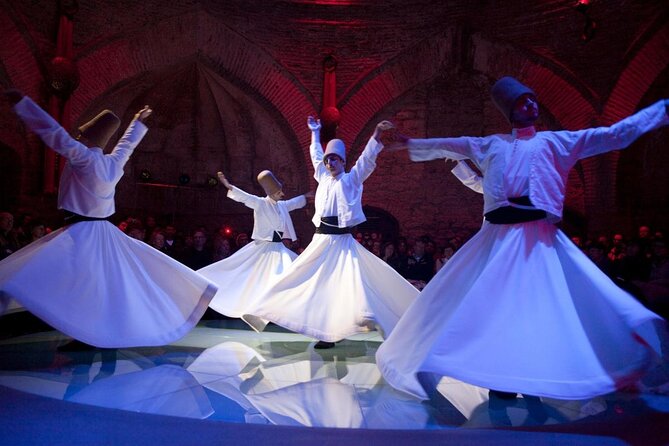
Hodjapasha Cultural Centre gives you something more than a standard theater entrance. The building began life as a 15th-century hamman, and its old structure adds weight to the evening before the first dancer even appears.
The venue is near public transportation, which matters in Istanbul. An 8:30 pm start fits neatly after a day around the historic center, though you should leave yourself time to reach the hall, find the entrance, and deal with ticket collection. Hotel pickup and drop-off are not included, so you make your own way there.
Before the performance, you can look around a small dance culture exhibition in the foyer. It offers useful context about the dances and their cultural meaning. It is not a large museum, but it gives you a better frame for the performance than simply walking into a dark room and waiting for the music.
One practical detail deserves attention. You book with a mobile ticket, but seat assignment is handled on a first-booked, first-served basis. Allow time at the venue to redeem the booking and collect the physical ticket if required. Booking earlier can also help with seat placement.
A few more Istanbul trips to weigh up
- Istanbul: Bosphorus Dinner Cruise & Show with Private Table
★ 4.8 · 44,561 reviews - Istanbul: Bosphorus Dinner Cruise with Turkish Night Show
★ 4.8 · 10,127 reviews - Istanbul: Hodjapasha Whirling Dervishes Show & Exhibition
★ 4.4 · 4,790 reviews
A fast-moving tour through Anatolia, the Balkans, and the Caucasus
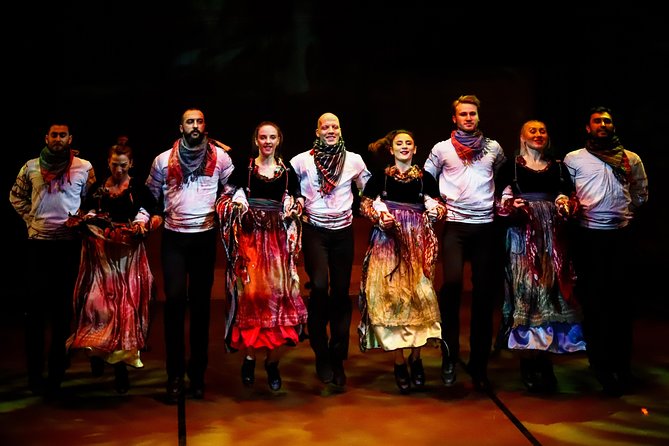
The program is built around variety. Rather than presenting one long style of dance, it moves between regional folk traditions, oriental dance, solo numbers, group choreography, and modern stage work.
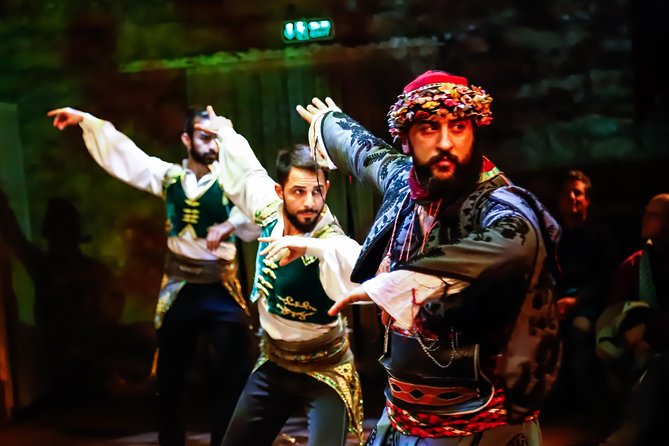
That range is the show’s biggest strength. You get a broad introduction to Turkish and neighboring dance traditions in a short sitting. The program can include group dances with strong patterns and footwork, more theatrical solo performances, and sections built around the movement of a single dancer.
The Anatolian material gives the performance its Turkish center. The Balkan and Caucasian dances widen the picture and show how many regional styles can fit into one evening. You should not expect a classroom explanation before every number, but small information cards can help explain the dances.
The show is polished rather than raw. Choreography, lighting, music, and costumes are arranged for a paying audience, so the evening feels like a proper stage production. That makes it easy to enjoy, but it also means the performance is shaped for entertainment rather than presented as a field study of folk dance.
Belly dancing, percussion, and the strongest solo numbers
Belly dancing is one of the main draws, and the male and female soloists are given room to make an impression. Several of the most memorable moments come when the full group falls away and one performer controls the stage.
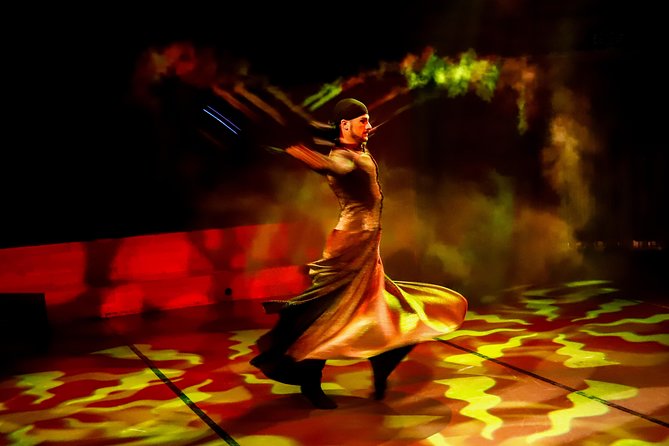
The male solo belly dancer is a particular highlight. His performance combines precision, theatrical timing, and a playful use of clothing as a reflective prop. One solo section features a male dancer spinning for nearly five minutes, using the fabric of his costume to catch the light and extend the movement.
The percussion section also earns special attention. A live solo performance by the drummer, followed by the combination of percussion and belly dance, gives the show one of its clearest bursts of energy. If you have seen belly dancing at a dinner cruise, do not assume this will feel the same. The dance here receives more serious stage treatment, with trained performers, choreographed lighting, and a focused setting.
The program is not perfect for every taste. A few dance numbers may feel long if you prefer constant changes, and some sections take time to build. Still, the overall structure offers enough contrast to keep the hour from feeling repetitive.
Whirling movement with a modern stage twist
Whirling dance appears in the program, but you should set your expectations carefully. If you are looking specifically for a traditional, spiritual ceremony centered on whirling dervishes, this is not that experience.
Here, whirling is part of a larger theatrical production. It may be paired with modern choreography, unusual costumes, colored light, and projected images. That approach can be mesmerizing, especially when the dancer holds a steady rhythm while the stage effects change around him.
The modern treatment is also why some people may find the show different from what they expected. This is not a quiet religious ritual. It is a lively cultural performance that borrows from several traditions and presents them in a compact evening show.
I see that as a useful distinction rather than a flaw. If you want an accessible introduction to Turkish dance with plenty of visual energy, the format works well. If you want a strictly traditional ceremony, choose a more specialized performance.
Same city, a completely different kind of day:
- Istanbul: Daytime or Sunset Sightseeing Cruise & Audio Guide
★ 4.8 · 14,430 reviews - Best of Istanbul 1, 2 or 3-Day Private Guided Istanbul Tour
★ 5.0 · 8,922 reviews - Istanbul: Basilica Cistern Fast-Track Entry and Audio Guide
★ 4.6 · 7,521 reviews - Istanbul: Hagia Sophia Skip-the-Line Ticket & Museum Option
★ 3.7 · 4,958 reviews
Costumes, live music, and 360-degree projections
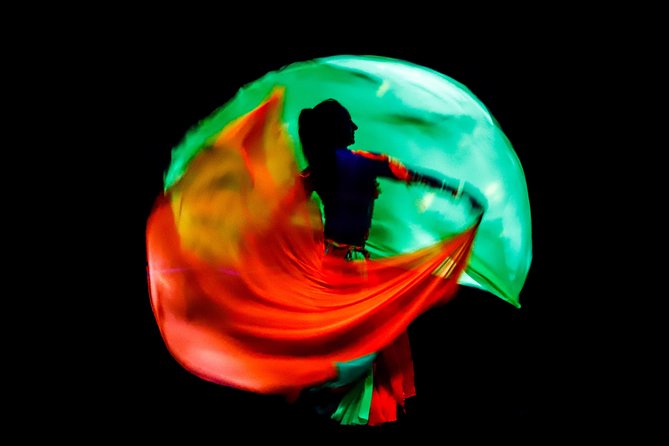
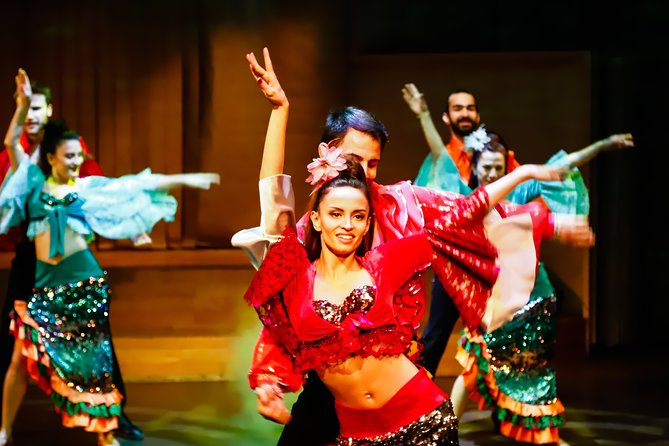
The costumes do a great deal of the visual work. Bright fabrics, flowing skirts, and carefully timed changes make even familiar dance patterns feel theatrical. In a small hall, costume movement becomes especially noticeable because you are close enough to see the fabric respond to every turn.
Live music supplies the pulse. Drums and other musicians are not just background sound, and the percussion solo gives the musicians their own moment. The music shifts with the dance style, helping the show move from regional folk numbers to oriental dance and then to more modern sections.
The 360-degree video projection adds another layer. Images surround the stage and help change the mood from one number to the next. The effects are designed to support the dancers rather than replace them, although the production is clearly more modern than a simple folk performance.
The balance is mostly effective. You get spectacle without losing sight of the performers. Still, anyone expecting a bare stage and purely traditional presentation may find the projection effects a little showy.
Why the small circular stage matters
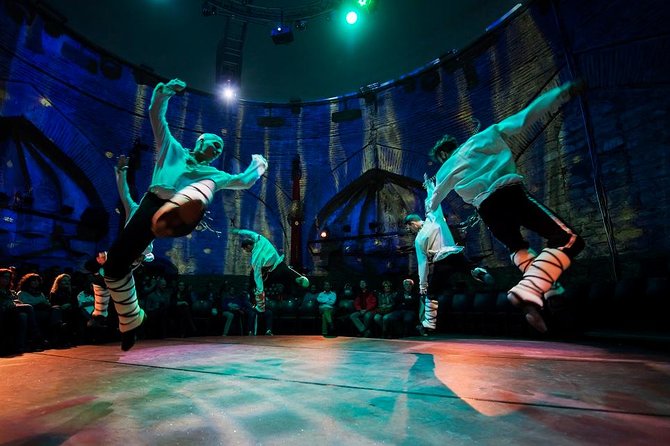
The theater’s compact size works in your favor. A circular stage gives the performance a more intimate shape, and the sightlines are generally strong from different parts of the room.
That does not mean every seat is identical. Seating is assigned by booking order, so earlier reservations may give you more choice. But the small hall reduces the risk of being stranded far from the action. You are not watching tiny figures in the distance.
One drawback is comfort. At least some seats may feel firm, and cushions are not guaranteed. If you have back trouble or are sensitive to hard seating, keep the 65-minute length in mind. The short running time helps, but a cushion would make the experience easier for some people.
The close seating also makes the dancers’ energy easier to feel. A large arena can make cultural dance seem remote. Here, the performers’ footwork, costume movement, and facial expression are more immediate.
Is $41 a fair price?
At $41 per person, the show sits in a reasonable range for an evening performance in central Istanbul. The ticket covers admission to a professionally staged production lasting about 1 hour and 5 minutes. Bottled water is included, though there is no hotel transportation.
The value depends on what you want from the night. If you compare it with a free street performance, $41 may feel high. If you compare it with a dinner cruise, the show offers a more focused dance program and avoids tying the performance to a full meal or a long boat schedule.
I consider it good value for someone who wants a reliable evening activity with a clear start and finish. The program gives you regional folk dance, belly dancing, live percussion, costumes, and projection effects in one sitting. It also uses a historic venue, which adds atmosphere without requiring a separate sightseeing visit.
The show is less suitable if you want a long concert, a meal, or a detailed spoken explanation of Turkish history. The cultural information is present mainly through the exhibition, dance styles, and performance itself.
The evening fits well after Istanbul sightseeing
The 8:30 pm start makes this an easy add-on to a day in Istanbul. You can spend the afternoon sightseeing, have an early meal, and then head to the theater without giving up a full day to the activity.
The timing also works for people arriving tired. The show is short enough to manage after a long day, and the steady sequence of dances gives you a change from museums, mosques, and city streets. It can be a good first-night choice because it introduces several regional traditions without asking you to commit to a full evening of formal theater.
Plan your route rather than arriving at the last minute. Public transportation is nearby, but Istanbul traffic and crowded streets can slow you down. Since there is no included hotel transfer, the final approach is your responsibility.
The booking pattern is another reason to plan ahead. The experience is commonly booked around 20 days before the date, and seats are allocated according to booking order. You do not need to reserve months ahead in every case, but last-minute booking may limit your seating options.
Who should book this show?
I would recommend it most strongly to you if:
- You want an evening cultural activity that lasts about an hour.
- You enjoy dance, music, costumes, and stage lighting.
- You want to see several regional styles rather than one narrow tradition.
- You prefer a small theater to a large concert hall.
- You are curious about belly dancing beyond the dinner-cruise setting.
- You want a performance that works for a mixed-age group.
Families and couples can both find plenty to enjoy, and most people can participate because the activity requires sitting and watching rather than physical effort. The maximum booking group is listed as 10 people, which may make the arrangement feel more manageable for a small party.
You may want to skip it if you dislike theatrical lighting, modern choreography, or performances that blend traditional material with contemporary staging. It is also not the right pick if your main goal is a formal whirling dervish ceremony.
Booking, cancellation, and small practical details
Confirmation is provided at booking, and the ticket is mobile. Because seat assignment is first booked, first served, reserve early if location inside the theater matters to you.
Bottled water is included. Hotel pickup and drop-off are not, so budget time and money for your own transportation.
Free cancellation is available up to 24 hours before the scheduled start time for a full refund. Cancellations or changes made within 24 hours are not accepted for a refund, and the cut-off uses Istanbul local time.
The experience is offered in English, though the core of the evening is visual and musical rather than based on a long spoken tour. That makes it accessible even if you do not want an information-heavy presentation.
Should you book the Hodjapasha Rhythm of the Dance Show?
Yes, if you want a lively and reasonably priced cultural night in Istanbul. The combination of an old hamman, skilled dancers, belly dancing, percussion, regional folk styles, and modern projections gives you plenty for the $41 ticket.
Book it with the right expectations. You are getting a polished stage production, not an untouched village performance or a solemn dervish ritual. A few sections may run longer than you prefer, and the seats can be firm, but the short length and wide variety keep the drawbacks manageable.
For the best chance of a favorable seat, reserve ahead and arrive with time to redeem the mobile ticket. If your Istanbul schedule leaves an open evening, this is a practical way to see Turkish and neighboring dance traditions in one concentrated, memorable show.
FAQ
How long does the Hodjapasha Rhythm of the Dance Show last?
The performance lasts approximately 1 hour and 5 minutes.
What time does the show start?
The scheduled start time is 8:30 pm.
How much does the experience cost?
The listed price is $41 per person.
What is included with the ticket?
Admission to the show and bottled water are included. Hotel pickup and drop-off are not included.
Is the show held in a historic building?
Yes. The performance takes place at Hodjapasha Cultural Centre, in a space converted from a 15th-century hamman.
Can I cancel for a full refund?
Yes. You can cancel at least 24 hours before the local start time for a full refund. Cancellations or changes made less than 24 hours before the start are not refundable.
Just added around Istanbul
- Istanbul Highlights Small-Group Walking Guided Tour★ 4.4 · 179 reviews
- Topkapi Palace&Harem-Guided Tour-Skip lines- All tickets inc★ 4.8 · 66 reviews
- Istanbul: Topkapi Palace Skip-the-Line Ticket & Guided Tour★ 4.2 · 178 reviews
- Istanbul: Private Guided Food Tour with 10 Tastings★ 4.7 · 49 reviews
- Istanbul: Belly Dancing, Show, & Dinner at Sultana’s Ticket★ 3.8 · 71 reviews
- Istanbul: Private Local Food & Markets Experience★ 4.9 · 27 reviews
- Skip-the-Line Hagia Sophia Digital Tickets w/Audio Guide★ 4.3 · 23 reviews
- Istanbul: Guided Shopping Trip with Turkish Coffee Tasting★ 4.7 · 37 reviews
Show, compared.

Bosphorus Dinner Cruise & Show with Private Table
Read our review →
Bosphorus Dinner Cruise with Turkish Night Show
Read our review →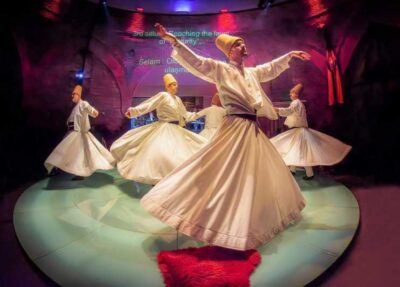
Hodjapasha Whirling Dervishes Show & Exhibition
Read our review →

Bosphorus Dinner Cruise with Show and Private Table
Read our review →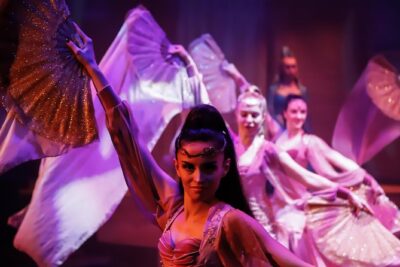
Bosphorus Dinner Cruise with Turkish Night Show
Read our review →