
Reviewed · SHOW
Istanbul: Hodjapasha Rhythm of The Dance Show
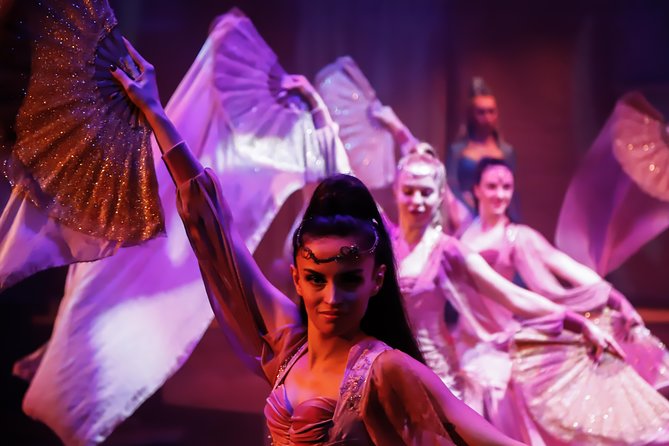
Istanbul’s Hodjapasha Rhythm of the Dance Show turns a 550-year-old Ottoman bath into an intimate stage. The 65-minute program moves through Turkish folk dances from different parts of Anatolia, with live music, drums, theatrical lighting, video projections, and costumes that do much of the storytelling.
I like the wide range of dance styles and the way traditional material is given a modern stage treatment. I also like the short running time, which fits neatly into a busy Istanbul evening. The main consideration is access: the center is not suitable for wheelchair users, and the entrance can be tricky to find in the surrounding lanes.
In This Review
- Key points to know before you book
- Entering the 15th-century HodjaPasha bath
- What the 65-minute performance includes
- Regional dances, belly dance, and the modern Sama solo
- Costumes, drums, lights, and video projections
- Seating and the best way to plan your arrival
- Is $32 good value for an Istanbul evening?
- How this differs from a whirling dervish ceremony
- Who will enjoy this show most?
- Practical tips for a smoother evening
- Should you book Hodjapasha Rhythm of the Dance?
- FAQ
- How long is the Hodjapasha Rhythm of the Dance Show?
- Where does the show take place?
- What is included in the ticket?
- Is hotel pickup included?
- Are seats assigned?
- Is the show suitable for wheelchair users?
Key points to know before you book
- A historic former hammam: The performance takes place inside the restored HodjaPasha Culture Center, a 15th-century Ottoman bath with original architectural features.
- A fast-moving cultural show: Expect a series of dances inspired by different Turkish regions, rather than one long story or a formal lecture.
- Live music and strong visual effects: Drums, traditional music, lighting, costumes, and video projections add theatrical punch.
- Assigned seats: Places are allocated in the order bookings are made, so booking earlier can help you secure a better position.
- A 65-minute evening plan: The show is long enough to feel substantial but short enough to pair with dinner or another Istanbul sight.
- Not a wheelchair-accessible activity: The venue is specifically listed as unsuitable for wheelchair users.
Entering the 15th-century HodjaPasha bath
The setting is half the experience. HodjaPasha Culture Center occupies a restored Ottoman Turkish bath, built in the 15th century and now around 550 years old. Instead of arriving at a modern theater with a broad lobby and rows of identical seats, you enter a compact historic building whose stonework and old bath architecture give the evening a strong sense of place.
The foyer includes a Dervish exhibition. It is worth allowing a few minutes before the performance to look around, especially if you have an interest in Ottoman culture or the traditions surrounding Sufi dance. The exhibition also helps set the scene for the show, even though Rhythm of the Dance is much livelier than a traditional sema ceremony.
Finding the entrance may take longer than you expect. The center is in an area of lanes and small passages, and the approach can feel confusing if you do not know the neighborhood. I would not arrive at the last possible minute. Give yourself extra time to locate the building, collect your ticket, and settle in without rushing.
The meeting point is the Hodjapasha Culture Center itself. There is no pickup service, so you are responsible for getting there. That is not a problem for visitors already sightseeing in central Istanbul, but it matters if you are coming from a distant part of the city or trying to fit the performance between timed attractions.
A few more Istanbul trips to weigh up
- Istanbul: Bosphorus Dinner Cruise & Show with Private Table
★ 4.8 · 44,561 reviews - Istanbul: Bosphorus Dinner Cruise with Turkish Night Show
★ 4.8 · 10,127 reviews - Istanbul: Hodjapasha Whirling Dervishes Show & Exhibition
★ 4.4 · 4,790 reviews
What the 65-minute performance includes
This is not a single folk dance repeated for an hour. The program presents a medley of Turkish folklore dances linked to different regions of Anatolia, with the performers moving between group numbers and solo or smaller-scale acts.
You can expect professional dancers with high energy, quick changes in mood, and choreography designed for a stage rather than a village celebration. Some sections draw directly on traditional movement and costume, while others use modern choreography, lighting, and theatrical effects.
The program includes material associated with several cultural areas around Turkey. One recent description of the show pointed to Arab, Balkan, and Levant influences, which makes sense in a country shaped by movement between Europe, Asia, and the eastern Mediterranean. The evening gives you a broad introduction rather than a detailed lesson in each regional tradition.
That distinction is useful. If you want a scholarly explanation of Turkish dance, this is not the right format. If you want to see how different musical rhythms, costumes, and dance forms can share one stage, it works very well.
The order of acts may change, but the show has included a belly dance, a modern solo Sama dance, comic touches, audience interaction, and a prominent drum performance. These shifts keep the pace moving. You are not left watching one style for too long before the music and visual character change.
Regional dances, belly dance, and the modern Sama solo
The most valuable part of the show is its variety. Turkish folk dance is not one uniform tradition, and the program makes that clear through changes in rhythm, formation, costume, and movement.
Group dances create the biggest visual moments. Several dancers can fill the compact stage with synchronized steps, turns, and gestures that feel both precise and festive. The choreography is built to read clearly from the audience, so you can follow the shape of a number even if you know little about the dances beforehand.
The belly dance section is likely to be one of the evening’s crowd-pleasing moments. It gives the program a more theatrical, solo-focused pause after the larger group numbers. The lighting is used especially well in solo performances, adding color and drama without requiring a large set.
The modern solo Sama performance is another unusual feature. Sama is associated with whirling dervish traditions, but this presentation is described as a contemporary interpretation rather than a full sema ceremony. That matters: you should not book this expecting a quiet, meditative religious ritual. The show uses the idea and movement in a more theatrical setting.
For a fuller look at Sufi performance, the same center also presents a separate sema ceremony. Rhythm of the Dance is the livelier choice. It has more changes of pace, more costume variety, and more direct entertainment.
Costumes, drums, lights, and video projections
The costumes are not a minor decoration here. They help distinguish the regional sections and make the movements easier to read. Expect colorful clothing, flowing fabric, and outfits that change the visual feel of the stage from one number to the next.
The music is performed live, which gives the show a more immediate feel than a dance program relying only on recorded tracks. Drums are a major part of the sound. A featured drummer has been singled out for taking the energy to another level, and the percussion helps drive the faster group dances.
Lighting and video projections add a modern concert feel. They are especially effective during solo acts, where the stage can shift from a crowded folk number to a more focused visual scene. If you enjoy polished production, you will appreciate this layer. If you prefer an unamplified, strictly traditional performance, the theatrical effects may feel less pure.
I see that as the honest trade-off. The show is inspired by Turkish folk traditions, but it is designed for an international audience seeking an enjoyable evening. It does not pretend to be an untouched village performance. Instead, it packages many styles into a compact stage production.
There are also light comic moments and some interaction with the audience. These touches keep the atmosphere relaxed and help prevent the performance from feeling like a formal cultural demonstration. The dancers move quickly from one act to another, so do not expect a long pause for introductions or a detailed explanation of every dance.
Same city, a completely different kind of day:
- Istanbul: Daytime or Sunset Sightseeing Cruise & Audio Guide
★ 4.8 · 14,430 reviews - Best of Istanbul 1, 2 or 3-Day Private Guided Istanbul Tour
★ 5.0 · 8,922 reviews - Istanbul: Basilica Cistern Fast-Track Entry and Audio Guide
★ 4.6 · 7,521 reviews - Istanbul: Hagia Sophia Skip-the-Line Ticket & Museum Option
★ 3.7 · 4,958 reviews
Seating and the best way to plan your arrival
Seats are assigned according to booking order. This is a useful system because it avoids the awkward rush toward the entrance and means you do not need to guard a seat while someone in your group is still arriving.
It also means that booking early can matter. The room is intimate, and the compact layout generally gives the audience a good view, but your exact position is not something you select freely. If having a particular sightline matters to you, reserve as soon as your plans are firm.
Several practical points follow from the seating policy:
- Arrive with enough time to find the building and enter calmly.
- Keep your booking details ready at the door.
- If you are traveling with companions, make sure the reservation includes everyone who wants to sit together.
- Do not assume you can change seats after entering.
The small scale of the room is a real advantage. You are close enough to see costume details and facial expressions, and the show does not feel like it is being staged for a huge arena. On the other hand, the compact historic venue has fewer modern theater conveniences than a large performing arts hall.
One useful inclusion is bottled drinking water. There is no bar, so do not count on buying a drink during the evening. Have dinner or refreshments before or after the performance if that is important to you.
Is $32 good value for an Istanbul evening?
At $32 per person, I consider this a reasonable price for a short cultural performance in a historic central venue. You are paying for admission, the production, a program booklet, and bottled water. Pickup is not included, so transport and any meal are separate.
The value depends on what you want from the night. The show makes sense if you want:
- A planned evening activity that lasts just over an hour
- A cultural performance without committing to a full dinner show
- Live music and dance in a historic building
- A visual introduction to several Turkish regional traditions
- Something suitable for a first or second night in Istanbul
It is less compelling if you want a long, deeply explained cultural program or a quiet religious ceremony. The 65-minute length is one of its strengths, but it also limits how much background each dance can receive.
I especially like the show as a first full-day activity. It is lively enough to wake you up and help you settle into Istanbul time, yet short enough that you do not lose an entire evening. You can place it before dinner, after an afternoon of sightseeing, or alongside other plans in the historic center.
Some people will wish it lasted longer. That is understandable, especially when the dancers, drumming, and costumes are working well. Still, the shorter format makes the experience easier to fit into a packed itinerary and keeps the pace from dragging.
How this differs from a whirling dervish ceremony
HodjaPasha Culture Center is also associated with sema performances by whirling dervishes, but Rhythm of the Dance is a different experience.
A sema ceremony is slow, focused, and contemplative. Rhythm of the Dance is energetic and theatrical. It moves between regional folk dances, percussion, solo acts, costume changes, modern choreography, and lighting effects.
If you have time for only one performance, choose based on your mood:
- Choose Rhythm of the Dance for color, movement, variety, drums, and lively entertainment.
- Choose a sema ceremony for quiet concentration and spiritual atmosphere.
- If your schedule allows, seeing both gives you a useful contrast between Turkish folk stage performance and Sufi ritual tradition.
Do not judge one by the standards of the other. The dance show is not trying to recreate a religious ceremony, and the sema is not meant to deliver a fast-paced stage spectacle.
Who will enjoy this show most?
I would recommend it to first-time visitors who want an easy introduction to Turkish culture through music and movement. You do not need previous knowledge of regional dance, and the visual presentation makes the program accessible even if you do not understand Turkish.
It also suits families and mixed-age groups. The high energy, comic touches, costumes, and changing acts give different people something to enjoy. The short duration helps if you are traveling with older relatives or anyone who does not want a late, lengthy performance.
It can also work well for couples looking for a colorful evening plan, solo visitors who want a ticketed activity with a clear start and finish, and repeat visitors who would like a different side of the HodjaPasha venue.
You may want to skip it if you dislike staged folklore shows, strong percussion, or modern lighting effects. You should also think carefully about access if anyone in your party uses a wheelchair, since the activity is not suitable for wheelchair users.
Practical tips for a smoother evening
Plan the location before you leave your hotel. The center can be difficult to locate among the surrounding lanes, and a few extra minutes will make a difference. A map pin may get you close without making the entrance obvious, so use the venue name and keep asking for the Hodjapasha Culture Center if needed.
Book early if seating position matters to you. Seats are allocated in first-booked, first-served order, not chosen casually at the door.
Bring an open mind about the word traditional. The show uses traditional Turkish dances and music, but it also adds modern choreography, video projections, dramatic lights, and theatrical pacing. I think that blend makes the program more accessible, but it is not the same as watching a local folk group at a community celebration.
Read the program booklet when you arrive or during the performance break if one is provided. It can help you place the dances within Turkey’s larger cultural mix, though the evening itself is built mainly around spectacle rather than long explanations.
Finally, do not plan on a drink at the venue. Bottled water is included, but there is no bar. A meal before or after the show will complete the evening more comfortably.
Should you book Hodjapasha Rhythm of the Dance?
I would book this show if you want a colorful, compact Istanbul night with live music, skilled dancers, dramatic costumes, and a historic setting. At $32, it offers a fair way to sample several Turkish dance traditions without giving up an entire evening.
Book early for the best chance of a preferred assigned seat, and allow extra time to find the entrance. Choose the show over a sema ceremony if you want energy and variety. Skip it if you are seeking a fully traditional, quiet performance or need wheelchair access.
For most visitors, the combination of setting, professional dancing, live drumming, and manageable length makes it a practical addition to an Istanbul itinerary.
FAQ
How long is the Hodjapasha Rhythm of the Dance Show?
The performance lasts 65 minutes.
Where does the show take place?
It takes place at the Hodjapasha Culture Center, inside a restored Ottoman Turkish bath dating from the 15th century and about 550 years old.
What is included in the ticket?
Admission to the performance, a program booklet, and bottled drinking water are included.
Is hotel pickup included?
No. Pickup service is not included. You must make your own way to the Hodjapasha Culture Center.
Are seats assigned?
Yes. Seats are allocated on a first-booked, first-served basis.
Is the show suitable for wheelchair users?
No. The activity is listed as not suitable for wheelchair users.
Just added around Istanbul
- Istanbul Highlights Small-Group Walking Guided Tour★ 4.4 · 179 reviews
- Topkapi Palace&Harem-Guided Tour-Skip lines- All tickets inc★ 4.8 · 66 reviews
- Istanbul: Topkapi Palace Skip-the-Line Ticket & Guided Tour★ 4.2 · 178 reviews
- Istanbul: Private Guided Food Tour with 10 Tastings★ 4.7 · 49 reviews
- Istanbul: Belly Dancing, Show, & Dinner at Sultana’s Ticket★ 3.8 · 71 reviews
- Istanbul: Private Local Food & Markets Experience★ 4.9 · 27 reviews
- Skip-the-Line Hagia Sophia Digital Tickets w/Audio Guide★ 4.3 · 23 reviews
- Istanbul: Guided Shopping Trip with Turkish Coffee Tasting★ 4.7 · 37 reviews
Show, compared.

Bosphorus Dinner Cruise & Show with Private Table
Read our review →
Bosphorus Dinner Cruise with Turkish Night Show
Read our review →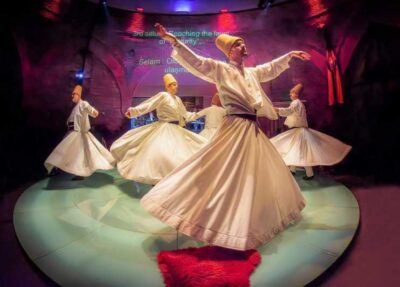
Hodjapasha Whirling Dervishes Show & Exhibition
Read our review →

Bosphorus Dinner Cruise with Show and Private Table
Read our review →Bosphorus Dinner Cruise with Turkish Night Show
Read our review →
Dinner Cruise On The Bosphorus with Turkish night show
Read our review →