
Reviewed · WHIRLING DERVISH SHOWS
Istanbul: Whirling Dervishes Ceremony and Mevlevi Sema
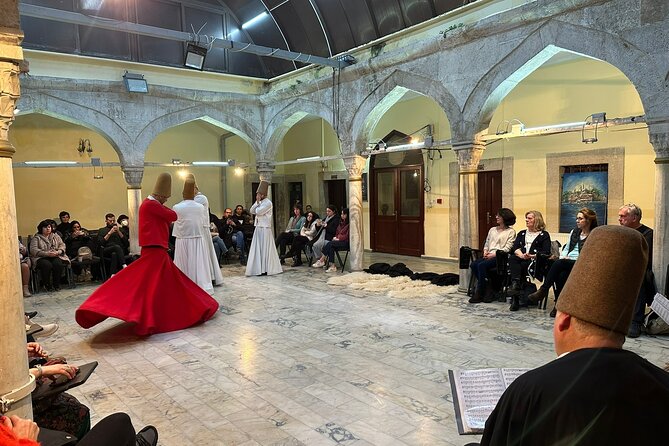
The striking part of this Istanbul evening is its quiet focus. At Kızlarağa Medresesi, musicians sing and play before the dervishes enter, bow, and turn in a controlled ritual shaped over centuries. This is not a theatrical dance show with bright effects. It is a Sufi ceremony with religious meaning.
I like the historic central setting and the close view of the performers. I also like the modest price, about $24.02, for a nearly hour-long cultural program with live music. The main drawback is simple: the ceremony may offer little or no explanation, and the small space can become crowded if you arrive late.
In This Review
- Key points to know before you go
- What the Mevlevi Sema ceremony really is
- Arriving at Kızlarağa Medresesi in Sultanahmet
- The opening music sets the tone
- Watching the dervishes turn
- Why advance reading makes a real difference
- Is the $24.02 price good value?
- Handling the small venue and seating
- Showing respect during a sacred ceremony
- Who will enjoy this Istanbul experience most?
- My practical verdict on the Mevlevi Sema
- FAQ
- Where does the Whirling Dervishes Ceremony take place?
- What time does the ceremony start?
- How long does the ceremony last?
- Is transportation included?
- Does the ticket include admission?
- Can I cancel for a refund?
Key points to know before you go
- The ceremony begins with music: Expect live instruments, chanting, and singing before the whirling starts.
- The whirling is only part of the program: Depending on the evening, it may last about 10 to 15 minutes, while music fills much of the 50-minute session.
- The venue is small: Arrive 15 to 20 minutes early if you want a front or unobstructed seat.
- The ritual is religious: Read a short introduction to Mevlevi Sema before attending so the movements have meaning, not just motion.
- The location is easy to reach: Kızlarağa Medresesi is in Sultanahmet, close to public transportation and the T1 tram line.
- The price is fair with one condition: It is good value if you want a compact cultural evening, but less so if you expect a long dance performance with commentary.
What the Mevlevi Sema ceremony really is
The Mevlevi Sema is tied to the Sufi tradition associated with Mawlana Jalaluddin Rumi. It symbolizes stages on the spiritual path toward Allah and follows formal religious rules, gestures, music, and movement.
That background matters. If you arrive expecting a folk dance or a stage spectacle, the ceremony may feel slow at first. If you understand that the turning is an act of worship and meditation, the quiet pace makes much more sense.
The tradition developed in a disciplined form over generations, beginning in the period of Sultan Veled and Ulu Arif Celebi and taking its established form by the time of Pir Adil Celebi. It is recognized by UNESCO as part of the Intangible Cultural Heritage of Humanity.
You do not need to be an expert to appreciate it. But I strongly suggest reading a short explanation of Sufi thought and the Mevlevi order before you go. The venue may provide an audioguide, but several parts of the program are not explained in person. Five minutes of reading can change the whole evening.
More Whirling Dervish Shows in Istanbul
- Istanbul: Hodjapasha Whirling Dervishes Show & Exhibition
★ 4.4 · 4,790 reviews - Istanbul: Whirling Dervishes Ceremony and Mevlevi Sema
★ 4.3 · 1,694 reviews - Istanbul: Whirling Dervish Ceremony next to Hagia Sophia
★ 4.5 · 906 reviews
Arriving at Kızlarağa Medresesi in Sultanahmet
The ceremony begins at 7:00 pm at Kızlarağa Medresesi, an old building in the Sultanahmet area. The central location is one of the event’s biggest practical advantages. You can reach the area by public transportation, and the T1 tram line makes it especially useful if you are already visiting the Blue Mosque, Hagia Sophia, the Grand Bazaar, or nearby streets.
The venue is small and intimate rather than grand. That gives you a close look at the musicians and performers, but it also creates the seating problem that some visitors have faced. There are only a few rows, and late arrivals may find that the best sightlines are gone. In some cases, the room has been too full for every person to sit comfortably.
I would arrive at least 15 to 20 minutes early. One person arrived 20 minutes ahead and found good seats, while another arrived 15 minutes early and sat toward the back. A child was given a cushion at one performance, and staff helped a young girl find a front-row position. Those small gestures can make a family visit easier, but you should not rely on them.
The exact best seat depends on the room arrangement that night. Sitting near the central area may give you a direct view of the turning space, but being too close to the musicians can block part of the ceremony. A position toward the side, with a clear view across the room, may work better.
The opening music sets the tone
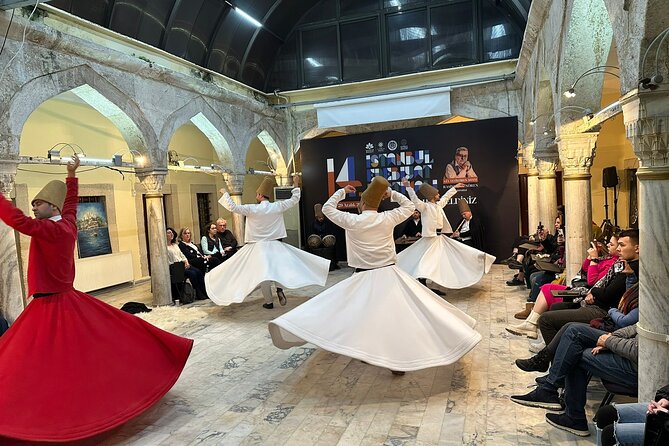
The first part of the program is live music, singing, and chanting. The musical section has been reported as lasting roughly 20 to 40 minutes, depending on the performance structure, with the whirling taking place later.
This timing is important. The listing describes a 50-minute event, but you should not assume that all 50 minutes will feature spinning dervishes. Some evenings have offered only about 10 minutes of whirling. Other accounts describe more than 15 minutes, with the musical opening forming a large part of the ceremony.
I consider this a strength, not a flaw, if you know what you are attending. The music is not filler before the main act. It is part of the ceremony. The small group of musicians creates a serious, restrained mood, and the chanting prepares the space for the dervishes.
Still, anyone booking this mainly for the turning should set expectations carefully. If you want nonstop movement, this is not the right format. If you want a short introduction to Turkish Sufi music and ritual, the opening section gives the program depth.
Tea and water have been offered before the ceremony, and one account also mentions juice. These simple refreshments are a pleasant touch, though they should be seen as a courtesy rather than a central feature.
Watching the dervishes turn
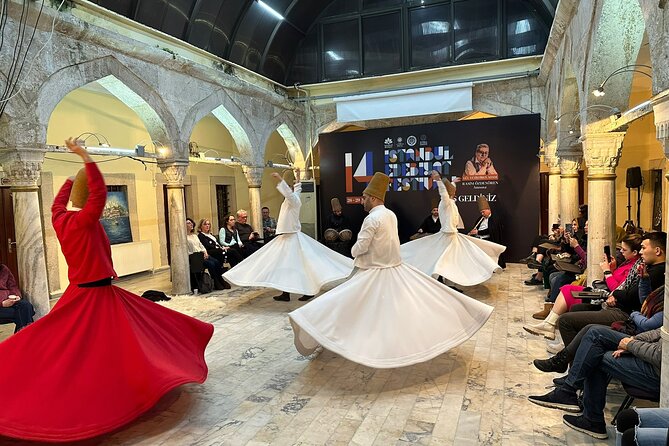
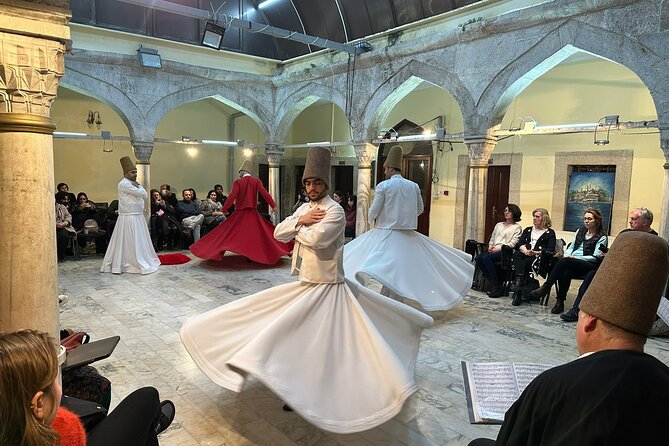
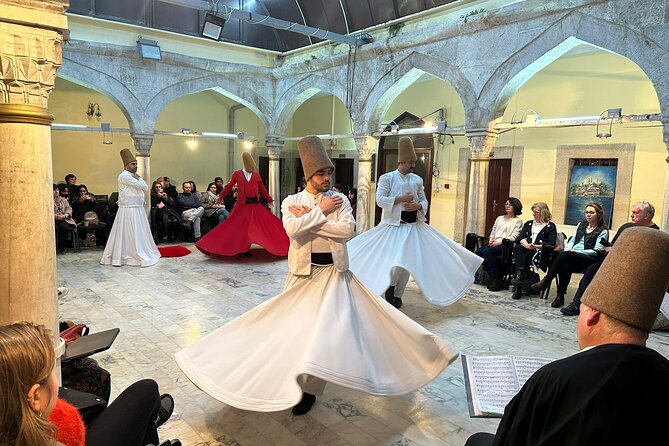
When the dervishes enter, the atmosphere changes. Their white garments, measured steps, and repeated turning create the image most people associate with the Mevlevi ceremony. The movement can look effortless, but the ritual has a precise structure and disciplined purpose.
The turning is meant to express spiritual focus, not entertainment for its own sake. The dervishes rotate with one hand raised and the other lowered, a familiar image from Mevlevi practice, though the precise symbolism and ceremony should be explained in your advance reading rather than guessed at from the seats.
From a close position, you can notice the control involved. The movement is steady rather than flashy. Some viewers find it hypnotic, while others find the long musical opening more compelling than the turning itself. Both reactions are reasonable.
The performance usually features three dervishes, according to descriptions of the evening, though the exact presentation may vary. The small room lets you see them clearly from many seats, provided no one is standing or blocking the view. This closeness is a major benefit over a large theater, where the ceremony can feel distant.
You should also treat the central performance area with respect. It is a sacred space for the ritual, not a walkway. Late arrivals, seat changes, loud conversation, and attempts to cross the area can disturb the quiet mood for everyone.
Same city, a completely different kind of day:
- Istanbul: Bosphorus Dinner Cruise & Show with Private Table
★ 4.8 · 44,561 reviews - Istanbul: Daytime or Sunset Sightseeing Cruise & Audio Guide
★ 4.8 · 14,430 reviews - Istanbul: Bosphorus Dinner Cruise with Turkish Night Show
★ 4.8 · 10,127 reviews - Best of Istanbul 1, 2 or 3-Day Private Guided Istanbul Tour
★ 5.0 · 8,922 reviews
Why advance reading makes a real difference
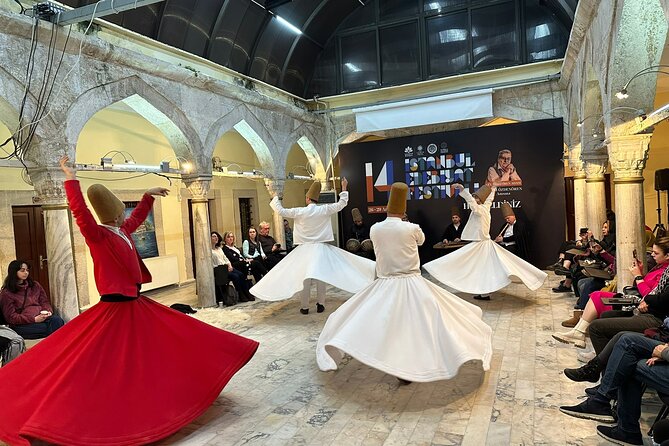
The most repeated weakness of this experience is the lack of explanation. You may receive a mobile ticket and enter easily, but there may be no spoken introduction describing the music, gestures, clothing, or stages of the ceremony.
That omission matters because the Sema is symbolic. Without context, you may see musicians playing, dervishes turning, and a series of bows without understanding how the parts fit together. With context, you can follow the ceremony as a religious practice with a clear order.
Use the audioguide if it is available to you, and read about the Mevlevi tradition before arriving. Learn who Rumi was, why the ceremony is associated with his teachings, and why the turning is treated as prayer. You do not need a long academic study. A brief overview is enough.
I also suggest discussing the tone with children before you go. Families can attend, and children have been welcomed at the venue. But this is a quiet religious ceremony, not a children’s performance. Younger children may enjoy the motion and music, while older children may get more from the symbolism if you explain it in simple terms.
Is the $24.02 price good value?
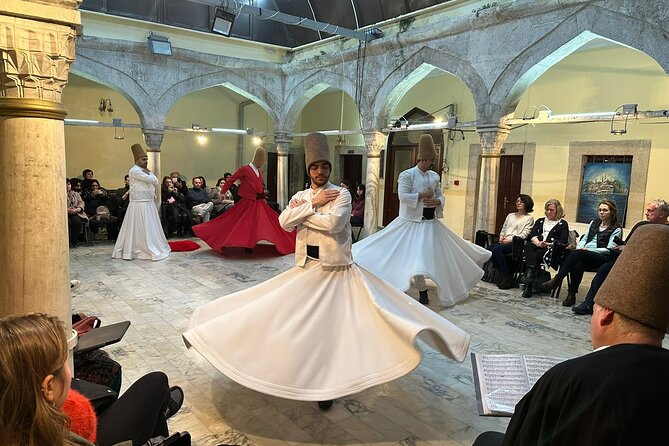
At about $24.02 per person, I consider this a reasonable price for a central Istanbul cultural activity lasting approximately 50 minutes. The ticket includes the Whirling Dervishes Ceremony and admission to the venue. Mobile ticketing makes entry straightforward.
The value depends on your expectations. You are paying for a formal cultural and religious presentation in a historic setting, supported by live music. You are not paying for a guided lecture, hotel transport, dinner, or a long evening performance.
For me, the price works best when you treat the program as one compact stop during a Sultanahmet evening. You can visit nearby sights earlier, eat before or after, and spend less than you might on a longer dinner show. The ceremony also offers something different from Istanbul’s usual mosques, palaces, markets, and food tours.
The value drops if you want detailed interpretation or guaranteed front seating. The ceremony does not include pickup or drop-off, and no guide is listed as accompanying you. You will need to make your own way to the venue and arrive early if seating matters.
Free cancellation up to 24 hours before the start time adds useful flexibility. Cancellations made within 24 hours are not refunded, and changes during that period are not accepted.
Handling the small venue and seating
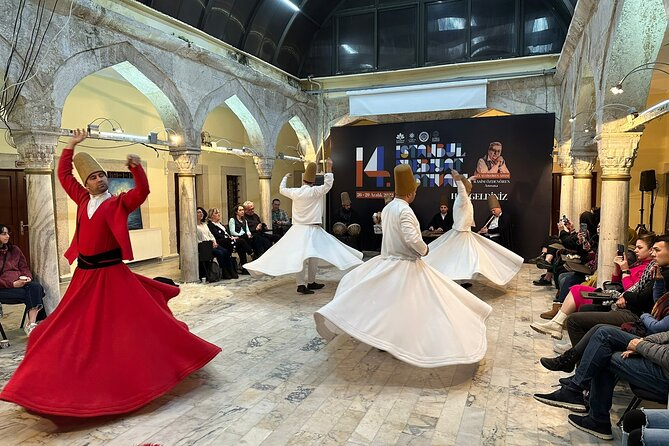
The room’s size creates both intimacy and risk. From a clear seat, you can feel close to the musicians and performers. Several accounts describe the proximity as one of the most powerful parts of the evening.
But a crowded room can change that quickly. Some people have found themselves standing, sitting behind musicians, or viewing the ceremony around pillars. Late arrivals can interrupt the quiet and may have difficulty finding a good position.
Here is how I would handle it:
- Arrive 15 to 20 minutes before 7:00 pm.
- Keep your mobile ticket ready for entry.
- Choose a seat with a clear view of the central turning area.
- Avoid assuming the front row is always best, since musicians or other people may block part of the view.
- If you are visiting with a child, ask staff about a cushion or a position where the child can see.
- Stay in your place once the ceremony begins.
The seating issue is the chief practical concern with this activity. It does not ruin every performance, but it is serious enough to plan around. Early arrival improves your odds.
Showing respect during a sacred ceremony
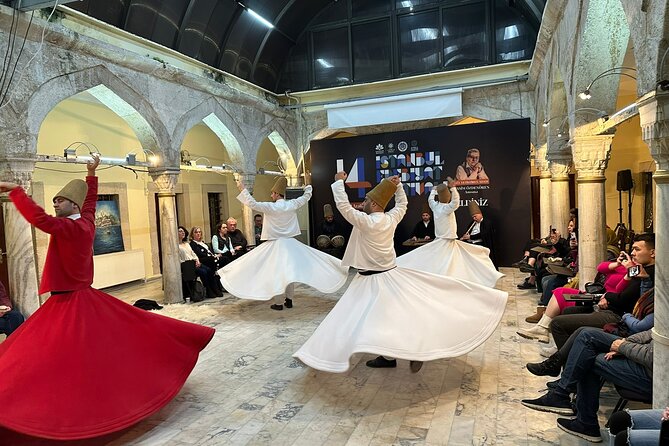
The performers are presenting a religious practice, even though the ceremony is open to the public. Your behavior affects the atmosphere.
Keep conversation low or save it for afterward. Avoid walking through the central area, changing seats during the turning, or holding a phone high enough to block someone behind you. Photography and video may be tempting, but frequent picture-taking can distract from the ceremony and the people around you.
Late entry is especially disruptive in a small room. If you can, arrive early, settle in, and give yourself time to become quiet before the music starts. This simple courtesy fits the spirit of the event.
The ceremony itself is calm and focused. The occasional poor behavior in the audience can feel out of place, but you can help preserve the mood by treating the space as a place of worship rather than a casual photo stop.
Who will enjoy this Istanbul experience most?
I would recommend the ceremony to you if you like music, religious traditions, and short cultural programs with a strong sense of place. It suits first-time visitors who want to see an aspect of Turkish culture beyond the main monuments.
It is also a good choice for families who can manage a quiet 50-minute program. Children may find the whirling fascinating, and staff have shown kindness toward young visitors. Explain the ceremony beforehand so they understand why everyone remains quiet and still.
Couples and solo visitors may especially enjoy the intimate mood. The combination of live music, chanting, and turning can feel powerful without requiring a full evening commitment.
I would hesitate to recommend it if you want a high-energy dance show, a detailed English explanation, or guaranteed seating. The ceremony asks you to bring some patience and curiosity. Its power comes from the ritual, not from stage tricks or constant action.
My practical verdict on the Mevlevi Sema
I like this experience because it gives you a close look at a Turkish tradition in a central, historic venue for a modest price. The music is a major part of the evening, and the whirling can be mesmerizing when the room is quiet and your view is clear.
The weaknesses are real. The schedule may devote most of the 50 minutes to music, the ceremony may not be explained, and seating can become uncomfortable when the small venue is overfilled. These are not minor details if you are booking with limited time in Istanbul.
Read about the Mevlevi Sema first, arrive early, and think of the program as a religious music ceremony that includes whirling, not as a dance show built around whirling. With that approach, I would book it, especially if you are staying near Sultanahmet and want a meaningful evening activity without spending much.
FAQ
Where does the Whirling Dervishes Ceremony take place?
The ceremony takes place at Kızlarağa Medresesi in Istanbul’s Sultanahmet area.
What time does the ceremony start?
The listed start time is 7:00 pm.
How long does the ceremony last?
The experience lasts approximately 50 minutes.
Is transportation included?
No. Pickup and drop-off are not included, but the venue is near public transportation and the T1 tram line.
Does the ticket include admission?
Yes. Admission to the Whirling Dervishes Ceremony is included, and the ticket is available as a mobile ticket.
Can I cancel for a refund?
You can cancel up to 24 hours before the start time for a full refund. Cancellations and changes made less than 24 hours before the start time are not accepted and are not refunded.
Just added around Istanbul
- Whirling Dervish Ceremony★ 4.5 · 35 reviews
- Istanbul:Whirling Dervish Ceremony, Mystical Sufi Experience★ 4.1 · 17 reviews
- Turkish Dance Show at Hodjapasha Cultural Centre in Istanbul★ 4.7 · 56 reviews
- Turkish Tapas – Meze Cooking for Beginners in Istanbul★ 4.5 · 16 reviews
- Istanbul Sultanahmet Turkish Bath Sultan Suleyman Bath★ 3.7 · 38 reviews
- Turkish Marbling Paper Ebru Art Workshop★ 5.0 · 44 reviews
- Turkish and Islamic Arts Museum: Entry Ticket & Audio Guide★ 4.2 · 19 reviews
- Flying Dress Photography on an Iconic Rooftop in Istanbul★ 5.0 · 87 reviews
Whirling Dervish Shows, compared.
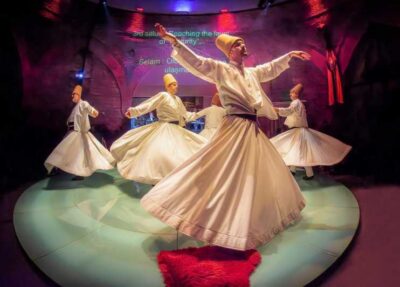
Hodjapasha Whirling Dervishes Show & Exhibition
Read our review →
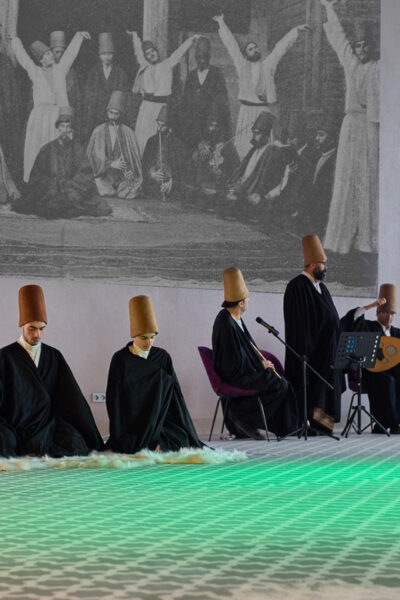
Istanbul Hodjapasha Whirling Dervishes Show & Exhibition
Read our review →
Istanbul Traditional Turkish Dinner and Dervish Experience
Read our review →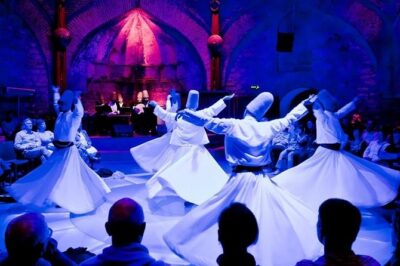
Whirling Dervish Ceremony: Go on a Spiritual Journey
Read our review →
Browse the lists this tour appears in